



Watch Dubbed
The Truth Unveiled
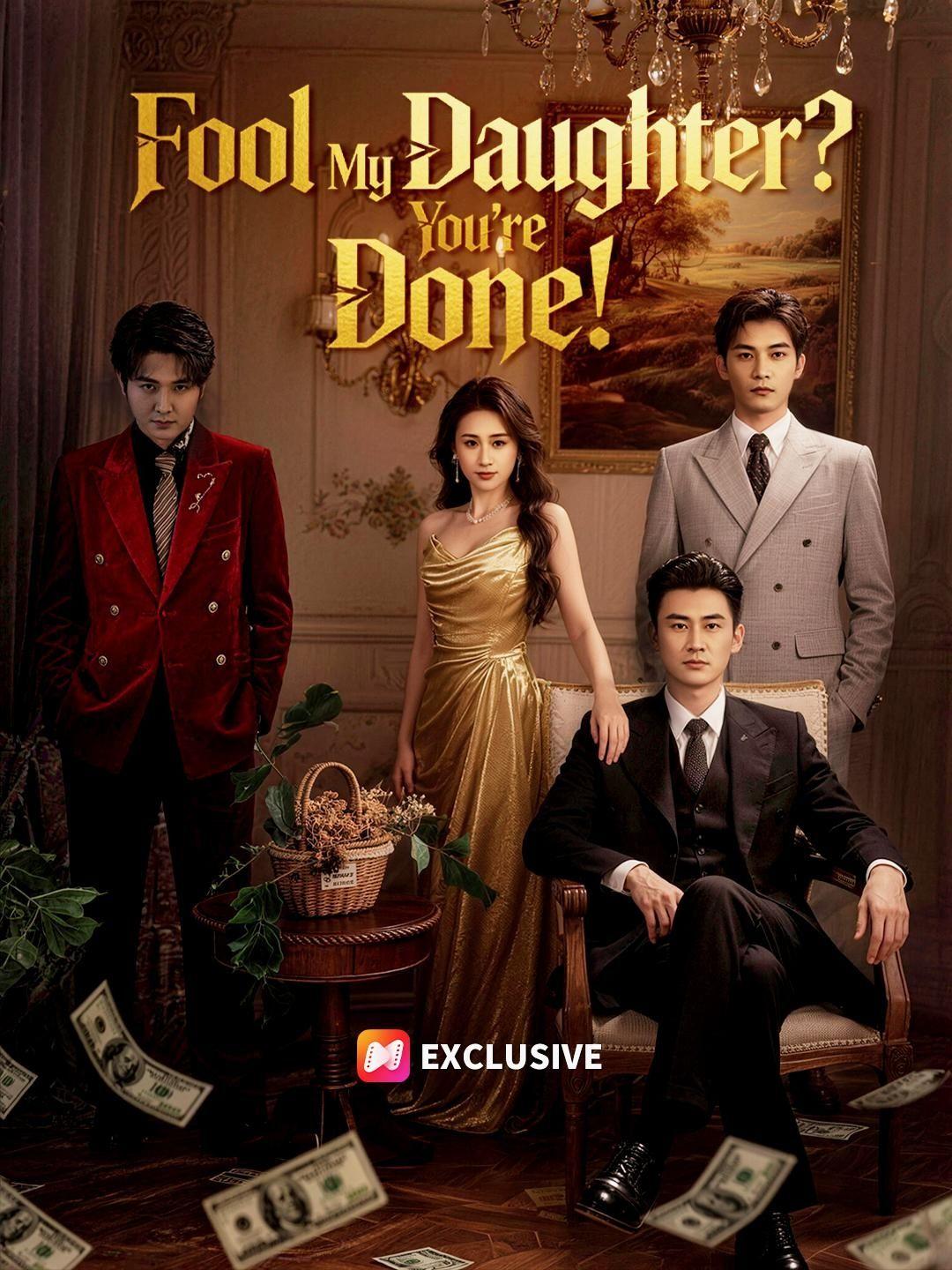
Shirley exposes Ray's true identity as the son of her chauffeur and his dependency on her money, shocking everyone at the scene.Will Ray manage to save face after this public humiliation or will Shirley's revelation change everything?


Recommended for you


Reborn to Crowned Love: When Earrings Speak Louder Than Words
There’s a moment in Reborn to Crowned Love—around 00:48—that lasts barely three seconds, yet it rewires the entire emotional architecture of the scene. Ling Xiao, standing center frame, tilts her head just slightly, sunlight catching the cascade of pearls and crystals dangling from her earlobes. Her lips part. Not to speak. Not to cry. To *breathe*. And in that suspended inhalation, the audience understands: this isn’t a confrontation. It’s a coronation. The earrings—long, asymmetrical, one featuring a carved mother-of-pearl flower, the other a geometric gold lattice—are not accessories. They’re heraldry. They whisper lineage, discipline, and a kind of cold, elegant power that no amount of shouting could replicate. While Jiang Tao stammers and Su Mei pleads, Ling Xiao’s earrings sway with the subtlest motion, like pendulums measuring the weight of lies in the room. That’s the brilliance of Reborn to Crowned Love: it trusts its visuals to carry the subtext, letting costume, gesture, and silence do the heavy lifting while dialogue remains sparse, precise, almost surgical. Let’s dissect the ensemble. Ling Xiao’s ivory dress—crinkled fabric, ruffles cascading down the bodice like spilled cream—is deliberately *unfussy*. No sequins. No bold prints. Just texture and volume, suggesting wealth so ingrained it no longer needs to announce itself. Contrast that with Su Mei’s cream coat: tailored, yes, but the black trim, the studded pockets, the hairpin shaped like a tiny dagger—all signals of *aspiration*. She’s dressed to impress, to belong. Ling Xiao is dressed to *preside*. And when Su Mei reaches for Jiang Tao’s arm at 01:29, her fingers brush his sleeve with urgency, while Ling Xiao’s hands remain clasped before her, white bag resting like a scepter. The visual hierarchy is absolute. Even Lin Zeyu, standing behind Ling Xiao in his white shirt—untied at the collar, sleeves rolled just so—radiates calm authority. He doesn’t intervene. He *witnesses*. His presence is the silent clause in the contract everyone else is violating. The true emotional pivot happens not with the receipt, but with the *reaction* to it. At 00:24, Ling Xiao’s eyes widen—not in shock, but in *recognition*. She’s seen this before. The inflated bill, the misplaced confidence, the desperate attempt to dazzle with excess. Her expression shifts from mild curiosity to weary familiarity, as if she’s watching a play she’s reviewed a dozen times. That’s when Reborn to Crowned Love reveals its core theme: this isn’t about one dinner. It’s about cycles. Jiang Tao isn’t the first outsider to try buying his way in. Su Mei isn’t the first ally to waver. And Ling Xiao? She’s the keeper of the ledger—literal and metaphorical. The receipt is just the latest entry. When she finally speaks at 00:45, her voice is calm, almost bored: “You charged it to my father’s corporate account. Again.” The word *again* lands like a stone in still water. No one denies it. Because denial would be pointless. The system is rigged—not by malice, but by expectation. Those who rise fast assume the rules bend for them. Ling Xiao knows better. Her earrings shimmer. Her posture doesn’t shift. And in that stillness, she asserts dominance without raising her voice. What’s fascinating is how the secondary characters mirror the central conflict. Yao Na and Fang Lin—initially united in judgment—begin to fracture. At 00:06, Fang Lin’s mouth opens in outrage; by 01:30, she’s folded her arms, eyes narrowed, reassessing. Yao Na, ever the pragmatist, glances at Lin Zeyu, then back at Ling Xiao, calculating loyalties. Their dynamic is a microcosm of the show’s larger world: alliances are fluid, trust is currency, and status is always provisional. Even Jiang Tao’s friend in the beige trenchcoat (seen at 00:58) stands apart, arms crossed, observing like a journalist documenting a coup. He’s not invested. He’s *learning*. That’s another layer Reborn to Crowned Love excels at: making the bystanders feel like co-conspirators in the audience’s mind. The climax isn’t loud. It’s visual. At 01:39, Ling Xiao raises the BLACK UNIQUE card—not triumphantly, but with the quiet finality of signing a death warrant. The camera lingers on her fingers, nails unpainted, cuticles neat. This isn’t vanity. It’s discipline. And when she turns slightly at 01:42, the light catches the edge of the card, reflecting off the gold lettering like a blade catching sun. Jiang Tao’s face goes slack. Su Mei takes a half-step back, as if the air itself has turned hostile. Lin Zeyu finally moves—not toward Ling Xiao, but *past* her, placing himself between her and the chaos. His gesture isn’t protective. It’s procedural. He’s creating space for the inevitable resolution. In Reborn to Crowned Love, violence is verbal, power is postural, and the most devastating moments happen in the pauses between words. And then, the exit. At 01:19, Ling Xiao turns away—not fleeing, but *departing*. Her dress flows behind her, the ruffles catching the light like waves receding from shore. She doesn’t look back. She doesn’t need to. The room knows. The receipt is paid. The card is reclaimed. The hierarchy is restored. But here’s the twist Reborn to Crowned Love leaves us with: as Ling Xiao walks toward the staircase, her earrings catch one last gleam—and for a split second, her reflection in a nearby glass panel shows her smiling. Not cruelly. Not smugly. *Resignedly*. Because she won. Again. And winning, in this world, is the loneliest throne of all. The show doesn’t moralize. It observes. It lets the audience sit with the discomfort of privilege, the fragility of ambition, and the quiet tyranny of inherited power. Ling Xiao’s earrings don’t just adorn her ears. They mark her as the last guardian of a code no one else remembers how to read. And in a world where everyone’s shouting, the most powerful thing you can do is stand still, hold up a receipt, and let your jewelry do the talking. That’s Reborn to Crowned Love at its most devastating: a drama where the loudest screams are silent, and the truest crowns are worn not on heads, but on lobes.
Reborn to Crowned Love: The Receipt That Shattered the Room
In a sleek, modern interior—white pillars, glass railings, soft ambient lighting—the tension in Reborn to Crowned Love doesn’t come from explosions or chase scenes, but from a single printed receipt held delicately between two fingers. That moment, at 00:21, is where the entire narrative fractures like thin porcelain under pressure. The woman in the ivory ruffled dress—Ling Xiao, whose name we learn only through subtle costume cues and the way others defer to her—doesn’t scream. She doesn’t collapse. She simply lifts the paper, eyes scanning line after line, lips parting just enough to let out a breath that’s half disbelief, half quiet fury. Her white handbag hangs limp at her side, its structured elegance now ironic against the chaos unfolding within her. Behind her, Chen Wei stands rigid, arms crossed, jaw set—not defensive, but *waiting*. He knows what’s coming. And the audience does too, because Reborn to Crowned Love has spent the prior minutes building a world where every glance carries weight, every silence hums with implication. Let’s rewind. At 00:00, the camera lingers on Jiang Tao—a man in a brown suede jacket, silver chain glinting under fluorescent light—his expression caught mid-speech, mouth open, eyes wide with something between shock and dawning realization. Beside him, Su Mei, in a cream coat adorned with black-trimmed pockets and pearl-studded buttons, grips his arm not for comfort, but to *restrain*. Her posture is poised, but her knuckles are white. This isn’t a couple sharing a secret; it’s a coalition holding back a landslide. Meanwhile, Ling Xiao enters frame at 00:02, smiling faintly, earrings catching the light like tiny chandeliers. Her smile is practiced, serene—but watch her eyes. They don’t flicker toward Jiang Tao. They lock onto the man behind him: Lin Zeyu, in crisp white shirt and black trousers, hands in pockets, gaze steady. That’s the first crack in the facade. Ling Xiao isn’t here for Jiang Tao. She’s here for *him*. And he knows it. The real genius of Reborn to Crowned Love lies in how it weaponizes stillness. At 00:04, two women—Yao Na in charcoal tweed, and Fang Lin in beige knit—stand side by side, hands clasped, faces frozen in synchronized horror. Their mouths hang open not in unison, but in *echo*: Yao Na gasps first, then Fang Lin mirrors her, as if reacting to a delayed audio feed. It’s not just shock—it’s betrayal registered in real time. They were *supposed* to be allies. Yet when Ling Xiao finally speaks at 00:28, her voice is low, controlled, almost melodic: “Eight hundred sixty-nine thousand and seven yuan? For *one* dinner?” The number hangs in the air like smoke. No one corrects her. No one denies it. Jiang Tao’s arms stay crossed, but his shoulders tighten. Su Mei’s grip on his sleeve shifts—from restraint to plea. And Lin Zeyu? He doesn’t flinch. He watches Ling Xiao like she’s solving an equation he’s been waiting years to see solved. What makes this scene unforgettable isn’t the amount—it’s the *context*. The receipt lists items like ‘Wild Sea Cucumber’, ‘Braised Abalone’, ‘Golden Phoenix Soup’—luxuries, yes, but also symbols. In Chinese elite circles, such a bill isn’t just expense; it’s a declaration. A performance. A test. Ling Xiao, who arrives with a minimalist white bag and zero jewelry beyond those statement earrings, represents old money’s quiet authority. Jiang Tao, in his streetwear-inspired jacket, embodies new wealth’s bravado—and its fragility. When he finally speaks at 00:53, his voice cracks just once: “It wasn’t me who ordered it.” The room inhales. Su Mei’s eyes dart to Fang Lin. Yao Na’s lips press into a thin line. Even the background extras—two men in dark suits near the shelves at 01:26—shift their weight, sensing the tectonic plates moving beneath them. Then comes the card. At 01:39, Ling Xiao lifts a black-and-gold credit card, embossed with ‘BLACK UNIQUE’ and a serial number ending in 21795. She doesn’t wave it. She *presents* it, like a judge holding evidence. The camera zooms in—not on the card, but on her thumb resting over the chip, steady as a surgeon’s hand. This isn’t about payment. It’s about *ownership*. The card belongs to her father’s conglomerate, a detail dropped casually in Episode 7 of Reborn to Crowned Love, where Ling Xiao’s mother whispers, “That card opens doors even the president can’t walk through.” Now, in this hallway, it becomes a weapon of erasure. Jiang Tao’s bravado evaporates. Su Mei steps back, as if burned. And Lin Zeyu? He finally moves. Not toward Ling Xiao. Toward Jiang Tao. He places a hand on his shoulder—not comforting, but *anchoring*. “Let’s talk,” he says. Two words. But in the grammar of Reborn to Crowned Love, they signal surrender. The aftermath is quieter, more devastating. At 01:43, Ling Xiao lowers the card, her expression unreadable. But look closely: her left eye twitches—just once. A micro-expression of exhaustion, not anger. She’s not triumphant. She’s *relieved*. Because this wasn’t about money. It was about truth. Jiang Tao thought he could buy his way into her world. Su Mei thought loyalty could mask deception. Yao Na and Fang Lin believed they were spectators. But Reborn to Crowned Love reminds us: in high-stakes social ecosystems, everyone is both actor and audience—and the most dangerous performances are the ones nobody sees coming. Ling Xiao didn’t need to raise her voice. She just needed to hold up a receipt. And in that moment, the entire hierarchy of the room recalibrated itself, silently, irrevocably. The real crown in Reborn to Crowned Love isn’t worn on the head. It’s held in the hand that dares to demand accountability—and the courage to pay for it, even when the cost is everything.