



Watch Dubbed
Dinner Drama
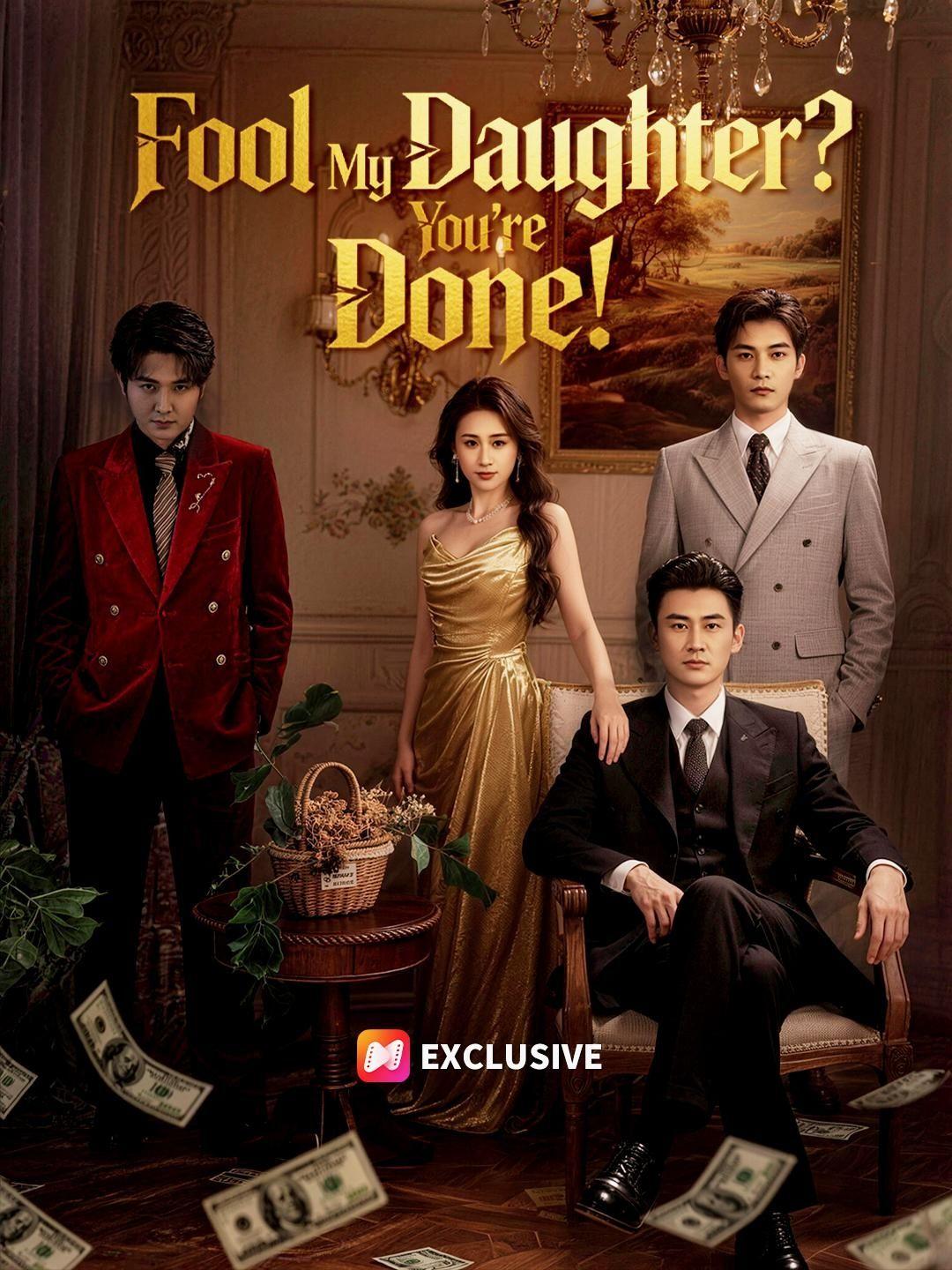
At a joint dinner for both schools, tensions rise between Shirley and Ray as old wounds resurface. Shirley stands her ground against Ray's taunts, with Terrence stepping in to support her, revealing he's the one funding the event, which escalates the conflict.Will Shirley and Terrence's united front against Ray lead to a full-blown confrontation?


Recommended for you


Reborn to Crowned Love: When a Dinner Becomes a Trial by Glance
There is a particular kind of dread that settles in the stomach when you walk into a room where everyone is already watching you—not with malice, but with the quiet intensity of people who’ve been waiting for your arrival to validate their suspicions. That’s the atmosphere that greets Lin Xiao and Chen Mo as they step into the private dining chamber in Reborn to Crowned Love. The air hums with unspoken history, and the polished wood of the round table reflects not just the overhead rings of light, but the fractured expressions of those seated around it. This isn’t just a gathering. It’s a tribunal. And the evidence? A single braid, a wristwatch, a gold bottle, and the way Jingyu’s fingers trace the rim of her teacup like she’s counting seconds until the inevitable collapse. Lin Xiao moves with the grace of someone who’s rehearsed composure, but her eyes tell another story. They flicker—left, right, down—never quite meeting Chen Mo’s gaze for longer than two beats. Why? Because she knows he’s shielding her. Not out of chivalry, but strategy. When he places his hand on her arm—brief, firm, almost imperceptible—it’s not comfort. It’s a signal: *Hold your ground. Don’t flinch.* Chen Mo, for his part, remains unnervingly still. His white shirt is crisp, his tie loose but deliberate, his posture open yet guarded. He doesn’t need to speak to dominate the room; his silence is louder than Li Wei’s outbursts. In Reborn to Crowned Love, power isn’t shouted. It’s worn like a second skin. And Chen Mo wears it like armor. Li Wei, however, wears his vulnerability like a torn jacket. Every gesture he makes is amplified—chopsticks clattering, hands rising in exasperation, eyebrows knitting into a permanent storm cloud. He’s not just angry; he’s *exposed*. He sees the alliances forming in real time: Jingyu’s knowing glance toward Lin Xiao, the way the woman in the lace blouse (let’s call her Mei, for the sake of narrative clarity) leans forward with feigned concern, her red lipstick stark against the muted tones of the room. Mei is fascinating—not because she speaks often, but because when she does, her words land like stones in still water. Her expression shifts from polite interest to thinly veiled disdain in the span of three frames, and it’s clear she’s not here to mediate. She’s here to witness. To remember. To decide later who deserved what. Jingyu, though—Jingyu is the linchpin. She sits between Li Wei and Mei, physically neutral, emotionally omniscient. Her grey cardigan is soft, but her eyes are sharp. When Lin Xiao finally sits, Jingyu doesn’t look relieved. She looks… intrigued. As if the performance has finally begun. Her subtle smirk when Li Wei raises his voice isn’t mockery—it’s recognition. She knows he’s playing a role he didn’t audition for. And when Chen Mo finally speaks—his voice low, measured, carrying the weight of someone used to being obeyed—Jingyu’s fingers stop moving. She doesn’t blink. She *listens*. Because in Reborn to Crowned Love, the most dangerous characters aren’t the ones who shout. They’re the ones who absorb. Then comes the interruption: the man in the black coat. No fanfare. No announcement. Just the soft click of the door, the rustle of fabric, and the unmistakable glint of gold. The bottle he carries isn’t just champagne. It’s a relic. A trophy. A threat. Its presence instantly recalibrates the room’s emotional gravity. Lin Xiao’s shoulders stiffen. Chen Mo’s fingers interlace on the table—a gesture of containment. Li Wei stops mid-sentence, his mouth half-open, caught between outrage and dawning comprehension. And Jingyu? She tilts her head, just slightly, as if hearing a melody only she recognizes. That’s the brilliance of this sequence: the object doesn’t speak, but everyone reacts as if it just delivered a soliloquy. What follows is a masterclass in nonverbal storytelling. The camera lingers on hands: Lin Xiao’s clasped tightly in her lap, Chen Mo’s resting flat on the table like a judge’s gavel, Jingyu’s tracing the edge of her plate, Mei’s adjusting her sleeve—each movement a micro-narrative. The food remains largely untouched. Not because they’re not hungry, but because hunger has been replaced by anticipation. Anticipation of revelation. Of confrontation. Of the moment when the carefully constructed facade cracks, and what lies beneath bleeds into the open. Reborn to Crowned Love understands that in elite circles, violence isn’t physical—it’s linguistic, spatial, temporal. The way someone *takes a seat* matters. The way they *refuse to look away* matters. The way Lin Xiao finally uncrosses her arms and places both hands flat on the table—palms down, fingers spread—isn’t surrender. It’s preparation. She’s grounding herself. Ready to speak. Ready to fight. And when she does—her voice calm, her words precise—the room doesn’t erupt. It *holds its breath*. Because everyone knows: once the truth is spoken aloud, there’s no going back. The crown has been offered. Now, someone must decide whether to wear it—or shatter it. The final wide shot, with all six figures encircling the table like planets orbiting a dying star, is haunting. The lazy Susan sits idle. The dishes are arranged like artifacts in a museum. The gold bottle gleams, indifferent. This isn’t the end of the meal. It’s the beginning of the reckoning. And in Reborn to Crowned Love, reckoning doesn’t come with fireworks. It comes with a sigh, a glance, and the quiet certainty that nothing will ever be the same again. The real question isn’t who wins. It’s who survives the aftermath. Because love, when crowned, doesn’t guarantee glory—it guarantees exposure. And in this room, under these lights, exposure is the most dangerous currency of all.
Reborn to Crowned Love: The Silent Tug-of-War at the Banquet Table
In the opulent, softly lit private dining room of what appears to be a high-end Chinese restaurant—its walls adorned with delicate ink-wash floral screens and modern circular pendant lights—the tension doesn’t come from raised voices or shattered porcelain. It comes from the way Li Wei’s fingers tighten around his chopsticks, the subtle shift in Jingyu’s posture as she turns her head just a fraction too late, and the way Chen Mo’s hand lingers on Lin Xiao’s shoulder before he steps back, as if retracting an unspoken claim. This is not a dinner. It’s a battlefield disguised as hospitality, where every glance is a maneuver, every sip of tea a calculated pause, and every silence heavier than the golden champagne bottle that enters the scene like a herald of impending rupture. Let’s begin with Lin Xiao—the woman in the cream-colored off-shoulder knit top, her hair braided low and elegant, her earrings catching the ambient glow like tiny chandeliers. She stands at first with quiet dignity, flanked by Chen Mo, who wears his white pinstriped shirt with the effortless authority of someone accustomed to being the center of attention—even when he chooses not to speak. His wristwatch gleams under the light, a silent testament to precision, control, and perhaps, impatience. When Lin Xiao speaks, her voice is measured, but her eyes betray a flicker of something raw: frustration, yes, but also resolve. She isn’t pleading. She’s stating facts, as if trying to anchor reality in a room where perception is already slipping. Her arms cross only once—not defensively, but decisively—when the new arrival, the man in the black overcoat holding the gold bottle, makes his entrance. That moment is pivotal. It’s not the bottle itself that unsettles her; it’s the implication it carries: a gift, a bribe, a declaration. In Reborn to Crowned Love, objects are never just objects. They’re proxies for power, memory, or betrayal. Then there’s Jingyu—the woman in the grey cable-knit cardigan with the white collar, her hair pinned with a silver floral clip, her expression shifting like liquid mercury between amusement, curiosity, and quiet judgment. She watches Lin Xiao not with hostility, but with the detached fascination of a scholar observing a rare specimen. When she smiles—just slightly, lips parted, chin tilted—she isn’t smiling *with* anyone. She’s smiling *at* the unfolding drama, as if she’s read the script and knows how Act Two ends. Her dialogue is sparse, but her body language speaks volumes: the way she rests her chin on her knuckles, the slight tilt of her head when Li Wei speaks too loudly, the way her gaze slides past Chen Mo toward the door, anticipating the next disruption. Jingyu is the emotional barometer of the room. When she frowns, you know the temperature has dropped. When she exhales through her nose, you know someone has just crossed a line no one dared name aloud. Li Wei, meanwhile, is the volatile spark. Dressed in a denim jacket over a black turtleneck, his silver chain glinting against dark fabric, he embodies restless energy. He eats, yes—but his chewing is tense, his eyes darting like a cornered animal assessing exits. He gestures with his chopsticks not to serve, but to punctuate accusations. At one point, he points directly—not at Lin Xiao, not at Chen Mo, but *through* them, as if addressing an invisible third party. That’s the genius of Reborn to Crowned Love: the real conflict isn’t always between the people in the frame. Sometimes, it’s with ghosts, with expectations, with the weight of a past that refuses to stay buried. Li Wei’s outbursts aren’t mere anger; they’re desperation masquerading as defiance. He knows he’s outnumbered, outclassed, perhaps even outmaneuvered—but he refuses to vanish quietly. His final stand—rising from the table, chopsticks still in hand, mouth open mid-sentence—is less a climax and more a confession: *I am still here. I still matter.* And then there’s the newcomer—the man in the black coat, whose entrance shifts the gravitational center of the room. He doesn’t announce himself. He simply *appears*, holding the gold bottle like a scepter, his expression unreadable, his posture relaxed but alert. He doesn’t sit. He *positions*. He places the bottle on the table not as an offering, but as a marker—like claiming territory. The way Lin Xiao’s breath catches, the way Chen Mo’s jaw tightens ever so slightly, the way Jingyu’s smile vanishes like smoke—all confirm this man isn’t just a guest. He’s a variable. A wildcard. Possibly a former ally, possibly a rival, possibly someone who holds a key Lin Xiao thought was lost forever. In Reborn to Crowned Love, entrances are never casual. They’re strategic deployments. His presence forces everyone to recalibrate: Who is he loyal to? What does he know? And most importantly—what does he want *now*? The setting itself is a character. The round table, with its lazy Susan at the center, is a perfect metaphor: everything rotates, nothing stays fixed. The dishes—steamed fish, golden dumplings, glossy braised ribs—are arranged with aesthetic precision, yet they remain untouched for long stretches, as if food has become secondary to the psychological feast unfolding above it. The lighting is warm, but the shadows are deep, especially near the doorway where the new man emerges. Even the background decor—the red plum blossoms on the folding screen—echoes the theme: beauty tinged with transience, elegance shadowed by thorns. Nothing here is accidental. Every detail serves the narrative architecture of Reborn to Crowned Love, where love isn’t declared in sonnets, but in the space between a held breath and a spoken word. What makes this sequence so compelling is how it subverts expectation. We anticipate shouting, tears, a dramatic exit. Instead, we get Lin Xiao sitting down with quiet fury, Chen Mo adjusting his cuff as if smoothing over a wrinkle in time, Jingyu sipping her tea with serene detachment, and Li Wei—still standing, still gesturing, still trying to make himself heard in a room that has already decided he’s background noise. The true tragedy isn’t that they’re at odds. It’s that they all understand each other perfectly—and yet, none of them can bridge the chasm between what they feel and what they’re willing to say. Reborn to Crowned Love thrives in that liminal space: the moment after the truth is known, but before it’s acknowledged. The moment when love has been crowned—not with laurels, but with consequences. And as the camera pulls back in the final wide shot, revealing the full circle of faces around the table, we realize: no one leaves unchanged. Not even the bottle of gold champagne, now resting beside the fish, gleaming like a silent verdict.