



Watch Dubbed
Unveiled Rivalries
Shirley Shaw's public admiration for Ray Perry sparks jealousy and rivalry, especially when Ray's performance on the field outperforms Terrence, leading to a tense confrontation.Will Shirley's loyalty to Ray deepen the rift between her and her critics?


Recommended for you


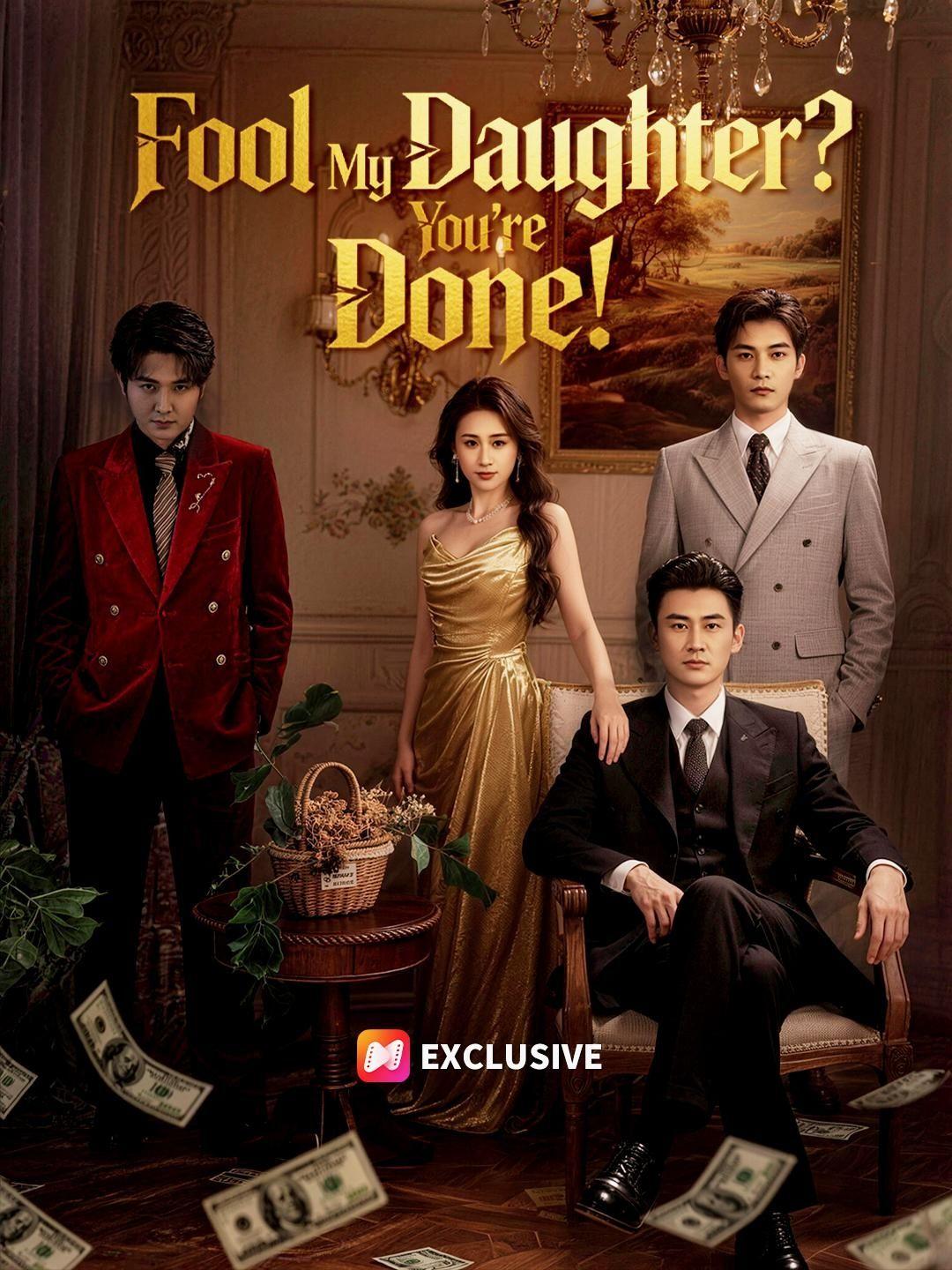
Reborn to Crowned Love: When the Crowd Becomes the Real Protagonist
Let’s talk about the audience in *Reborn to Crowned Love*—not the extras, not the background noise, but the *people* who sit in those red stadium chairs like sentinels of emotion. Because in this short film, the true narrative engine isn’t the players on the court; it’s the women in the stands, their expressions shifting like weather systems across a single quarter. Take the girl in the gray cable-knit cardigan—let’s call her Lin Mei, though the film never names her. She enters the frame at 00:36, lips parted, eyes tracking Number 24 with the intensity of someone decoding a love letter. Her hair is half-up, pinned with a delicate silver clip; her earrings, pearl-and-jade drops, sway with every tilt of her head. She doesn’t shout. She doesn’t wave a bat. She *observes*. And when Zhao Yintong approaches the court, Lin Mei’s breath catches—not in jealousy, but in recognition. She knows this dance. She’s seen it before, maybe lived it. At 01:28, after Number 16 sinks a clean layup, Lin Mei brings her hands together in front of her chest, fingers interlaced, smiling so wide her eyes crinkle at the corners. It’s not fandom. It’s *relief*. As if she’s been waiting for this moment—not for the basket, but for the confirmation that yes, the world still allows for grace under pressure. Beside her sits another woman, in a floral dress layered under ivory lace—a soft contrast to Lin Mei’s structured elegance. She holds a folded red fan, tapping it lightly against her knee, her gaze darting between the court and her friend. When Lin Mei claps, she doesn’t join in immediately. She watches Lin Mei first, then smiles, slow and knowing. Their dynamic is the quiet heartbeat of *Reborn to Crowned Love*: two women, different styles, same emotional rhythm. They don’t need dialogue to communicate. A glance, a sigh, a shared smirk when Number 24 stumbles and falls—*again*—at 01:17. That fall isn’t just physical; it’s symbolic. He lands hard, palm scraping wood, and for a beat, the gym holds its breath. But Lin Mei doesn’t gasp. She leans forward, elbows on knees, and whispers something to her friend. The camera zooms in: her lips move, but no sound comes through. Yet we *know* what she says. Because in *Reborn to Crowned Love*, silence speaks louder than cheers. Meanwhile, higher up in the bleachers, two girls clutch green inflatable bats, their faces frozen in mock concern. One wears a white cardigan over a striped top; the other, a black hoodie with white lettering. They’re the comic relief, yes—but also the chorus. Their exaggerated reactions (“Oh no!” “He’s down!”) mirror the audience’s own internal monologue, giving permission to feel both invested and slightly ridiculous. And then there’s the woman in the beige coat—the one who starts it all. Zhao Yintong. Her entrance is cinematic: heels clicking on polished wood, banner held high, eyes locked on Number 24 like he’s the only person in the room. But watch her hands. At 00:29, she grips the banner tighter when he turns away. At 00:44, she lowers it slightly, as if shielding herself. By 01:18, when she shouts his name—*not* his number, but his *name*—her voice cracks just enough to betray her. This is where *Reborn to Crowned Love* transcends genre. It’s not a sports film. It’s a study in proximity. How close can two people stand without touching? How long can a look last before it becomes a promise? The gym itself becomes a character: the orange walls, the metal railings, the faint smell of rubber and disinfectant. Even the scoreboard matters—the manual flip cards, the way a hand swipes ‘51’ to ‘52’ with mechanical indifference, while below, hearts race. And let’s not forget Number 16 of the Braves, the quiet counterpoint to Number 24’s charisma. He drinks water, wipes his brow, exchanges a few words with his teammate (Number 23, who holds the ball like it’s a talisman), and yet his attention keeps drifting—not to the game, but to the stands. To Lin Mei. To the girl in lace. He sees them seeing *him*, and it unsettles him. At 01:04, he leans in to whisper something to Number 24, hand covering his mouth, eyes flicking toward the audience. What did he say? The film leaves it open. Maybe it was strategy. Maybe it was warning. Or maybe it was, *She’s watching you again.* That ambiguity is *Reborn to Crowned Love*’s greatest strength. It trusts the viewer to fill the gaps, to read the micro-expressions, to feel the weight of a held breath. When the final sequence arrives—Lin Mei standing, hands clasped, tears glistening but not falling—we understand: this wasn’t about basketball. It was about witness. About being seen, truly seen, in a world that moves too fast to notice. The players score points. The crowd cheers. But the real victory? It belongs to the women in the stands, who remember every stumble, every smile, every time someone chose to stay on the court—even when it hurt. *Reborn to Crowned Love* doesn’t end with a trophy. It ends with a shared glance, a crumpled banner, and the quiet certainty that love, like a well-timed pass, only works when both parties are ready to receive it. And in that readiness, we find the most radical act of all: hope.
Reborn to Crowned Love: The Water Bottle That Changed Everything
In the opening frames of *Reborn to Crowned Love*, we’re dropped into a gymnasium buzzing with anticipation—not for a championship, but for something far more delicate: the quiet collision of two worlds. Zhao Yintong, in her beige trench coat with that oversized black bow collar, stands like a figure from a vintage romance novel—polished, poised, and utterly out of place among the sweat-stained jerseys and squeaking sneakers. Her earrings, long silver teardrops, catch the fluorescent light as she watches Zhao Yintong—no, wait—*Zhao Yintong* is the name on the fan banner she holds later, but here, in this moment, she’s just *her*, the woman who walks onto the court not to cheer, but to *converse*. And the man she approaches? Number 24 of the Falcons, his jersey crisp, his hair slightly damp at the temples, holding a water bottle like it’s a sacred relic. He takes a sip, slow, deliberate, eyes never leaving hers. It’s not thirst he’s quenching—it’s tension. The camera lingers on his fingers wrapped around the plastic, the way he twists the cap just once before handing it back, not to the bench, but to *her*. A gesture so small it could be missed, yet it sets the entire scene humming. Behind them, spectators shift in red stadium seats—some holding green inflatable bats adorned with stars, others clutching printed banners with phrases like ‘FIGHTING’ and ‘BUFF’, their faces a mosaic of curiosity, amusement, and mild judgment. One girl in a lace cardigan whispers to her friend; another, in gray knit, bites her lip, eyes wide. They’re not watching basketball—they’re watching *this*. The unspoken contract between Zhao Yintong and Number 24 isn’t about points or plays. It’s about timing. About how he pauses mid-sentence when she tilts her head, how she exhales—just barely—when he smiles, not broadly, but with the corner of his mouth, the kind that says *I see you, and I’m not scared*. This is where *Reborn to Crowned Love* excels: it doesn’t need a scoreboard to tell us who’s winning. The real game happens in the half-second between breaths. When Number 16 of the Falcons steps up beside him, arms crossed, expression unreadable, the dynamic shifts again—not into rivalry, but into triangulation. Three people, one silent negotiation. Is Number 16 a teammate? A rival? A friend who knows too much? His gaze flicks between them, calculating, while Zhao Yintong remains serene, her posture relaxed but her fingers tight around the edge of her banner. Later, during actual gameplay, the camera cuts to a fast break: Number 24 drives hard, gets fouled, crashes to the floor with a thud that echoes in the silence before the crowd erupts. He lies there, palm scraped raw, blood already beading at the knuckle. And who rushes first? Not the coach. Not the medic. Number 16 drops to one knee, pressing a towel to the wound, murmuring something low and urgent. Zhao Yintong, meanwhile, has already moved—not toward the court, but toward the scorer’s table, where a hand flips the manual scoreboard from 51 to 52. A detail most would overlook, but in *Reborn to Crowned Love*, every number matters. Because love, like basketball, is built on increments: one point, one glance, one shared bottle of water. The film understands that the most electric moments aren’t the dunks or the three-pointers—they’re the seconds after the whistle, when everyone else is shouting, and two people are just breathing in the same air, wondering if they should speak. Zhao Yintong’s smile, when it finally breaks across her face at 00:21, isn’t joy—it’s surrender. She’s been holding her breath since frame one, and now, finally, she lets go. The audience reacts in waves: the girl in gray claps her hands together like she’s praying; the one in lace fans herself with a red paper fan, cheeks flushed. They’re not just fans—they’re witnesses. And *Reborn to Crowned Love* makes us complicit in their witnessing. We lean in when Number 24 winces as he stands, when Zhao Yintong’s hand hovers near his elbow but doesn’t touch. We feel the weight of what’s unsaid—the history in his hesitation, the hope in her stillness. This isn’t sports drama. It’s emotional archaeology. Every dribble, every pass, every fall is a layer being peeled back. The gym’s orange walls, the faded banners reading ‘Unity, Friendship, Cooperation’, the distant hum of a PA system—all of it forms a stage where personal revolutions unfold in slow motion. And when the final shot shows Zhao Yintong walking off the court, her banner now crumpled in one hand, her other hand brushing a stray hair behind her ear, we realize: the game was never about winning. It was about showing up. About choosing to stand in the arena, even when your heart feels like it’s been knocked loose. *Reborn to Crowned Love* doesn’t give us answers. It gives us questions—and the courage to hold them, just like Number 24 holds that water bottle: carefully, reverently, as if it might shatter at any moment.