



Power Struggle at the Gala
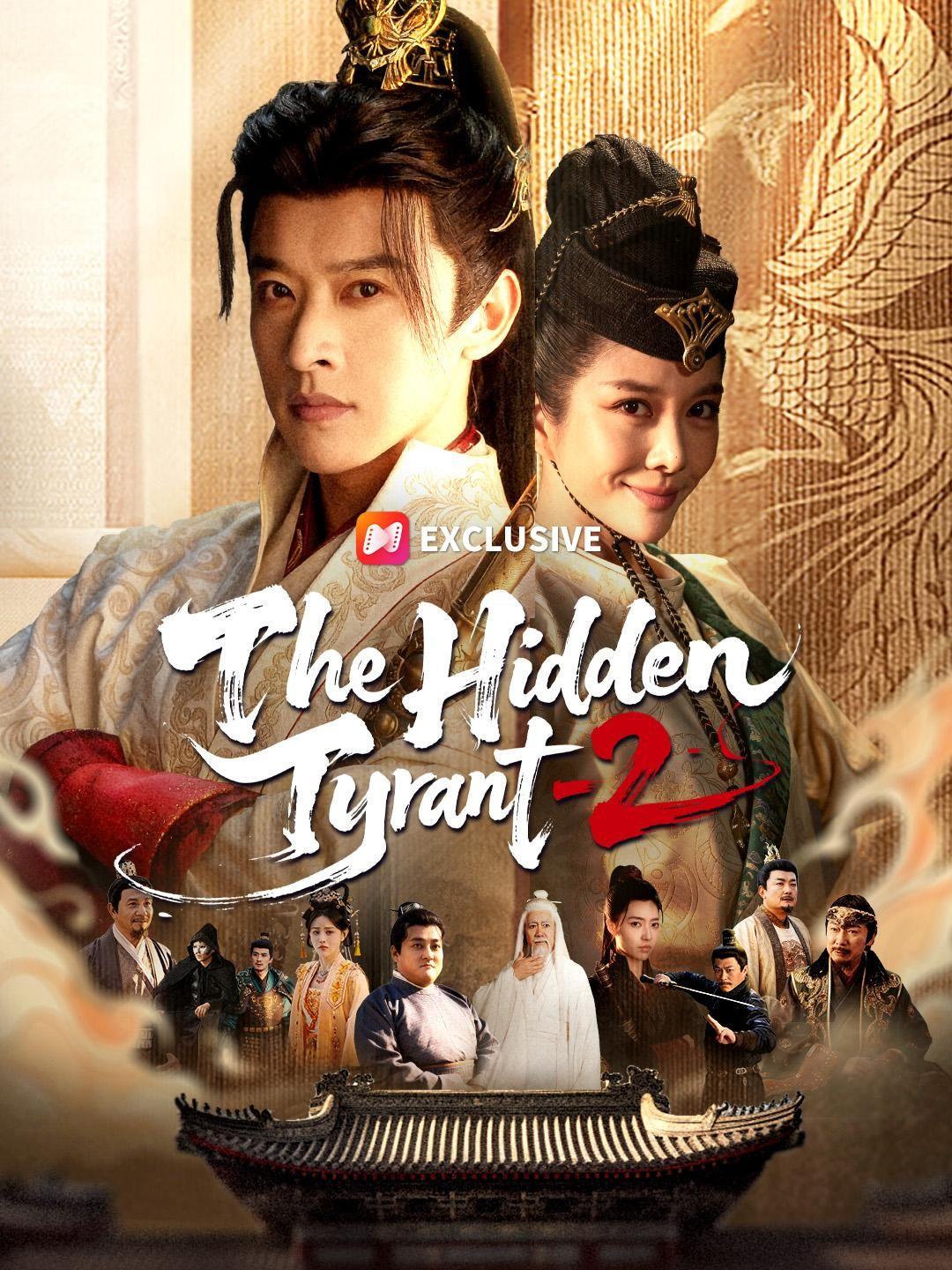
At the exclusive Phoenix Rise gala hosted by Skyline Group, tensions rise as Luke Nielsen confronts his adversaries, revealing his true identity as the heir to Chairman Nielsen's empire and making a bold move to revoke the top president position of the Chamber of Commerce in favor of his foster father, Allan Schmidt.Will Luke's declaration as the heir solidify his power, or will it ignite a fiercer battle for control within the Skyline Group?


Recommended for you


Rich Father, Poor Father: When the Crutch Speaks Louder Than the Suit
Let’s talk about the crutch. Not as a prop, not as a disability marker—but as a character. In Rich Father, Poor Father, that silver-handled cane with the yellow grip isn’t just aiding mobility; it’s a narrative fulcrum, a silent witness to generational fracture. Watch how Mr. Zhang holds it—not like a burden, but like a scepter. His grip is firm, his posture upright despite the limp. He doesn’t shuffle; he *advances*. And when Liu Wei places a hand on his elbow—not to steady him, but to anchor him—their connection reads louder than any dialogue. This isn’t caretaking. It’s alliance. It’s defiance wrapped in quiet loyalty. The scene in the banquet hall isn’t about confrontation; it’s about *reintroduction*. Ms. Li, elegant in black silk with that delicate bow at her collar, doesn’t approach them head-on. She circles, assessing, her gaze lingering on the crutch’s worn rubber tip. She knows its history. Or suspects it. Her earrings—star-shaped, dangling—catch the light each time she tilts her head, like radar pings scanning for truth. Meanwhile, Mr. Chen in the olive suit plays the role of amused outsider, but his eyes betray him. Every time Liu Wei speaks—or doesn’t speak—Mr. Chen’s expression shifts: amusement → skepticism → reluctant respect. He’s the audience surrogate, the one who thinks he’s above it all until the story pulls him under. His laugh at minute 52 isn’t dismissive; it’s the sound of someone realizing the game is deeper than he assumed. And when he crosses his arms later, watch his left wrist—the watch is expensive, yes, but the strap is scuffed. A detail. A crack in the facade. Rich Father, Poor Father excels at these tiny fractures: the frayed cuff on Mr. Zhang’s jacket, the slight asymmetry in Madam Huang’s hairpin, the way Liu Wei’s leather jacket catches the light differently on the left shoulder—as if worn more heavily there, from years of carrying something unseen. The hallway sequence (00:01–00:17) is masterclass in visual storytelling. No dialogue needed. Just four men walking, and yet you feel the weight of expectation, the unspoken rivalries, the alliances formed in silence. Mr. Lin’s animated hands? He’s selling a vision. Mr. Zhou’s neutral face? He’s evaluating ROI. Mr. Wu’s steady pace? He’s already decided. And behind them, the young men in black—silent, observant, ready to act. One carries the red tray like it’s sacred. Is it food? A gift? A warning? The ambiguity is intentional. Rich Father, Poor Father refuses to spoon-feed. It trusts you to read the subtext in the set design: the gold-leaf throne in the background, the red drapes like bloodstains, the blue carpet pattern resembling shattered glass. Then comes the pivot: Ms. Li’s question—‘So he’s really your father?’—delivered not with shock, but with icy precision. Her eyebrows don’t raise; her chin lifts. That’s the difference between surprise and suspicion. Liu Wei doesn’t flinch. He exhales, slow, and says, ‘He raised me.’ Two words. No qualifiers. No apologies. And in that moment, Mr. Zhang’s eyes glisten—not with tears, but with the relief of being *seen*, finally, for what he is: not a broken man, but a builder. The crutch isn’t weakness; it’s proof he kept walking after the fall. Madam Huang’s reaction seals it: she steps forward, not toward Liu Wei, but toward Mr. Zhang. Her hand hovers near his sleeve, then retreats. She wants to touch him, to confirm he’s real, but decorum holds her back. That hesitation speaks volumes. In Rich Father, Poor Father, touch is privilege. Words are currency. Silence is power. What’s brilliant is how the show avoids melodrama. No shouting matches. No dramatic reveals with thunderclaps. Instead, tension builds in micro-expressions: Liu Wei’s thumb rubbing the jade bi pendant when stressed, Mr. Chen’s fingers tapping his thigh in Morse code rhythm, Ms. Li’s lips pressing into a thin line when she hears the word ‘inheritance.’ Even the lighting shifts subtly—from warm gold in the hallway to cooler tones in the hall, as if the emotional temperature has dropped. The camera loves close-ups: the sweat bead on Mr. Zhang’s temple, the faint scar near Liu Wei’s eyebrow, the way Madam Huang’s shawl slips just slightly off her shoulder when she’s agitated. And let’s not overlook the symbolism of clothing. Mr. Zhang’s utilitarian jacket vs. Liu Wei’s textured leather vs. Mr. Chen’s bespoke velvet—it’s a visual triad of values: survival, rebellion, assimilation. Ms. Li’s dress? Structured, feminine, but with sharp shoulders—she’s softness armored in elegance. Madam Huang’s qipao-inspired top, encrusted with sequins and cutouts, whispers tradition reimagined. Every stitch tells a story. Rich Father, Poor Father isn’t just about who has money; it’s about who *owns* the narrative. When Liu Wei finally says, ‘He didn’t give me his name. He gave me his word,’ the room goes still. Not because it’s poetic—but because it’s true. In a world where titles mean everything, integrity is the rarest inheritance. The final shot—Mr. Zhang turning away, crutch clicking on marble, Liu Wei half a step behind—not following, but *matching* his pace—that’s the thesis of the entire series. Rich Father, Poor Father isn’t a morality play. It’s a mirror. It asks: when legacy is contested, who do you stand beside? The man with the title? Or the man with the truth? And more importantly—what are you willing to carry, even if it weighs you down? The crutch doesn’t define Mr. Zhang. It *accompanies* him. Like loyalty. Like memory. Like the quiet, unbreakable thread between fathers and sons—even when the bloodline is blurred, and the path is uneven. That’s why we keep watching. Not for the suits. Not for the halls. But for the man who walks with dignity, one deliberate step at a time.
Rich Father, Poor Father: The Hallway That Split Two Worlds
The opening sequence of Rich Father, Poor Father doesn’t just walk—it strides with purpose, like a slow-motion declaration of class warfare disguised as corporate protocol. Three men in tailored suits advance down a polished corridor, their footsteps echoing off marble and wood-paneled walls. The man on the left—let’s call him Mr. Lin, based on his confident gesticulation and striped tie—speaks animatedly, hands slicing the air as if conducting an orchestra of invisible subordinates. His tone is brisk, rehearsed, almost performative. Beside him, the central figure—Mr. Zhou, glasses perched low on his nose, dark blazer over a striped shirt—listens with the stillness of someone who already knows the script but humors the speaker anyway. His right hand holds a rolled document, perhaps a contract, perhaps a will; its weight seems symbolic. To his right, Mr. Wu, double-breasted navy suit, red tie, walks with quiet authority, eyes forward, lips sealed. Behind them, two younger men in black traditional jackets follow like silent sentinels, one carrying a red-and-gold tray draped in ceremonial cloth—a detail that hints at ritual, not routine. This isn’t just a hallway; it’s a stage where power is measured in stride length and shoulder alignment. Then, the camera lingers on the floor—those glossy tiles, each black square a punctuation mark in the sentence of their procession. The lighting is warm but clinical, like a museum exhibit labeled ‘Elite Behavior, circa 2024.’ You can almost smell the leather polish and faint trace of sandalwood cologne. What’s striking isn’t the opulence—it’s the *distance* between them. Mr. Lin talks to Mr. Zhou, but Mr. Wu doesn’t glance sideways. He’s not excluded; he’s *waiting*. There’s hierarchy in the spacing, in the way Mr. Zhou occasionally glances at his watch—not checking time, but asserting control over tempo. When Mr. Lin raises both hands in mid-sentence, palms up, it’s not surrender—it’s invitation to agreement, a rhetorical trap disguised as openness. And Mr. Zhou? He nods once. Just once. Enough to keep the charade alive. Cut to the grand hall—where the real drama ignites. A woman in a black mermaid dress, Ms. Li, stands arms crossed, pearl earrings catching light like tiny moons. Her expression shifts from amused detachment to sharp inquiry in under two seconds. She’s not just observing; she’s *auditing*. Beside her, a younger man in olive-green velvet—Mr. Chen—shifts his weight, one hand in pocket, the other resting near his belt buckle, which bears a discreet Gucci logo. He’s stylish, yes, but his posture screams ‘I belong here, but I’m watching you.’ Then enters the pivot point: a man in a worn olive jacket, leaning on a crutch, his sleeve slightly frayed at the cuff. His name? Let’s say Mr. Zhang. He’s flanked by a younger man in a crocodile-textured leather jacket—Liu Wei—who grips his arm not supportively, but protectively, almost possessively. Liu Wei wears a jade bi pendant, ancient symbol of heaven and unity, yet his stance is modern, defiant. The contrast is jarring: old-world injury meets new-world armor. Ms. Li speaks first—not loudly, but with precision. Her voice carries the cadence of someone used to being heard without raising volume. She gestures toward Mr. Zhang, not unkindly, but with the curiosity of a curator examining a disputed artifact. Meanwhile, the older woman in the white embroidered shawl—Madam Huang—steps forward, her face a mosaic of concern, amusement, and something deeper: recognition. Her eyes flick between Liu Wei and Mr. Zhang, and for a split second, her lips part as if about to say something long buried. That moment—just before speech—is where Rich Father, Poor Father earns its title. It’s not about wealth alone; it’s about *inheritance*, literal and emotional. Who carries the legacy? The man with the crutch? The one with the pendant? The one in the double-breasted suit who never speaks? Mr. Chen, the olive-suited observer, finally breaks silence—not with words, but with laughter. Not mocking, not nervous, but *relieved*. As if the tension had become so thick it needed puncturing. His laugh echoes, and Madam Huang joins him, her smile wide, genuine, tinged with nostalgia. Liu Wei doesn’t smile. He watches Mr. Zhang, whose expression remains unreadable—until he looks down at his crutch, then back at Liu Wei, and gives the faintest nod. That’s the core of Rich Father, Poor Father: the unspoken contracts, the debts carried in silence, the way a single gesture can rewrite decades. Later, when Ms. Li turns to Liu Wei and says, ‘You really think he’ll believe that?’—her tone laced with challenge—the camera tightens on his face. His jaw tightens. He doesn’t answer. He doesn’t need to. The pendant swings slightly against his chest, catching light like a compass needle pointing north. In this world, truth isn’t spoken; it’s worn, carried, endured. Mr. Zhang’s crutch isn’t just support—it’s testimony. Liu Wei’s jacket isn’t just fashion—it’s armor. And the hallway they walked earlier? It wasn’t leading to a meeting room. It was leading to this exact collision of past and present, where bloodlines are tested not by DNA, but by who steps forward when the music stops. Rich Father, Poor Father thrives in these micro-moments: the way Madam Huang adjusts her shawl before speaking, the way Mr. Chen’s watch gleams under the chandelier, the way Liu Wei’s fingers twitch near his pocket—perhaps holding a phone, perhaps a photo, perhaps nothing at all. The show understands that power isn’t shouted; it’s held in the space between breaths. When Mr. Zhang finally speaks—softly, in Mandarin, though the subtitles render it as ‘Some debts don’t expire’—the room doesn’t gasp. They *lean in*. Because in this universe, legacy isn’t inherited. It’s reclaimed. And Rich Father, Poor Father makes you wonder: which side of the crutch are you standing on?