



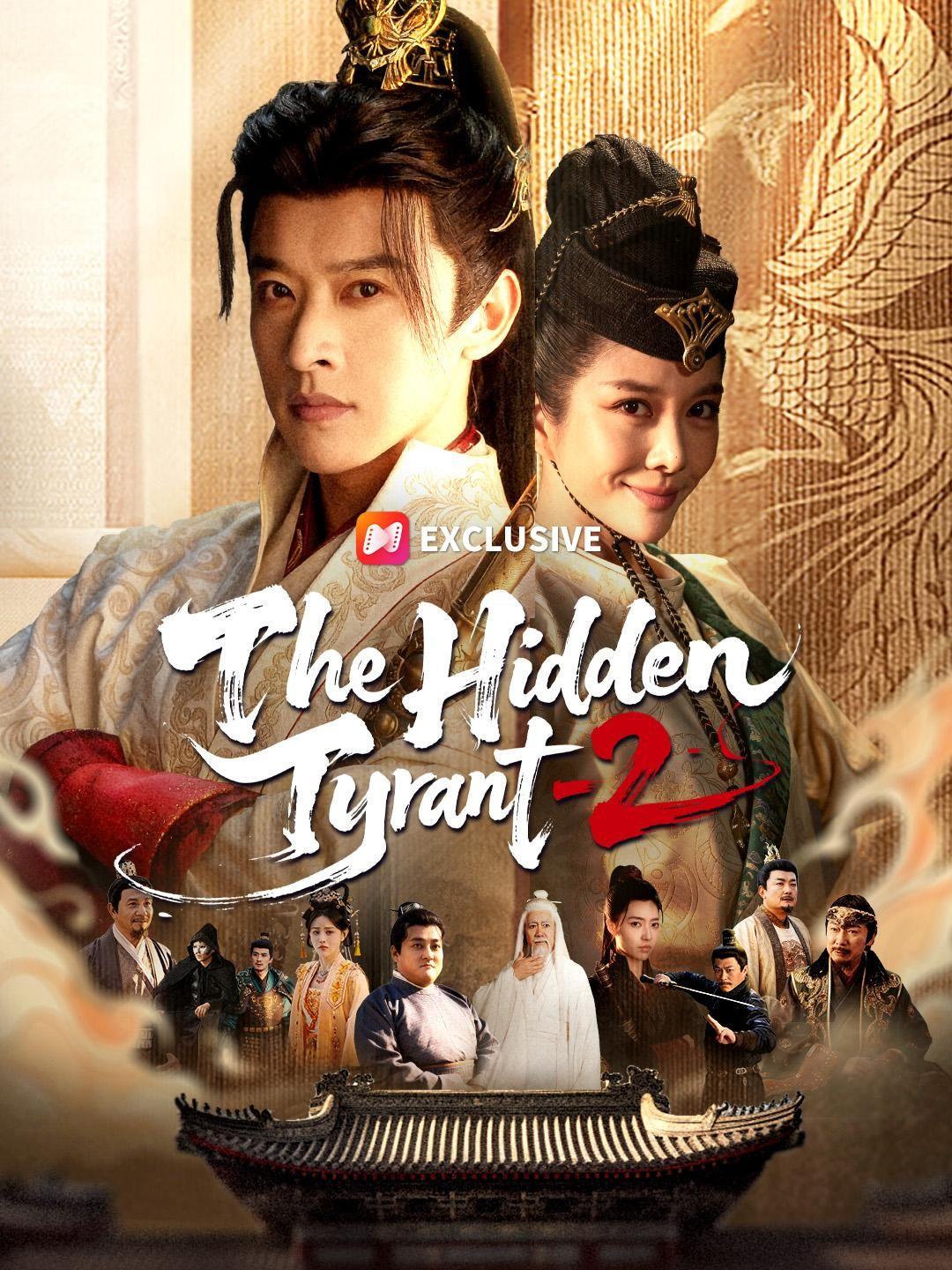
The Revelation of the Lord
Luke's identity as the Lord of North Ridge is revealed, causing disbelief and conflict among those who knew him only as the son-in-law of the Rays. The truth about his past and his formidable reputation begins to unfold, leading to a confrontation with those who doubt his true power.Will Luke's enemies finally acknowledge his true identity, or will they continue to underestimate the Lord of North Ridge?


Recommended for you


Rich Father, Poor Father: Blood on the Banquet Carpet
The first thing you notice isn’t the blood. It’s the carpet. Deep navy blue, woven with golden vines that twist like serpents, swallowing the light. It’s expensive. Too expensive for what’s about to happen. And yet, it’s the perfect stage for *Rich Father, Poor Father*—a title that sounds like a moral fable but plays out like a noir thriller filmed inside a luxury hotel ballroom. The camera lingers on details: a dropped champagne flute, still bubbling at the rim; a man’s cufflink, shaped like a dragon’s eye, half-buried in the pile; the faint smear of red near the base of the podium, where a ceremonial bell hangs silent, as if even it refuses to ring. Enter Lin Wei again—not as the groom, but as the question mark. His blazer is pristine, but his shirt is slightly rumpled at the collar, and his tie hangs crooked, as though he adjusted it mid-panic. He keeps glancing over his shoulder, not at the guests, but at the service corridor behind the stage. His eyes widen when he sees Chen Mo approaching—not walking, but *advancing*, each step measured, deliberate, like a predator testing the wind. Chen Mo’s leather jacket creaks softly with movement, the jade bi disc swaying against his sternum like a pendulum counting down. There’s blood on his lip, yes, but also on his left thumb, wiped hastily across his jeans. He doesn’t wipe it clean. He lets it stain. A signature. A warning. Meanwhile, Xiao Yu and Madam Su are locked in a silent crisis. Madam Su’s face is a map of decades compressed into seconds: shock, grief, dawning horror. She clutches Xiao Yu’s hands like they’re the last life rafts on a sinking ship. Xiao Yu, younger but sharper, scans the room—not with fear, but with assessment. Her gaze lands on Jiang Yan’s entourage entering through the double doors, and her breath catches. Not because of the guards. Because of the woman leading them. Jiang Yan moves like water given form—fluid, relentless, impossible to grasp. Her qipao isn’t traditional; it’s reimagined, fused with punk aesthetics: metal rings at the hem, asymmetrical draping, a sash tied like a martial artist’s belt. In her right hand, she carries not a bouquet, but a folded fan—black lacquer, inlaid with mother-of-pearl dragons. When she snaps it open, the sound cuts through the ambient murmur like a whip crack. Lin Wei tries to speak. His voice cracks. “This isn’t supposed to happen today.” Chen Mo stops three feet away. He doesn’t look at Lin Wei. He looks past him—to Li An, who stands near the floral arch, veil half-lifted, watching everything with unnerving calm. Her makeup is flawless, her posture regal, but her fingers are curled into fists at her sides. She’s not passive. She’s coiled. And when Jiang Yan reaches the center of the room, Li An finally moves—not toward her, but *around* her, circling like two dancers in a deadly waltz. “Did you tell him?” Jiang Yan asks, voice low, melodic, dangerous. Li An smiles. “I told him enough.” That’s when the truth surfaces—not in dialogue, but in flashback fragments the editing stitches in like scars: a childhood photo (blurred, but recognizable—Lin Wei and Chen Mo, maybe eight years old, standing beside a man in a military coat); a newspaper clipping (partially obscured, but the headline reads “Fire at Longxi Manor, 2003”); a locket opened to reveal two tiny portraits, one labeled *Father*, the other *Uncle*. *Rich Father, Poor Father* isn’t about class. It’s about erasure. About who gets remembered, and who gets buried under layers of polite fiction. Chen Mo finally speaks. “You let him wear the ring.” Li An touches her left hand—where a simple platinum band gleams. “I let him believe he earned it.” The room holds its breath. Even the fallen men on the floor seem to tense. Lin Wei staggers back, hand flying to his pocket—where, we now see, rests a small velvet box. He pulls it out. Opens it. Inside: not a wedding ring, but a key. Iron, rusted at the edges, shaped like a phoenix’s wing. He stares at it, then at Chen Mo, then at Li An—and realization hits him like a physical blow. His knees buckle. He doesn’t fall, but he sways, gripping the podium for support. His mouth opens, but no sound comes out. Just air. Just betrayal. Jiang Yan steps forward. She doesn’t take the key. She doesn’t need to. She simply says, “The vault under the old library. Third tile from the east. You know the code.” Chen Mo’s expression doesn’t change. But his hand drifts toward his jacket inner pocket. And in that micro-second, you understand: the blood on his lip wasn’t from a fight. It was from biting his tongue—holding back words that could unravel everything. The genius of *Rich Father, Poor Father* lies in its restraint. No explosions. No car chases. Just six people in a room, and the weight of twenty years pressing down on them like a collapsing ceiling. The director uses shallow focus masterfully: when Lin Wei speaks, the background blurs into abstract gold swirls; when Jiang Yan walks, the camera tracks her feet first, then rises slowly, forcing us to see the world from her perspective—grounded, dominant, unshaken. The lighting shifts subtly: warm amber during the fake civility of the reception, then cooler, harsher whites as tensions rise, until the final confrontation is lit like an interrogation room—flat, unforgiving, stripping away all pretense. And the bride? Li An remains the enigma. She never raises her voice. She never gestures wildly. Yet she commands the scene more than anyone. When she finally uncrosses her arms and reaches for the fan Jiang Yan offers—not to take it, but to *touch* it, fingertips grazing the pearl inlay—you feel the shift in power. It’s not transfer. It’s acknowledgment. She sees Jiang Yan not as a rival, but as an equal. A sister in arms, forged in the same fire of inherited trauma. The last shot is a close-up of the carpet. The bloodstain spreads, slow and inevitable, soaking into the golden vine pattern. It doesn’t ruin the design. It becomes part of it. Like the story itself: messy, violent, beautiful in its broken symmetry. *Rich Father, Poor Father* doesn’t offer redemption. It offers reckoning. And in that reckoning, we see ourselves—not as heroes or villains, but as inheritors of choices we didn’t make, standing in rooms too grand for our truths, waiting for someone to ring the bell… even though we already know what’s inside.
Rich Father, Poor Father: The Veil and the Sword
In a grand banquet hall draped in gold filigree and crimson velvet, where the air hums with tension like a tuning fork struck too hard, *Rich Father, Poor Father* unfolds not as a simple wedding drama—but as a psychological opera staged on the edge of collapse. The opening frames fixate on Lin Wei, the groom-to-be, dressed in an off-white double-breasted blazer with a collar patch of gray wool—a subtle but telling detail, as if his identity itself is layered, mismatched, stitched together from disparate parts. His tie, striped in beige and taupe, looks like something borrowed from a father he never truly knew. His eyes dart, pupils dilating at every shift in the room’s energy; he doesn’t speak much, but his mouth opens and closes like a fish gasping for air—each breath a silent plea for control. He stands near the stage, where a massive LED screen glows with stylized Chinese characters that read ‘Phoenix and Dragon’—a traditional motif for marital harmony, yet here it feels ironic, almost mocking, given what’s about to unfold. Then there’s Chen Mo, the man in the black crocodile-textured leather jacket, blood smeared at the corner of his lip like a badge of recent violence. He wears a jade bi disc pendant, ancient and heavy, hanging low over his chest—a symbol of heaven, of authority, of lineage. His posture is relaxed, almost bored, but his gaze is surgical. He doesn’t blink when others flinch. When he walks past the two women—Madam Su, the older woman in the white cropped blazer over a beaded cheongsam, and Xiao Yu, her daughter in sleek black silk—he doesn’t acknowledge them. Yet they recoil. Madam Su grips Xiao Yu’s wrist so tightly her knuckles whiten, whispering something urgent, her voice trembling beneath the music. Xiao Yu’s expression shifts between fear and fascination, her lips parted as if she’s memorizing Chen Mo’s silhouette for later use. This isn’t just discomfort—it’s recognition. She knows him. Or she thinks she does. The bride, Li An, enters like a ghost stepping into daylight. Her gown is modern, high-necked, sequined, with delicate strands of pearls cascading down her arms like frozen tears. A tiara rests lightly on her hair, not crowning her so much as framing her face like a relic in a museum case. She doesn’t smile at Lin Wei. She watches him, then turns her head slowly toward Chen Mo—and for a heartbeat, her lips curve upward. Not warm. Not cruel. Just knowing. That tiny gesture detonates the room’s fragile equilibrium. Lin Wei’s jaw tightens. His hand clenches at his side, revealing a black beaded bracelet—perhaps a gift, perhaps a talisman. He exhales sharply, and in that moment, you realize: he’s not the protagonist. He’s the pawn. Cut to wide shot: the floor is littered with bodies. Not dead—no, not yet—but collapsed, unconscious, or feigning. Men in suits lie sprawled across the ornate carpet, limbs twisted, faces slack. Guests stand frozen, some clutching drinks, others covering mouths, all staring toward the stage where Lin Wei, Chen Mo, and Li An now form a triangle of unspoken history. The camera circles them like a vulture, capturing the sweat on Lin Wei’s temple, the way Chen Mo’s fingers twitch near his pocket (is there a weapon? A phone? A photo?), and how Li An crosses her arms—not defensively, but possessively, as if claiming space no one dared contest before. Then, the doors swing open. A new figure strides in: Jiang Yan, clad in a charcoal-gray qipao with silver cloud motifs, thigh-high slit revealing black lace stockings and chunky platform boots. Behind her, four men in identical black suits and mirrored sunglasses flank her like sentinels. One carries a long black case. Another holds a walkie-talkie. Jiang Yan doesn’t rush. She doesn’t shout. She walks with the rhythm of someone who has rehearsed entrance and exit a thousand times. Her earrings—long, dangling silver daggers—catch the light with each step. As she approaches the center aisle, the crowd parts without being told. Even Chen Mo lifts his chin slightly, a flicker of respect—or calculation—in his eyes. Lin Wei stumbles back half a step. His voice, when it finally comes, is thin: “Who… who is she?” No one answers. But Madam Su lets out a choked sob. Xiao Yu whispers, “It’s her. The one from the north.” Ah. So *that’s* the missing piece. Jiang Yan isn’t just a guest. She’s the counterweight. The wildcard. The daughter of the man who built the empire Chen Mo now inherits—or usurps. *Rich Father, Poor Father* isn’t about wealth disparity alone; it’s about legacy as inheritance, debt, and curse. Lin Wei’s father may have been poor in money but rich in hope; Chen Mo’s father was rich in power but poor in love; Jiang Yan’s father? He vanished—leaving behind only debts, a sword, and a daughter trained to wield both. The climax arrives not with gunfire, but with silence. Jiang Yan stops three paces from Li An. She opens the case. Inside lies a jian—straight, elegant, wrapped in black silk. She draws it slowly, the steel catching the chandelier’s glow like a shard of moonlight. Then she offers the hilt to Li An. Li An doesn’t take it. Instead, she smiles—full, radiant, terrifying—and says, “You’re late. I’ve already chosen.” Chen Mo steps forward. Not toward Li An. Toward Jiang Yan. His voice is low, rough: “You shouldn’t have come.” Jiang Yan tilts her head. “You left the door open.” And in that exchange, the entire narrative pivots. *Rich Father, Poor Father* reveals its true structure: it’s not linear. It’s cyclical. Every generation repeats the same mistake—trusting the wrong person, loving the wrong heir, believing the ceremony will sanctify the sin. The wedding isn’t the beginning. It’s the reckoning. The guests aren’t spectators. They’re witnesses to a trial no court would dare hold. What makes this sequence unforgettable isn’t the costumes or the set design—though both are immaculate—but the micro-expressions. Lin Wei’s panic isn’t theatrical; it’s visceral, the kind that makes your own palms sweat. Chen Mo’s stillness isn’t indifference; it’s containment, like a dam holding back a flood. Jiang Yan’s entrance isn’t flashy; it’s inevitable, like gravity pulling a stone downhill. And Li An? She’s the calm at the eye of the storm, the only one who sees the whole board. When she folds her arms again at the end, that gold bangle glinting under the lights, you understand: she’s not waiting for permission. She’s waiting for the right moment to strike. This isn’t just a short drama. It’s a cultural artifact disguised as entertainment—a mirror held up to the contradictions of modern Chinese family dynamics, where tradition collides with ambition, and love is often just leverage dressed in lace. *Rich Father, Poor Father* dares to ask: when bloodline and loyalty diverge, which do you follow? The answer, as the final frame lingers on Jiang Yan’s unsheathed blade reflecting Li An’s face, is chillingly simple: neither. You follow the one who holds the sword.