



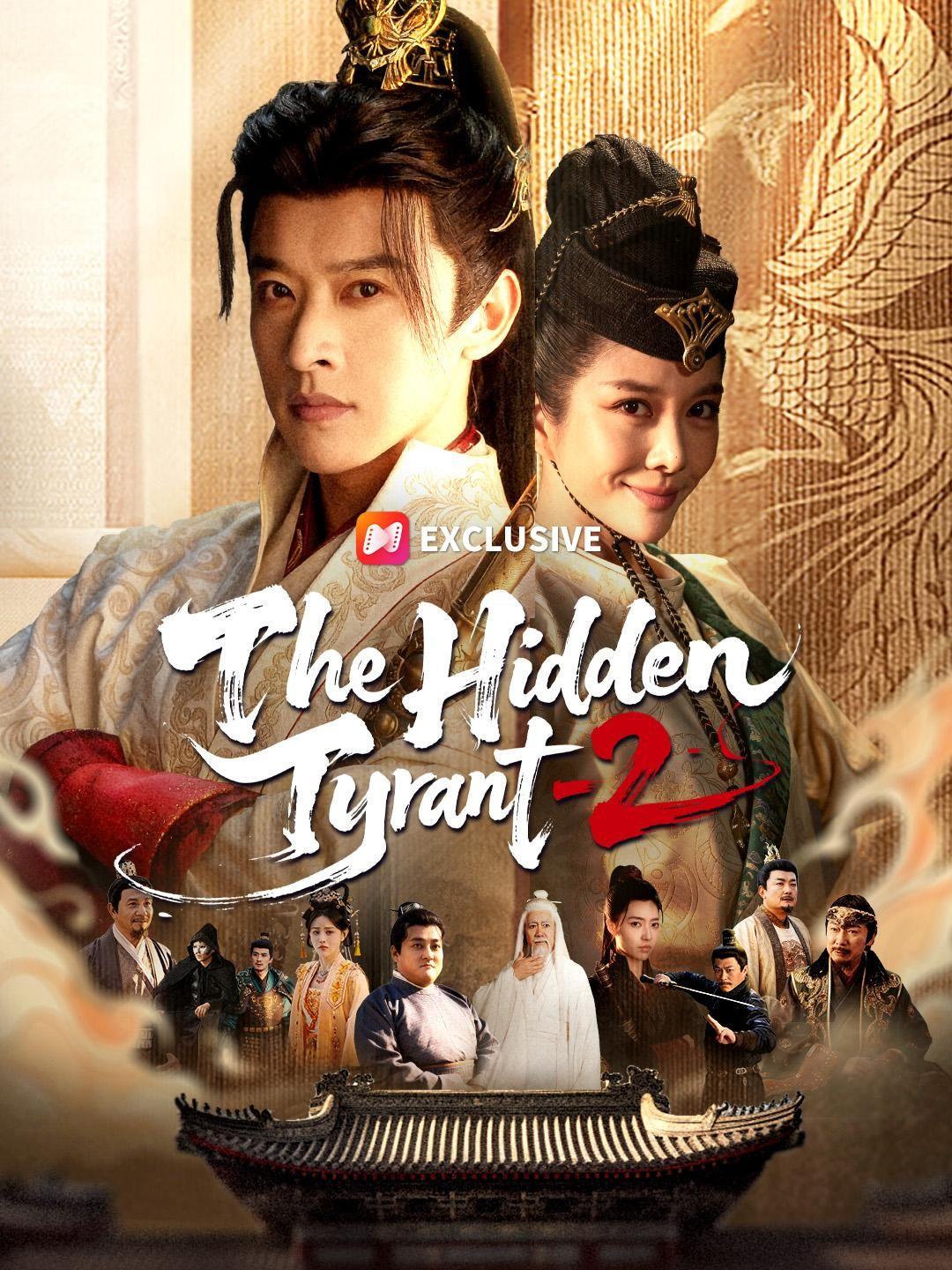
Revelation of Identity
Luke's true identity as the Lord of North Ridge is revealed through the use of the Freedom Technique, shocking everyone around him and leading to a grand welcome from the North Ridge Cavalry.Will Luke fully embrace his past as the Lord of North Ridge?


Recommended for you


Rich Father, Poor Father: When the Jade Pendant Glowed and the World Split in Two
There’s a moment—just one frame, barely two seconds—that changes everything in *Rich Father, Poor Father*. Kai, still bleeding from the corner of his mouth, lifts his right hand. Not in surrender. Not in threat. In *invitation*. And the air shimmers. Not like cheap VFX. Like reality itself is exhaling, releasing pressure it’s held for decades. Golden light blooms from his palm, swirling upward in fractal patterns, illuminating the dust motes dancing above the fallen bodies. Li Wei staggers back, not from force, but from revelation. Because he’s seen this before. In dreams. In childhood nightmares. In the faded photographs hidden behind the false panel in his study. The jade Bi pendant hanging against Kai’s chest isn’t just jewelry. It’s a signature. A seal. A sentence. Let’s rewind. The ballroom is pristine—crystal chandeliers, ivory drapes, a stage draped in crimson velvet. The banner reads ‘Phoenix & Dragon’, but no one mentions the third creature in the myth: the serpent that coils beneath both, feeding on their rivalry. That serpent is Kai. Or rather, what Kai carries. His leather jacket is scuffed at the elbows, the collar worn soft from repeated wear—not the uniform of a rebel, but of someone who’s lived in the margins too long to afford new clothes. Yet his posture? Confident. Too confident for a man on his knees. When Yun Xi reaches for him, her fingers brush his jaw, and he doesn’t flinch. He *leans* into it. That’s the first clue: this isn’t coercion. It’s consent. Complicated, painful, but deliberate. Li Wei’s entrance is the catalyst. He doesn’t run. He *accelerates*, as if his body remembers the trajectory before his mind does. His cream suit is immaculate—except for the frayed cuff on his left sleeve, where a button is missing. A detail. A flaw. A sign he’s been rushing, distracted, living half-in, half-out of the life he built. When he grabs Kai’s arm, his grip is firm, but his thumb trembles. He’s not angry. He’s terrified. Because he knows what happens when the Bi disc activates. He saw it once, years ago, when Kai was twelve and a stray dog attacked them in the alley behind the old temple. Kai didn’t fight. He *stopped* the dog—not with fists, but with a soundless pulse that dropped it like a stone. Li Wei carried him home that night, silent, staring at his own hands as if they belonged to someone else. The fight that follows isn’t choreographed violence. It’s conversation in motion. Kai blocks Li Wei’s jab with his forearm, not hard enough to hurt, just enough to redirect. Li Wei feints left, Kai steps right—*predictably*. Because they’ve sparred since they were kids. This isn’t improvisation. It’s rehearsal. A dance they’ve performed in secret, in empty courtyards at dawn, testing limits, boundaries, loyalties. Every movement echoes a memory: the time Li Wei taught Kai to fall safely; the time Kai caught Li Wei’s wrist when he tried to strike their tutor; the day they buried the old Bi disc under the willow tree, swearing never to speak of it again. And then—Yun Xi intervenes. Not with force. With touch. She places both hands on Kai’s chest, her red nails stark against his black shirt, and speaks three words. The audio is muted in the clip, but her lips form them clearly: *‘He remembers you.’* Not ‘I love you.’ Not ‘Stop.’ *He remembers you.* And Kai’s breath catches. Because ‘he’ isn’t Li Wei. It’s the man lying unconscious near the stage—the elder in the olive-green suit, the one with the silver-capped cane. The man who raised Kai after his mother vanished. The man who whispered the old chants into his ear every night, pressing the jade disc into his palm until it warmed with his heartbeat. The man who told him, ‘Power is not taken. It is *recognized*.’ That’s when the shift happens. Kai’s eyes narrow. Not with anger. With clarity. He looks at Li Wei—not as a rival, but as a brother who chose amnesia over truth. And Li Wei sees it too. The realization hits him like a physical blow. He stumbles, hand flying to his own chest, where a matching pendant rests beneath his shirt—hidden, unacknowledged, *denied*. The cream suit suddenly feels like a costume. The tie, a noose. He’s been playing the role of the respectable heir, the successful businessman, the man who escaped the family’s shadow. But the shadow was never behind him. It was *inside* him. Waiting. The crowd watches, paralyzed. Not out of fear, but reverence. Two women in black qipaos stand side by side—one older, her blouse adorned with mother-of-pearl buttons, the other younger, her hair pinned with jade combs. They don’t move. They don’t speak. They simply *witness*, as if this confrontation is sacred, inevitable, part of a cycle older than the building they stand in. Behind them, a man in a charcoal suit adjusts his glasses, eyes calculating, fingers tapping a rhythm only he understands. He’s not security. He’s an archivist. And he’s been waiting for this moment for twenty years. The climax isn’t the energy blast. It’s the silence after. Kai lowers his hand. The golden light fades, leaving only the scent of ozone and old paper. Li Wei doesn’t attack. He bows. Not deeply. Not formally. Just a slight dip of the head, shoulders relaxing, jaw unclenching. A surrender not of defeat, but of acceptance. And Kai? He reaches out, not to strike, but to steady him. Their hands meet—calloused, scarred, familiar—and for the first time, there’s no tension between them. Just gravity. Just history. Just the weight of a name they both carry but neither owns. Then the cut. To the riverbank. Yun Xi stands alone, sword at her hip, the wind pulling at the hem of her gray qipao. The men around her aren’t guards. They’re disciples. Each bears a mark on their left wrist—a tattoo of interlocking rings, the symbol of the Chen lineage’s hidden branch. She doesn’t speak. She doesn’t need to. Her gaze sweeps the horizon, and the camera tilts up, revealing the sky—not blue, but bruised purple, streaked with gold where the sun bleeds through the clouds. The final frame is her face, half-lit, half-shadow, lips curved in a smile that holds no joy, only resolve. The subtitle appears, not in Chinese, but in clean, modern English: *‘The inheritance is not the power. It is the choice.’* *Rich Father, Poor Father* masterfully avoids the trap of explaining its mythology. It trusts the audience to feel the weight of the jade, to read the tension in a handshake, to understand that the real battle isn’t between men—it’s between what we inherit and what we dare to become. Kai isn’t rich or poor. He’s *awake*. Li Wei isn’t weak or strong. He’s *choosing*. And Yun Xi? She’s already moved on. She’s not waiting for them to decide. She’s preparing for what comes next. Because in this world, the most dangerous thing isn’t magic. It’s memory. And the moment you remember who you are… the world splits in two. One side burns. The other rebuilds. Which side will you stand on when the Bi disc glows again?
Rich Father, Poor Father: The Veil and the Vow That Shattered the Ballroom
Let’s talk about what happened in that ballroom—not just the chaos, but the quiet detonation of identity, loyalty, and class that unfolded like a slow-motion explosion. At first glance, it looked like a wedding gone rogue: a bride in a shimmering white gown with delicate pearl strands draped over her shoulders, a groom—or maybe not—wearing a black leather jacket that screamed rebellion more than romance, and a man in a cream double-breasted suit, tie slightly askew, whose face cycled through disbelief, fury, and something far more dangerous: recognition. This wasn’t just a fight. It was a reckoning. And the title *Rich Father, Poor Father*? It’s not metaphorical here—it’s literal, visceral, encoded in every gesture, every blood-smeared lip, every trembling hand reaching for a weapon that never came out of its sheath. The opening frames are deceptively calm. A young man—let’s call him Kai, since his name flickers across the screen in one of the background banners—kneels on the ornate blue-and-gold carpet, eyes wide, mouth open mid-protest or plea. A woman’s hands, nails painted deep crimson, grip his shoulder. Not gently. Not supportively. Like she’s trying to anchor him before he vanishes into thin air. Behind him, bodies lie scattered—some motionless, some twitching, all dressed in formal wear, as if the event had been hijacked mid-toast. The lighting is warm, opulent, the kind you’d expect at a high-society gala. But the air? Thick with static. You can almost hear the silence before the scream. Then enters Li Wei—the man in the cream suit. His entrance isn’t dramatic; it’s *wrong*. He doesn’t stride. He stumbles forward, eyes locked on Kai, jaw clenched so tight you can see the tendon jump. When he grabs Kai’s wrist, it’s not to restrain. It’s to *confirm*. As if touching him proves he’s real. Their exchange is wordless, yet louder than any dialogue: Kai’s lips move, but no sound comes out—just breath, panic, and something else: guilt. Li Wei’s expression shifts from shock to betrayal, then to a chilling resolve. He points—not at Kai, but past him, toward the stage where a golden throne sits beneath a banner bearing the characters for ‘Phoenix’ and ‘Dragon’. That’s when the first energy flare erupts. Not CGI fire. Not smoke machines. Something *organic*, like heat distortion made visible—a ripple of golden light that pulses from Kai’s palm as he raises it, fingers splayed. Li Wei flinches, not from pain, but from memory. Because this isn’t the first time. This is the second act of a tragedy written long before the invitations were sent. The bride—Yun Xi—steps between them. Her veil catches the light like spun glass. She doesn’t shout. She doesn’t cry. She places her hand on Kai’s chest, right over his heart, and whispers something only he hears. Her voice is soft, but the camera lingers on her eyes: they’re not pleading. They’re *warning*. She knows what he’s capable of. She knows what he’s already done. And when Kai turns to her, his expression softens—not with love, but with sorrow, as if he’s already mourning the future they won’t have. That’s the genius of *Rich Father, Poor Father*: it refuses to let us root for anyone cleanly. Yun Xi isn’t the damsel. She’s the strategist. Kai isn’t the villain—he’s the son who inherited a curse disguised as a legacy. Li Wei? He’s the man who thought he could outrun bloodline, only to find it waiting for him in the mirror. What follows is less a brawl and more a ritual. Kai moves with unnatural speed, dodging strikes not with skill, but with *anticipation*. He knows how Li Wei fights because he’s watched him train. He knows where he’ll pivot because he’s stood beside him in the dojo. Every punch thrown is a question. Every block is an answer. And when Kai finally lifts his hand again, the golden aura doesn’t just flare—it *coalesces*, forming a translucent disc above his palm, glowing like a miniature sun. Li Wei freezes. Not in fear. In awe. Because he recognizes the symbol. It’s the same one carved into the jade pendant Kai wears around his neck—the ancient Bi disc, a token of heaven’s mandate, passed down through generations of the Chen lineage. The ‘Rich Father’ didn’t just fund the wedding. He *blessed* it—with power, with burden, with a destiny Kai never asked for. Meanwhile, the guests stand frozen—not out of cowardice, but confusion. Two women in black qipaos clutch each other, eyes darting between the combatants and the stage. One wears a white blazer over a beaded dress; the other, a sleek black tunic with pearl accents. They’re not bystanders. They’re enforcers. Or perhaps, mourners. Their presence suggests this isn’t the first disruption. The floor is littered with fallen men, some still breathing, others unconscious—but none dead. Kai holds back. Even in rage, even in defense, he measures his force. That restraint is telling. He’s not here to destroy. He’s here to *reclaim*. The turning point comes when Kai kneels beside a man in a green suit—older, balding, clutching a cane. He checks his pulse. Gently. Reverently. Then he looks up, and for the first time, his eyes meet Li Wei’s without hostility. Just exhaustion. And grief. Because this man? He’s not a random guest. He’s the tutor. The one who taught Kai to read the old texts, to meditate, to channel the energy that now hums beneath his skin. And Li Wei sees it too. His shoulders slump. The fight drains out of him, replaced by something heavier: understanding. The cream suit is stained now—not with blood, but with dust from the carpet, from kneeling, from the weight of truth. Then the cut. Not to black. To mist. To a desolate riverbank, where Yun Xi stands atop a concrete pillar, back to the camera, gripping a wrapped sword hilt. Around her, eight men in black suits bow their heads—not in submission, but in oath. The wind lifts her hair, revealing the intricate silver filigree of her earrings, the same ones she wore at the wedding. But now, the dress is different: charcoal gray, embroidered with storm motifs, the collar lined with black silk inscribed with forgotten script. This isn’t a bride anymore. This is a warlord. A guardian. The final shot lingers on her face as she turns—lips parted, eyes sharp, voice low and resonant: ‘The phoenix rises only after the dragon falls.’ *Rich Father, Poor Father* isn’t about wealth or poverty. It’s about inheritance—of power, of trauma, of silence. Kai didn’t choose this path. But he walks it anyway, because the alternative is letting the world burn while he pretends not to see the flames. Li Wei thought he could build a life outside the old ways. He couldn’t. Yun Xi knew the cost of love in this world—and paid it anyway. And that jade Bi disc? It’s not a weapon. It’s a key. To a door no one remembers how to open. Yet. The brilliance of this sequence lies in its restraint. No grand monologues. No over-explained backstories. Just bodies in motion, faces in close-up, and the unspoken history that hangs between them like incense smoke. You don’t need to know *why* Kai has the power—you feel it in the way his knuckles whiten when he grips Yun Xi’s hand, in the way Li Wei’s breath hitches when he sees the pendant. This is cinema as emotional archaeology: digging through layers of performance to uncover the bone-deep truths we all carry but rarely admit. *Rich Father, Poor Father* doesn’t ask you to pick a side. It asks you to witness. And in that witnessing, you realize: the real conflict wasn’t in the ballroom. It was in the silence before the first punch landed—the silence where choice lives, and fate waits.
Bride’s Smile After Chaos: The Real Power Move
While men brawl and fall, she stands—calm, radiant, holding his hand like it’s a choice, not a rescue. Rich Father, Poor Father flips tropes: her quiet strength outshines every explosion. That final smirk? She knew the script all along. 💫✨
The Leather Jacket vs. The Suit: A Wedding Gone Wild
In Rich Father, Poor Father, the leather-jacketed rebel isn’t just crashing the wedding—he’s rewriting its rules. His raw intensity versus the groom’s polished panic? Pure cinematic tension. That glowing hand gesture? Not CGI—just pure emotional voltage. 🤯🔥