



The Veil's Secret
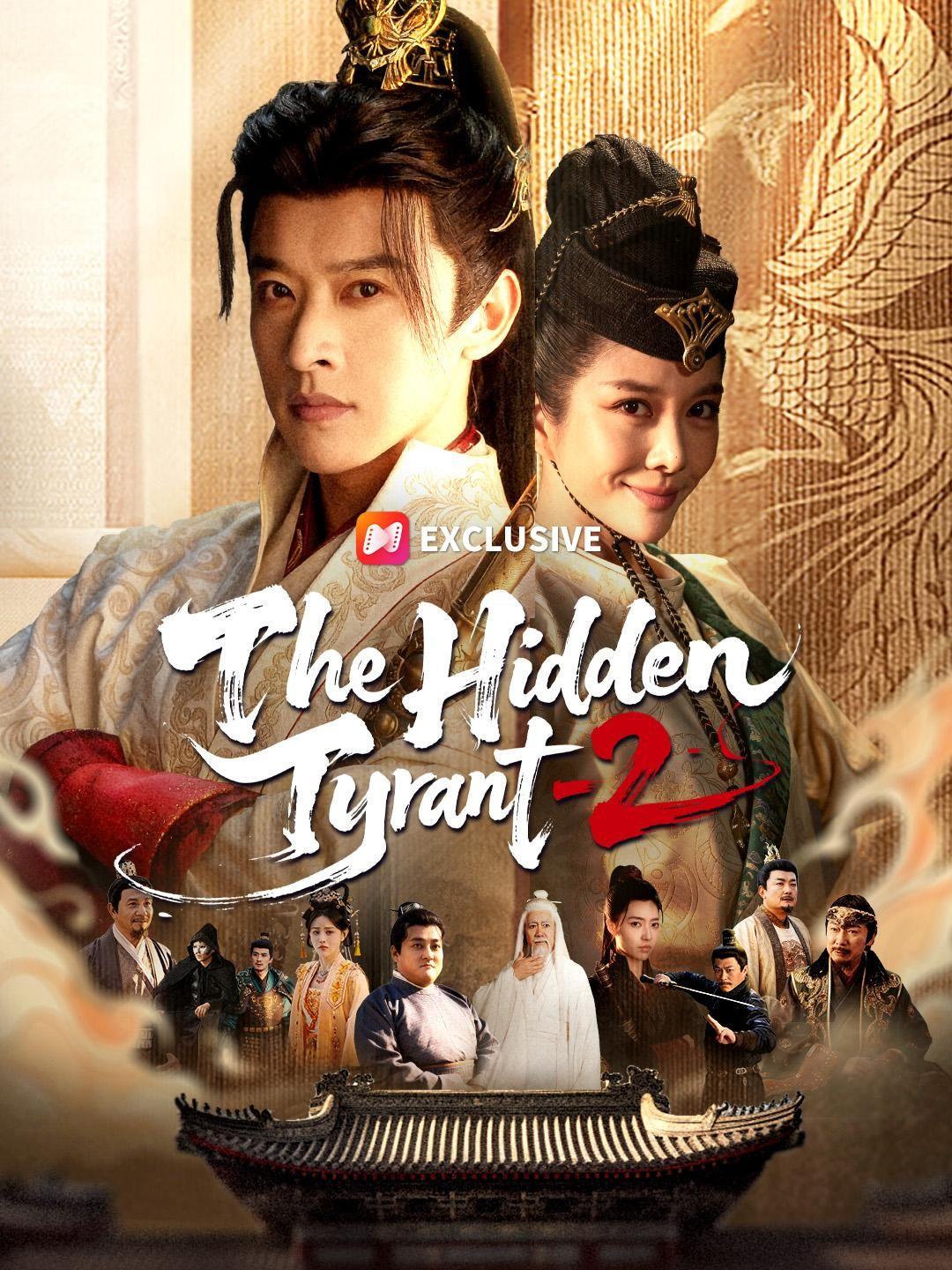
In this episode, tensions rise as the Moore family envoy questions the identity of the woman claiming to be the Hall family's eldest daughter, who wears a veil due to a promise that only the man she desires can remove it. She reveals that the man she is waiting for is the legendary Lord of North Ridge, hinting that Luke may be this mysterious figure, much to the disbelief of the Moores.Is Luke truly the Lord of North Ridge, and what will happen when his real identity is revealed?


Recommended for you


Rich Father, Poor Father: When the Groom Isn’t the Real Target
Let’s talk about the elephant in the ballroom—no, not the chandelier, not the pearl-veiled bride, but the fact that *Chen Hao* isn’t the one being judged. He’s just the decoy. In *Rich Father, Poor Father*, the real confrontation unfolds not between fiancé and father, but between two ideologies embodied in clothing, posture, and the way a person holds their silence. The scene opens with Li Wei, draped in black over white silk, gripping a staff like it’s a relic from a temple he once guarded. His face is a map of suppressed emotion: eyebrows knotted, lips pressed thin, eyes scanning the room like a general assessing battlefield terrain. He’s not angry. He’s disappointed. And that’s far more devastating. Disappointment implies expectation—and expectation implies betrayal. Li Wei expected something. And whatever it was, Chen Hao failed to deliver. But here’s the twist: Chen Hao isn’t the one who broke the promise. He’s just the face of the breach. Watch how the camera treats him. It circles him, yes—but always from a slight low angle, making him seem larger than life, yet also unstable, as if he might topple under the weight of his own performance. His olive-green suit is immaculate, his tie knotted with military precision, his Gucci belt buckle catching the light like a target. He *wants* to be seen as worthy. He gestures broadly, laughs too loud, leans in too close—classic compensation behavior. But his eyes? They dart. They avoid direct contact with the bride. When he looks at her, it’s not with love, but with calculation. He’s running scenarios in his head: *If I deny it, will they believe me? If I confess, will they forgive me?* He’s not a villain. He’s a man trapped in a script he didn’t write, playing a role he never auditioned for. And the tragedy is—he’s good at it. Too good. Which makes the eventual unraveling all the more satisfying. Now shift focus to Zhou Ran. Leather jacket, messy hair, jade bi pendant resting against his sternum like a shield. He doesn’t speak for the first minute of the sequence. He doesn’t need to. His presence is a question mark carved in leather. When he finally turns toward the bride, his expression isn’t hostile—it’s sorrowful. Recognition flashes across his face, followed by resignation. He knows her. Not as a bride, but as *her*. The girl who ran away. The sister who disappeared. The witness who survived. His stillness is not indifference; it’s grief held in check. And when the camera catches his hand hovering near his waist—where a weapon might be concealed—it’s not a threat. It’s a vow. A promise to protect, even if protection means standing aside while the world collapses around her. Then there’s Lin Xiao, the woman in black with the pearl bow. She’s the narrative’s Greek chorus—commenting without uttering a word. Her arms stay crossed, but her fingers tap rhythmically against her forearm, a metronome of impatience. Her earrings sway with each subtle head tilt, catching light like Morse code. When Chen Hao tries to charm her with a half-smile, she doesn’t return it. Instead, she glances past him, toward the bride, and her lips part—just enough to let out a breath that’s half-sigh, half-warning. She’s not aligned with Li Wei. She’s not loyal to Chen Hao. She’s playing a deeper game, one where alliances are temporary and truth is currency. In *Rich Father, Poor Father*, she represents the new generation: educated, elegant, ruthless. She doesn’t need a sword or a staff. She has words, and she knows exactly when to withhold them. The bride herself—let’s call her Mei Ling, though her name is never spoken—is the silent engine of this drama. Her veil isn’t just decorative; it’s strategic. Lace embroidered with floral motifs, pearls sewn in concentric circles around her forehead, strands of beads trailing down her arms like liquid silver. She stands perfectly still, yet her body language screams contradiction: shoulders squared, chin high, but fingers interlaced so tightly the knuckles whiten. She’s not passive. She’s *choosing* silence. Every time someone speaks, the camera cuts to her, and in those moments, you see it—the flicker of memory, the tightening of her jaw, the way her left hand drifts toward her collarbone, where a scar might be hidden beneath the gown. She remembers what happened. She knows who lied. And she’s waiting for the right moment to speak—not to defend herself, but to dismantle the lie entirely. The environment amplifies this tension. The ballroom is designed for grandeur, but the characters treat it like a cage. Tables are pushed aside, chairs stacked in corners, leaving a wide, empty space where the confrontation must occur. The carpet’s blue-and-gold pattern resembles a maze—fitting, since everyone here is lost. Overhead, the chandeliers cast soft pools of light, but the edges of the room fade into shadow, where figures linger: a woman in a gray qipao clutching a clutch purse, a man in a vest watching with folded arms, another in sunglasses despite the indoor lighting. These aren’t extras. They’re stakeholders. Each one represents a faction, a debt, a secret. And they’re all waiting for the bride to make the first move. What’s brilliant about *Rich Father, Poor Father* is how it subverts the wedding trope. This isn’t about love conquering all. It’s about legacy versus desire, duty versus truth, and who gets to define ‘family’ when bloodlines are blurred by ambition. Li Wei represents the old order—ritual, hierarchy, honor codified in silk and staff. Chen Hao embodies the new money—flashy, insecure, desperate to belong. Zhou Ran is the wild card: untethered, principled, dangerous. And Lin Xiao? She’s the future—polished, observant, ready to rewrite the rules. The turning point comes not with a shout, but with a gesture. Chen Hao, trying to regain control, reaches out—to the bride? To Li Wei? The camera blurs the intent. But Zhou Ran steps forward, not aggressively, but with purpose. He doesn’t block the gesture. He *intercepts* it—not with force, but with presence. His shoulder brushes Chen Hao’s arm, and for a heartbeat, the room holds its breath. Then Li Wei speaks. His voice, though unheard, is visible in the set of his shoulders, the tilt of his head. He’s not addressing Chen Hao. He’s addressing the *idea* of Chen Hao. The construct. The placeholder. And in that moment, the bride lifts her chin. Just slightly. Enough for the veil to shift, revealing one eye—dark, steady, unafraid. That eye says everything. She’s not waiting for rescue. She’s waiting for permission to act. And in *Rich Father, Poor Father*, permission isn’t granted by fathers or fiancés. It’s seized. By women. By outsiders. By those who’ve been silenced long enough. The final frames show the group from above—a circle of tension, the bride at its heart, Zhou Ran to her left, Li Wei to her right, Chen Hao slightly behind, looking lost. Lin Xiao stands apart, arms now uncrossed, one hand resting lightly on the hilt of a small, ornate dagger tucked into her sleeve. The camera zooms in on the bride’s hands again. This time, she’s not crossing them. She’s opening them. Palms up. An offering. A challenge. A surrender. And the veil? Still there. But it’s thinner now. Almost translucent. Because the real unveiling isn’t physical. It’s psychological. It’s when the characters stop performing and start *being*. *Rich Father, Poor Father* doesn’t give you answers. It gives you questions—and the courage to ask them aloud. That’s why this scene lingers in your mind long after the screen fades to black. Not because of the costumes or the set, but because of the silence between the lines. The truth is always there, waiting. You just have to learn how to listen to what isn’t said.
Rich Father, Poor Father: The Veil That Hides More Than a Bride
In the opulent ballroom of what appears to be a high-end hotel—its carpet patterned with swirling gold vines, its chandeliers casting soft halos over tense faces—the air crackles not with celebration, but with unspoken accusation. This is not a wedding. Not yet. It’s a trial disguised as a ceremony, and every character in *Rich Father, Poor Father* seems to know it. The bride stands center stage, her face obscured by a delicate lace veil studded with pearls, each bead catching light like a tiny judgmental eye. Her gown shimmers with sequins arranged in geometric precision—a modern armor against emotional exposure. Yet her posture betrays her: arms crossed, fingers painted crimson, a gold bangle glinting at her wrist—not bridal jewelry, but something older, heavier, perhaps inherited or demanded. She doesn’t smile. She doesn’t flinch. She simply *waits*, as if time itself has paused to let the truth settle like dust on a forgotten altar. The man in the black robe over the white Tang-style shirt—Li Wei, we’ll call him, though his name isn’t spoken aloud—holds a black staff, its grip worn smooth by use. His expression shifts like weather: furrowed brow, parted lips, a flicker of disbelief that hardens into resolve. He speaks often, but his words are never heard in this silent reel; only his mouth moves, his eyes darting between the bride, the groom-to-be, and the others circling like sharks in tailored suits. His stance is rooted, almost ceremonial—like a master of rites who knows the ritual has already been broken. When he gestures, it’s not with flourish, but with weight: a palm raised, a finger pointed, a slow turn of the head that says more than any monologue could. He is the moral fulcrum of this scene, the one who *should* bless, but instead interrogates. In *Rich Father, Poor Father*, tradition isn’t a comfort—it’s a weapon, and Li Wei wields it with quiet fury. Then there’s Chen Hao, the groom—or rather, the man positioned as such. Olive-green suit, Gucci belt buckle gleaming like a challenge, watch ticking audibly (or so the editing implies). His arms cross, uncross, clench, relax—each movement a micro-drama. At first, he smirks, as if amused by the absurdity of it all. But then his jaw tightens. His eyes narrow. He leans forward, voice presumably rising, though again, silence reigns. What’s fascinating is how his performance oscillates between arrogance and panic. One moment he’s gesturing dismissively, as if brushing away an insect; the next, he’s staring at the bride with something raw—guilt? Fear? Desire? It’s unclear, and that ambiguity is the point. Chen Hao isn’t just a fiancé; he’s a pawn caught between two fathers, two legacies, two versions of power. The show’s title, *Rich Father, Poor Father*, isn’t about money alone—it’s about *authority*, and Chen Hao has neither. He’s trying to claim it, and failing visibly. Enter Lin Xiao, the woman in the black blouse with the pearl bow at her throat—elegant, sharp, dangerous. Her earrings are long silver daggers, her red lipstick applied with surgical precision. She watches everything, arms folded, chin slightly lifted. When she speaks (again, silently), her lips form words that feel like accusations wrapped in silk. She’s not a guest. She’s a witness with stakes. Perhaps she’s the sister of the bride, or a former lover of Chen Hao, or even an emissary from the ‘Poor Father’ faction. Her presence destabilizes the room. Every time the camera cuts to her, the tension spikes—not because she acts, but because she *chooses* not to. Her stillness is louder than anyone’s shouting. In *Rich Father, Poor Father*, silence isn’t empty; it’s loaded. And Lin Xiao holds the detonator. Then there’s the leather-jacket man—Zhou Ran. Black crocodile-textured jacket, jade bi pendant hanging low on his chest, hair tousled like he just walked out of a storm. He says little, but when he does, the room tilts. His gaze locks onto the bride, not with lust, but with recognition. A shared history flickers in his eyes—something unresolved, something buried. He doesn’t confront. He observes. He waits. And when he finally steps forward, just slightly, the camera lingers on his hand resting near his hip, where a sword hilt might be hidden. Yes—a sword. Later, another woman appears, clad in black latex and buckled harness, a blade strapped to her back like a second spine. Her entrance is brief but seismic. She doesn’t speak. She doesn’t need to. Her very existence recontextualizes the entire event: this isn’t just a family dispute. It’s a clan war dressed in couture. The setting itself is a character. The ballroom is vast, yet claustrophobic—the guests stand in rigid rows, some in qipaos, others in Western formalwear, all frozen mid-reaction. Behind them, blurred figures move like ghosts, servants or spies, carrying trays or listening at doors. The lighting is warm, but the shadows are deep, swallowing expressions whole. There’s no music, only the faint hum of HVAC and the rustle of fabric as someone shifts their weight. This is cinema of restraint: every glance, every twitch of the lip, every hesitation before speaking carries the weight of a confession. What makes *Rich Father, Poor Father* so compelling is how it refuses catharsis. No one shouts ‘I object!’ No one tears the veil. The bride remains veiled, her face unreadable, her silence absolute. Li Wei continues to speak, but his words are swallowed by the room’s heavy air. Chen Hao’s smirk returns, but it’s brittle now, cracking at the edges. Lin Xiao exhales, almost imperceptibly, and for the first time, her arms loosen—just a fraction. Zhou Ran turns his head, and for a split second, his eyes meet hers. That’s it. That’s the spark. Not a kiss, not a fight, but a look that says: *We both know what’s coming.* This isn’t melodrama. It’s psychological warfare conducted in whispers and silences. The veil isn’t just covering the bride’s face—it’s covering the truth of the entire arrangement. Who arranged this marriage? Why is Li Wei holding a staff instead of a bouquet? Why does Zhou Ran wear a jade bi, an ancient symbol of heaven and authority, while Chen Hao wears a Gucci belt? The contrast is deliberate, brutal. *Rich Father, Poor Father* isn’t about wealth—it’s about legitimacy. And in this room, legitimacy is up for grabs, auctioned off in glances and gestures. The final shot lingers on the bride’s hands, still crossed, nails polished blood-red, gold bangle catching the light. Then the camera pulls back, revealing the full tableau: a circle of adversaries, a bride at the center, and behind her, a massive screen displaying what looks like a faded portrait—two men, one in silk robes, one in tattered cotton, standing side by side, smiling. The past is watching. The future is waiting. And the veil? It’s still there. Unlifted. Unbroken. The most powerful thing in the room isn’t the sword, the staff, or the suit—it’s the refusal to reveal. In *Rich Father, Poor Father*, the greatest drama isn’t in what happens, but in what *doesn’t*. And that, dear viewer, is why you’ll keep watching, breath held, until the veil finally falls—or burns.