



The Ruthless Takeover
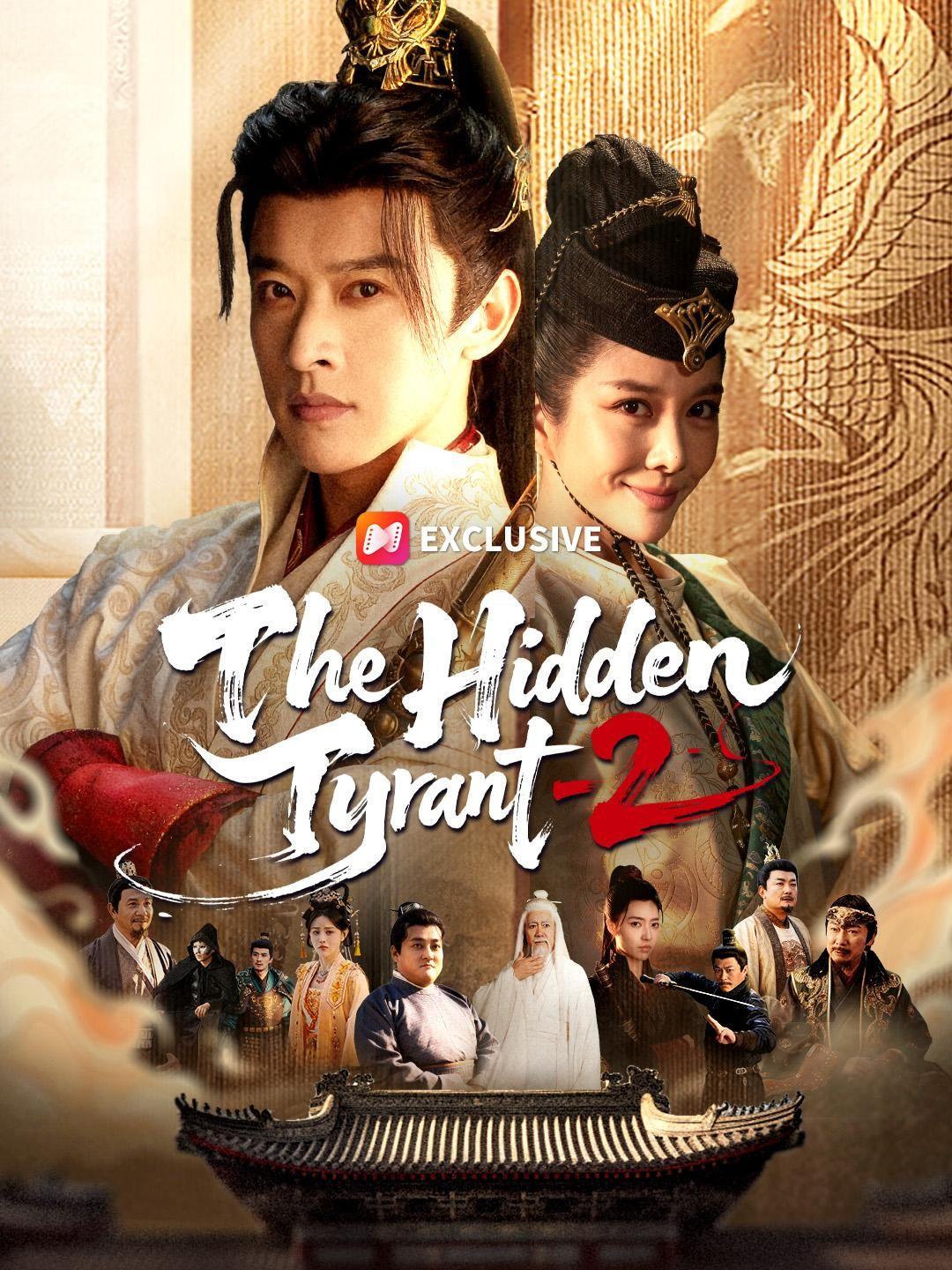
Luke demonstrates his formidable strength by overpowering a group of attackers, then confronts the leader of the Boundless Union, forcing him to surrender the controlling rights of the port and issuing a stern warning for future compliance.Will Luke's intimidating tactics be enough to keep the Boundless Union in line, or will they seek revenge in the next episode?


Recommended for you


Rich Father, Poor Father: When the Baton Falls, Truth Rises
There’s a moment—just two seconds, maybe less—when the telescopic baton slips from Brother Feng’s grip and clatters onto the concrete. Not with a dramatic ring, but a dull, hollow thud, like a bone hitting stone. That sound, more than any scream or punch, tells you everything you need to know about *Rich Father, Poor Father*: this isn’t a story about winning. It’s about *unraveling*. Let’s start with the hands. Because in this short film, hands do the heavy lifting—literally and metaphorically. Li Wei’s hands are calloused, nails trimmed short, a silver band on his left ring finger that’s slightly tarnished, as if he forgot to polish it after washing dishes or fixing a leaky pipe. When he grabs the red pole at the beginning, his grip isn’t aggressive; it’s *anchoring*. He’s not holding on to fight—he’s holding on to stay grounded. Meanwhile, Brother Feng’s hands tremble—not from fear, but from adrenaline hangover. His fingers twitch even when he’s still, like a pianist remembering a concerto he’ll never play again. And Xiao Man’s hands? Bound with coarse rope, yet her posture is relaxed, her fingers loosely curled, as if she’s waiting for tea to steep. That contrast alone could carry an entire thesis. The setting is deliberate decay. Concrete steps stained with oil and rain, red poles bolted into the ground like forgotten grave markers, chains sagging between them like tired serpents. Behind it all, a massive orange hull—part of a decommissioned cargo vessel—looms like a sleeping giant. Graffiti peels off its side in strips, revealing older layers of paint, older warnings, older lies. One phrase, barely legible, reads: *‘The strongest chains are the ones you don’t feel.’* *Rich Father, Poor Father* doesn’t underline it. It just lets it sit there, waiting for you to notice. Now, the confrontation. Brother Feng doesn’t attack Li Wei with rage. He attacks with *plea*. His first lunge isn’t aimed at Li Wei’s face—it’s aimed at the space *between* them, as if he’s trying to collapse the distance, to make Li Wei *see* him, not just fight him. When Li Wei blocks, the impact jars Brother Feng’s wrist, and he winces—but not from pain. From disappointment. Because he expected resistance. He didn’t expect *patience*. That’s the core tension of *Rich Father, Poor Father*: Li Wei isn’t here to punish. He’s here to *witness*. Every time Brother Feng shouts, ‘You don’t know what I’ve sacrificed!’, Li Wei doesn’t argue. He just nods, once, slowly, as if filing the statement away for later review. His silence isn’t indifference—it’s the quiet of someone who’s heard every excuse before, in every accent, under every streetlamp. When Brother Feng drops to his knees (not dramatically, but with the weary slump of a man who’s run out of steam), Li Wei doesn’t tower over him. He crouches. Eye level. And that’s when the real exchange happens—not with fists, but with breath. Master Lin enters late, not as a deus ex machina, but as a reminder: some truths require a third party to hold the mirror. He doesn’t speak until the baton is on the ground, until Brother Feng’s voice has cracked into something fragile. Then, in a voice so low it’s almost subsonic, he says two words: ‘Your father.’ Not ‘your father did this.’ Not ‘your father failed you.’ Just *your father*. And Brother Feng flinches like he’s been struck. Because that’s the wound no rope can bind—the knowledge that his rage was never really about Li Wei. It was about the man who taught him that love must be earned through suffering, that worth is measured in scars, not smiles. Xiao Man’s release is the quietest revolution in the film. Li Wei doesn’t cut the rope with a knife. He *unties* it. Slowly. Methodically. Each knot loosened is a layer of assumption peeled back. When her wrists are finally free, she doesn’t rub them. She looks at her palms, as if surprised to find them still hers. Then she reaches out—not to Li Wei, but to Brother Feng. She places her hand over his clenched fist. Not to comfort. To *stop*. And in that touch, something shifts. Brother Feng’s shoulders drop. His breath steadies. He doesn’t apologize. He just whispers, ‘I thought she was the key.’ Key to what? The film never says. But we infer: the key to his father’s will, to the warehouse downtown, to the offshore account with the initials R.F. stamped in the corner. *Rich Father, Poor Father* thrives in ambiguity. It trusts the audience to sit with uncertainty, to let the silence hum louder than the dialogue. The cinematography reinforces this. Close-ups linger on micro-expressions: the flicker of doubt in Li Wei’s eyes when Xiao Man mentions the train station; the way Brother Feng’s mustache twitches when he lies about the money; the slight dilation of Master Lin’s pupils behind his sunglasses when Li Wei touches the red pole a second time. These aren’t acting choices—they’re *human* choices. Flaws exposed, not fixed. And let’s talk about the rope. It’s not just a prop. It’s a motif. Early on, it binds Xiao Man. Later, Li Wei uses it to secure the baton to the pole—turning a weapon into a tether. In the final shot, it lies coiled on the ground, half-hidden under a puddle, reflecting the gray sky like a broken halo. Symbolism? Sure. But *Rich Father, Poor Father* avoids heavy-handedness by grounding every symbol in physicality. You *feel* the rope’s roughness when Li Wei’s fingers trace its fibers. You *hear* its creak when Xiao Man shifts in the chair. It’s tactile, not theoretical. What elevates this beyond typical short-form drama is the refusal to moralize. Brother Feng isn’t redeemed. Li Wei isn’t heroic. Xiao Man isn’t victim or savior. They’re all three trapped in a cycle they didn’t design but can’t escape—until now. The ending isn’t hopeful. It’s *possible*. Li Wei walks away with Xiao Man, not arm-in-arm, but side-by-side, leaving Brother Feng kneeling in the dust, Master Lin vanished into the fog, and the red poles standing sentinel over a truth no one wants to name: sometimes, the richest inheritance is the courage to walk away from the fight. *Rich Father, Poor Father* doesn’t give answers. It gives *questions*—and leaves you holding them long after the screen fades. Like why Li Wei kept the baton. Why Xiao Man wore pearls to a dockside interrogation. Why the orange wall had Chinese characters about crane safety, when no crane had moved there in a decade. These details aren’t filler. They’re breadcrumbs leading to a larger world, one where fathers build empires on sand, and sons spend lifetimes trying to shore up the foundations. In the last frame, the camera tilts up—not to the sky, but to the top of the red pole, where a single bird has landed, feathers ruffled by the wind. It doesn’t sing. It just watches. And you realize: the real protagonist of *Rich Father, Poor Father* isn’t Li Wei, or Brother Feng, or even Xiao Man. It’s the silence between them. The space where choices echo, and forgiveness waits—not with open arms, but with open hands, ready to untie whatever knot comes next.
Rich Father, Poor Father: The Red Pole and the Rope That Tied Three Fates
Let’s talk about what unfolded in that gritty riverside scene—where concrete cracked under worn boots, red poles stood like silent sentinels, and a woman in black silk sat bound on a plastic chair, her lips painted crimson, her eyes wide with something between fear and defiance. This isn’t just a kidnapping trope; it’s a psychological triptych disguised as action, and the short film *Rich Father, Poor Father* pulls off something rare: it makes you *lean in* even when your gut tells you to look away. The protagonist, Li Wei—a name whispered in the background dialogue, though never formally introduced—enters not with a bang, but with a fist clenched around a rusted chain link. His leather jacket is scuffed at the elbows, his white tee slightly damp at the collar, suggesting he’s been running, or fighting, or both. He doesn’t speak much in the first minute, but his body does all the talking: shoulders squared, jaw tight, eyes darting between the red pole, the rope, and the man in the maroon velvet blazer who’s already shouting like a cornered animal. That man—let’s call him Brother Feng, per the crew’s call sheet—isn’t just a villain; he’s a performance artist of desperation. His shaved head, the thin line of hair combed over the bald patch, the way he grips the telescopic baton like it’s a rosary—he’s not threatening Li Wei. He’s *begging* him to take it seriously. And here’s where *Rich Father, Poor Father* reveals its true texture: the power dynamic isn’t about weapons or numbers. It’s about *timing*. When Brother Feng lunges, teeth bared, eyes bulging, Li Wei doesn’t flinch. He sidesteps—not with martial grace, but with the weary precision of someone who’s seen this dance before. The camera lingers on Li Wei’s hand as it catches the baton mid-swing, fingers wrapping around the cold metal like they’ve done it a thousand times. There’s no triumph in his expression. Only exhaustion. Because this isn’t his first rodeo. This is the third time this month he’s had to disarm a man who thinks violence is negotiation. Then comes the twist no one sees coming—not because it’s hidden, but because it’s *ignored*. The woman tied to the chair? Her name is Xiao Man, and she’s not a damsel. She watches the struggle with detached curiosity, her ankles crossed, her gold bangle catching the dull light. When Li Wei finally moves toward her, she doesn’t gasp. She *smiles*. A slow, knowing curve of the lips, as if she’s just confirmed a hypothesis. And that’s when the real story begins—not with rescue, but with recognition. Li Wei’s fingers brush the rope around her waist, and for a split second, his breath hitches. Not from exertion. From memory. The way her earlobe catches the light matches a photo he keeps folded in his wallet, behind a faded train ticket from 2018. *Rich Father, Poor Father* doesn’t spell it out. It lets you connect the dots while the wind whips strands of hair across Xiao Man’s face and Brother Feng collapses to his knees, still clutching the baton like a child clinging to a broken toy. What follows is less fight, more confession. Brother Feng doesn’t beg for mercy. He begs for *understanding*. ‘You think I’m the monster?’ he rasps, voice raw, spittle flying. ‘I’m the son who watched his father sell the family shop for a bottle of whiskey and a night with a girl half his age. You think *he* was rich? He was drowning. And I learned to swim in the same water.’ His words aren’t justification—they’re autopsy notes. And Li Wei listens. Not because he agrees, but because he hears the echo of his own father’s voice in those syllables. The man who built a shipping empire on debt and silence, who once told Li Wei, ‘Power isn’t taken. It’s inherited—and then buried.’ The third man—the one in black traditional attire, sunglasses perched low on his nose, moving like smoke—doesn’t speak until the very end. He’s called Master Lin in the script, though he’s never addressed by name on screen. He appears only when the tension peaks, stepping into frame like a shadow given form. He doesn’t intervene. He *observes*. When Brother Feng tries to rise again, Master Lin flicks his wrist—not to strike, but to *redirect*. A subtle shift in weight, a palm open, and Brother Feng stumbles sideways, not from force, but from imbalance. It’s a lesson in control, not domination. And when Li Wei finally cuts Xiao Man free, Master Lin nods once. Not approval. Acknowledgment. As if to say: *You chose the harder path. Again.* The setting itself is a character. That orange wall behind Xiao Man? Faded Chinese characters still cling to it—warnings about crane operation, safety protocols, ‘No unauthorized personnel’. Irony drips from every peeling stroke. They’re standing on the edge of an industrial dock, where cargo ships once loaded dreams and now just rust. The chains linking the red poles aren’t decorative; they’re functional, meant to hold barges. Yet here they’re repurposed as props in a human drama—binding, separating, connecting. Li Wei’s hands, when he unties Xiao Man, are steady, but his knuckles are split, one finger swollen. He doesn’t wince. He just works. Because in *Rich Father, Poor Father*, pain is punctuation, not plot. The emotional climax isn’t the fight. It’s the silence after. When Brother Feng kneels, not in submission, but in surrender—his shoulders heaving, his voice reduced to a whisper: ‘She’s not yours to save.’ Li Wei pauses. The baton dangles from his fingers. For three full seconds, the camera holds on his face—no music, no cutaways, just wind and distant traffic. Then he says, softly, ‘She’s not yours to keep.’ And that line? It’s the thesis of the entire series. *Rich Father, Poor Father* isn’t about wealth or poverty. It’s about *ownership*. Who owns loyalty? Who owns regret? Who owns the right to decide another person’s fate? Xiao Man stands up slowly, rubbing her wrists, her dress swaying. She doesn’t thank Li Wei. She looks past him, toward the water, where a single gull circles overhead. ‘He paid you,’ she says, not accusingly, but factually. ‘Didn’t he?’ Li Wei doesn’t answer. He just walks to the red pole, places his palm flat against the paint-chipped surface, and exhales. The rope lies coiled on the ground like a sleeping serpent. Master Lin turns to leave. Brother Feng remains on his knees, staring at his own hands—as if seeing them for the first time. This is why *Rich Father, Poor Father* lingers. It refuses catharsis. There’s no victory lap, no tearful reunion, no villain monologue explaining his trauma in neat paragraphs. The resolution is quieter than the conflict: Li Wei helps Xiao Man down the steps, his hand hovering near her elbow but never touching. Brother Feng rises unaided, brushes dirt from his trousers, and walks away without looking back. Master Lin disappears into the haze beyond the dock gates. And the red poles stand sentinel, unchanged, as if they’ve witnessed this exact scene a hundred times before. What stays with you isn’t the action—it’s the *weight* of the unsaid. The way Li Wei’s jacket sleeve rides up to reveal a scar shaped like a question mark. The way Xiao Man’s earrings—pearls strung on silver wire—catch the light like tiny moons orbiting a dark planet. The way Brother Feng’s maroon blazer, so sharp and expensive, looks absurdly out of place against the grime of the pier. *Rich Father, Poor Father* understands that costume is character, and environment is psychology. Every detail is a clue, not a decoration. In the final shot, the camera pulls back, revealing the full scope: the river, the distant city skyline, the three figures now small against the vast gray sky. Li Wei glances at Xiao Man. She meets his gaze. No words. Just a tilt of the head—enough to say, *I remember you too.* And then she walks toward the road, heels clicking on concrete, while Li Wei watches her go, one hand still resting on the red pole, the other tucked in his pocket, where his phone buzzes once. A message from an unknown number: *He knows you were there.* That’s the genius of *Rich Father, Poor Father*. It doesn’t end. It *pauses*. And in that pause, you realize the real hostage wasn’t Xiao Man. It was all of them—trapped not by rope, but by choices made years ago, in rooms lit by fluorescent bulbs and choked with unspoken apologies. The red pole? It’s still there. Waiting for the next act.