



The Moore Family's Brutal Justice
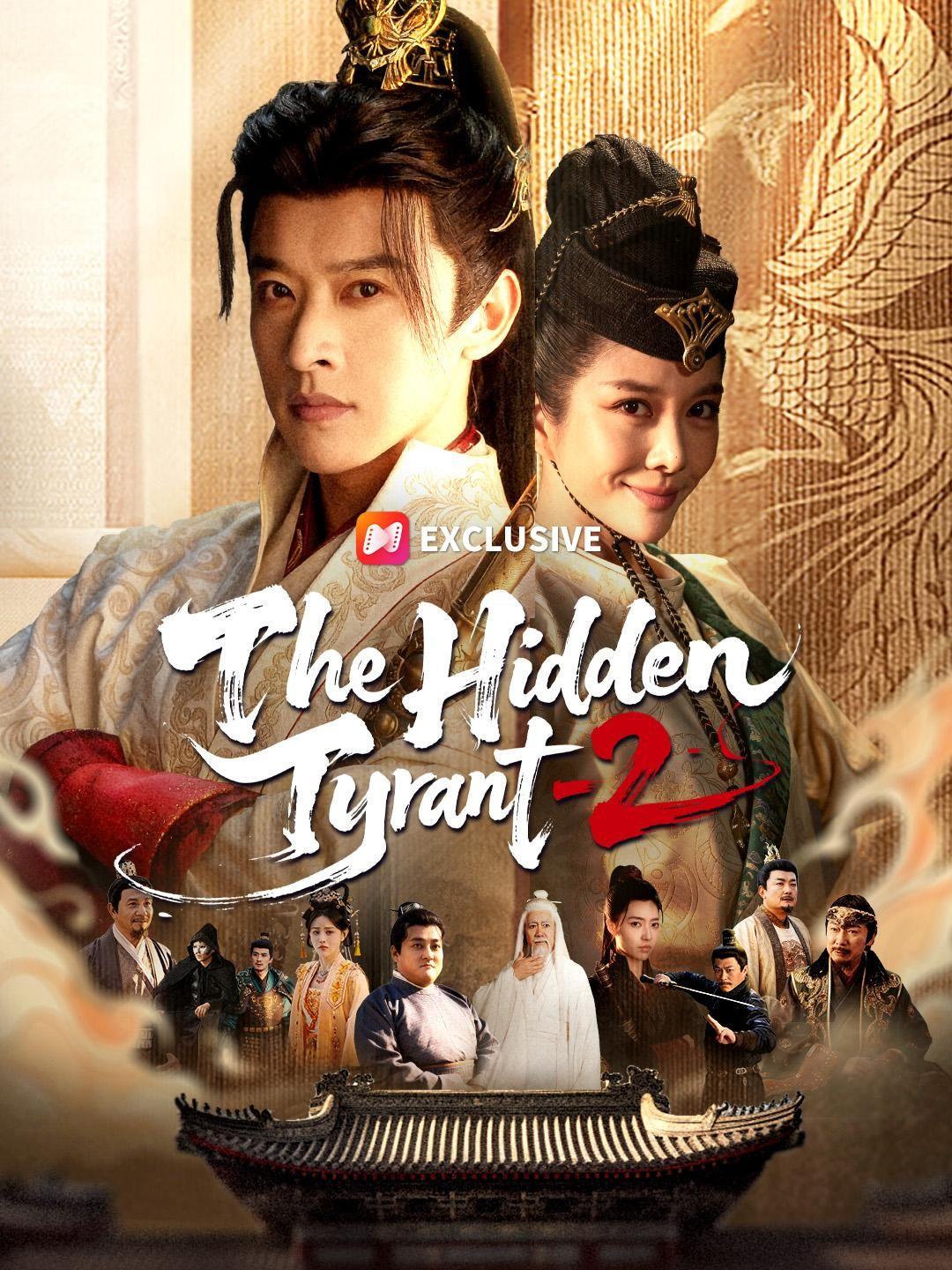
Luke witnesses the ruthless enforcement of the Moore family's three merciless rules when their envoy executes anyone who disrespects them, leaving him disturbed by their extreme actions.Will Luke confront the Moore family's tyranny or fall victim to their ruthless justice?


Recommended for you


Rich Father, Poor Father: Jade Pendants and Broken Knees
Let’s talk about the pendant. Not the expensive one on Li Wei’s lapel pin—tiny, gold, barely visible—but the large, pale jade bi hanging from Liu Xing’s neck, and the identical one resting against Chen Hao’s sternum. Same shape. Same stone. Same hole in the center, like an eye watching the room. Yet when Liu Xing wears it, it looks like a target. When Chen Hao wears it, it looks like a seal. That’s the core irony of Rich Father, Poor Father: identity isn’t claimed; it’s *assigned* by proximity to power. Liu Xing didn’t choose that pendant. Someone gave it to him—perhaps as a gift, perhaps as a warning. And now, as he’s dragged forward, half-supported, half-dragged by two men in navy jackets, the pendant swings wildly, catching the light like a pendulum measuring time until disgrace. The scene opens with Li Wei walking down the aisle—not striding, not marching, but *gliding*, as if the carpet itself parts for him. His olive suit is tailored to perfection, the kind of cut that whispers ‘I’ve never had to bargain for anything.’ His tie is dark green with subtle dots, matching the watch on his wrist: silver face, brown leather strap, expensive but understated. He’s not flashy; he’s *inevitable*. Behind him, the background figures blur into a uniform sea of black—suits, sunglasses, impassive faces. They’re not guards; they’re ambiance. Human wallpaper. Their presence isn’t to protect him; it’s to confirm that he belongs here. That this space is his by right of arrival, not inheritance. Then the camera cuts to Zhang Da. He’s not in the aisle. He’s off to the side, near the throne chair, gripping his crutch like it’s the last solid thing in a dissolving world. His jacket is functional, not fashionable. His shoes are scuffed. His hair is uneven, as if he rushed here without a mirror. And yet—his eyes. They don’t plead. They *accuse*. He’s not asking for mercy. He’s demanding recognition. And in this room, recognition is more dangerous than rejection. Because to be seen is to be judged. To be judged is to be found lacking. Zhang Da knows this. He’s lived it. His crutch isn’t just mobility aid; it’s a ledger. Every step he takes is recorded in the creak of metal, the drag of rubber on wool. He’s the ghost at the feast—the one who remembers the famine. Chen Hao stands opposite Li Wei, arms folded, sword sheathed but present. His attire is deliberate: black outer robe, white inner tunic with traditional knot buttons, the kind that take minutes to undo. He doesn’t wear a watch. He doesn’t need one. Time bends around him. When he speaks—his voice low, measured, each syllable placed like a chess piece—the room doesn’t lean in; it *contracts*. People instinctively lower their voices, shift their weight, avoid direct eye contact. He’s not the loudest, but he’s the only one who doesn’t need amplification. His authority isn’t shouted; it’s exhaled. And when Liu Xing stumbles into the center of the circle, Chen Hao doesn’t move. He watches. Not with disdain. With assessment. Like a curator examining a damaged artifact, wondering if it’s worth restoring—or if it’s better left as evidence of what not to repeat. Liu Xing’s breakdown is the emotional climax, but it’s not sudden. It’s built in layers. First, the shock—his eyes widen as he’s pushed forward, not roughly, but *efficiently*, as if he’s being moved into position for a photograph no one intends to develop. Then the resistance—his shoulders tense, his fingers dig into the leather of his jacket, his jaw clenches so hard a muscle jumps near his ear. Then the collapse. Not dramatic. Not theatrical. Just… surrender. His knees hit the carpet with a soft thud, his hands slap down, and for a moment, he stays there, forehead nearly touching the patterned weave, breathing hard, lips parted, blood trickling from the corner of his mouth. He doesn’t cry. He *grinds* his teeth. That’s the detail that kills me. In a world obsessed with appearances, the only honest thing he can offer is the sound of his molars grinding together—raw, animal, unedited. Li Wei’s reaction is masterful. He doesn’t laugh. He doesn’t sneer. He *kneels*. Not in submission. In mockery. He lowers himself with perfect control, one knee on the carpet, the other foot planted, his back straight, his smile returning—not cruel, but *amused*. He reaches out, not to help, but to *inspect*. His fingers brush Liu Xing’s jawline, tilt his head up, and for a beat, they lock eyes. Liu Xing’s pupils are dilated, his breath ragged, his nostrils flared. Li Wei’s are steady. Calm. Curious. As if he’s studying a specimen. And then he speaks. We don’t hear the words, but we see Liu Xing’s throat convulse. A swallow. A blink. A micro-expression of realization: *He knows.* He knows about the pendant. He knows about the letter. He knows about the night Zhang Da disappeared for three days and came back with the crutch and no explanation. And in that moment, Liu Xing understands—he’s not the victim here. He’s the messenger. The bearer of bad news no one wants to receive. The women in the foreground—Madam Lin in the sequined qipao, and Xiao Yu in the black dress—watch without moving. Madam Lin’s fingers are clasped tightly in front of her, her knuckles white. Xiao Yu’s arms are crossed, her posture rigid, but her eyes flicker toward Chen Hao, then back to Liu Xing, then to Li Wei. She’s calculating angles. Probabilities. Escape routes. These women aren’t bystanders; they’re strategists in a war fought with teacups and silence. When Li Wei finally stands, smoothing his sleeve, Xiao Yu exhales—just once—and her shoulders relax, almost imperceptibly. She knows the worst is over. For now. What Rich Father, Poor Father does so brilliantly is refuse catharsis. There’s no last-minute rescue. No dramatic reveal that flips the script. Zhang Da doesn’t rise and declare his true identity. Chen Hao doesn’t draw the sword. Liu Xing doesn’t roar and knock Li Wei down. Instead, the scene ends with Li Wei walking away, Liu Xing still on his knees, Zhang Da watching him go, and Chen Hao turning slowly toward the throne chair—as if the real performance hasn’t even begun. The pendant swings one last time, catching the light, and for a second, it looks less like jade and more like ice. Cold. Hard. Unforgiving. This isn’t a story about rich vs poor. It’s about *recognized* vs *unrecognized*. Li Wei is rich, yes—but his wealth is transactional. Zhang Da is poor, yes—but his poverty is *narrative*. He carries the weight of a story no one wants to hear. Liu Xing is caught in the middle, wearing the symbol of belonging while being denied the right to speak. And Chen Hao? He’s the archivist. The keeper of the ledger. He doesn’t need to win. He just needs to remember. Because in Rich Father, Poor Father, the past isn’t dead. It’s seated at the head of the table, sipping tea, waiting for someone to finally ask the right question. And when they do—well, let’s just say the crutch won’t be the only thing that shakes.
Rich Father, Poor Father: The Crutch and the Crown
In a grand banquet hall draped in opulence—gilded dragon motifs, crimson velvet, and a massive screen bearing the stylized characters ‘Feng Wang’ (Phoenix King)—a silent war unfolds not with swords, but with glances, postures, and the weight of inherited shame. This is not a scene from a historical epic; it’s a modern-day power ritual disguised as a family gathering, where lineage is currency, and humiliation is the toll for entry. At its center stands Li Wei, the young man in the olive-green suit—sharp-cut, expensive, his Gucci belt buckle gleaming like a challenge. He moves with the confidence of someone who has never been told ‘no,’ yet his eyes betray a flicker of calculation, a practiced charm that masks something colder beneath. He is the embodiment of the new money elite: polished, fluent in corporate jargon, fluent in silence when it serves him. Behind him, a phalanx of men in black suits and sunglasses stand like statues—his entourage, his armor, his mute chorus. But the real tension doesn’t come from them. It comes from the man leaning on the crutch. That man—Zhang Da—wears a worn olive jacket over a faded shirt, his hair damp with sweat or rain, his face etched with exhaustion and quiet desperation. He stands before a throne-like chair, ornate and absurdly regal, as if the room itself mocks his presence. His crutch isn’t just support; it’s a symbol—a physical manifestation of what he’s lost, what he’s survived, what he’s still trying to prove. When the camera lingers on his hands gripping the handle, knuckles white, you feel the tremor in his resolve. He’s not here to beg. He’s here to be seen. And in this world, being seen without permission is the gravest offense. Then there’s Chen Hao—the man in the black Mandarin tunic, white inner robe, and jade bi pendant hanging low on his chest. His look is calm, almost serene, but his eyes are sharp as flint. He holds a sword—not drawn, not threatening, just present, resting against his thigh like an afterthought. That sword is the fulcrum of the entire scene. It doesn’t speak; it *listens*. Every shift in posture, every tilt of the head from Chen Hao sends ripples through the crowd. He is the old guard, the keeper of tradition, the one who remembers what blood means when money forgets. When he speaks—softly, deliberately—it’s not volume that carries his words, but the silence that follows. His voice doesn’t rise; it *settles*, like dust after an earthquake. And in that settling, Li Wei’s smirk falters, just for a frame. The third key figure is Liu Xing—the younger man in the crocodile-textured leather jacket, same jade pendant, same desperate energy. He’s not a servant, not quite a son, but something more volatile: a proxy, a lightning rod, a sacrifice waiting to happen. When he’s shoved forward, stumbling, his face contorted in pain and fury, it’s not random violence. It’s choreographed degradation. The men around him don’t strike him—they *position* him. They guide his fall like stagehands adjusting a prop. And when he hits the carpet, knees first, palms flat, the patterned blue-and-gold weave swallowing his dignity whole, the room doesn’t gasp. It watches. Some women glance away; others—like the two standing near the front, one in a sequined qipao under a cream blazer, the other in a sleek black dress with pearl bow—hold their expressions like porcelain masks. They’ve seen this before. They know the script. What makes Rich Father, Poor Father so unnerving is how it weaponizes etiquette. There’s no shouting, no overt threats—just micro-aggressions dressed in silk and starched collars. Li Wei doesn’t yell at Liu Xing; he crouches beside him, grips his chin with fingers that look like they’ve never held anything rougher than a pen, and smiles. That smile is the most terrifying thing in the room. It says: *I could break you, but I’d rather watch you break yourself.* And Liu Xing, trembling, eyes burning with tears he refuses to shed, tries to lift his head—only to have Li Wei’s thumb press harder, tilting his jaw upward like a trophy. The jade pendant swings slightly, catching the light. A reminder: *You wear the same token as me. But you don’t own it.* Chen Hao observes all this, unmoving. His expression doesn’t change—but his grip on the sword shifts. Just once. A subtle rotation of the wrist. Enough for those who know to understand: the line has been crossed. Not by Liu Xing’s fall, but by Li Wei’s amusement. Because in this world, laughter at another’s ruin is the only sin that cannot be forgiven. Zhang Da, still clutching his crutch, exhales sharply—whether in relief or dread, we can’t tell. His eyes lock onto Chen Hao’s, and for a split second, the decades between them collapse. They were once equals. Or perhaps, one was always meant to kneel. The setting itself is a character. The carpet’s swirling floral design mirrors the chaos beneath the surface—order imposed on entropy. The chandeliers cast soft pools of light, but shadows cling to the corners where the enforcers stand. Even the air feels thick, perfumed with sandalwood and tension. No one breathes too loudly. No one steps out of line. Except Liu Xing. And that’s the point. He’s the loose thread in the tapestry, the variable the system didn’t account for. His pain isn’t incidental; it’s the catalyst. When he finally spits blood onto the carpet—not in defiance, but in surrender—the room holds its breath. Then Chen Hao speaks. Three words. We don’t hear them, but we see Li Wei’s smile freeze, then crack. His hand releases Liu Xing’s chin. He stands, smooths his lapel, and turns—not toward the exit, but toward Zhang Da. The unspoken question hangs: *What do you want?* Not ‘Who are you?’ Not ‘Why are you here?’ But *what do you want?* That’s the true test. In Rich Father, Poor Father, desire is the only truth left standing when everything else has been negotiated away. This isn’t about wealth. It’s about legitimacy. Li Wei has the suit, the watch, the confidence—but he lacks the *weight* of memory. Zhang Da has the crutch, the scars, the silence—but he lacks the platform to speak. Chen Hao has both, and that’s why he’s dangerous. He doesn’t need to raise his voice. He only needs to exist in the room, and the hierarchy recalibrates around him. Liu Xing, meanwhile, is the mirror. He reflects what happens when you try to wear the mask of power without the bones to hold it up. His leather jacket is stylish, but it’s thin. His pendant is real jade, but it’s borrowed. And when he’s forced to crawl—not because he’s weak, but because the rules demand it—he becomes the living proof that some legacies aren’t inherited; they’re extracted, drop by drop, from the marrow of those who dare to stand too close to the throne. The final shot lingers on Chen Hao’s face as the crowd begins to disperse, murmuring, repositioning. He doesn’t look victorious. He looks weary. Because in Rich Father, Poor Father, winning isn’t about taking the crown. It’s about remembering why you ever wanted it in the first place. And sometimes, the heaviest burden isn’t the crutch—or the sword. It’s the silence after the applause fades.