



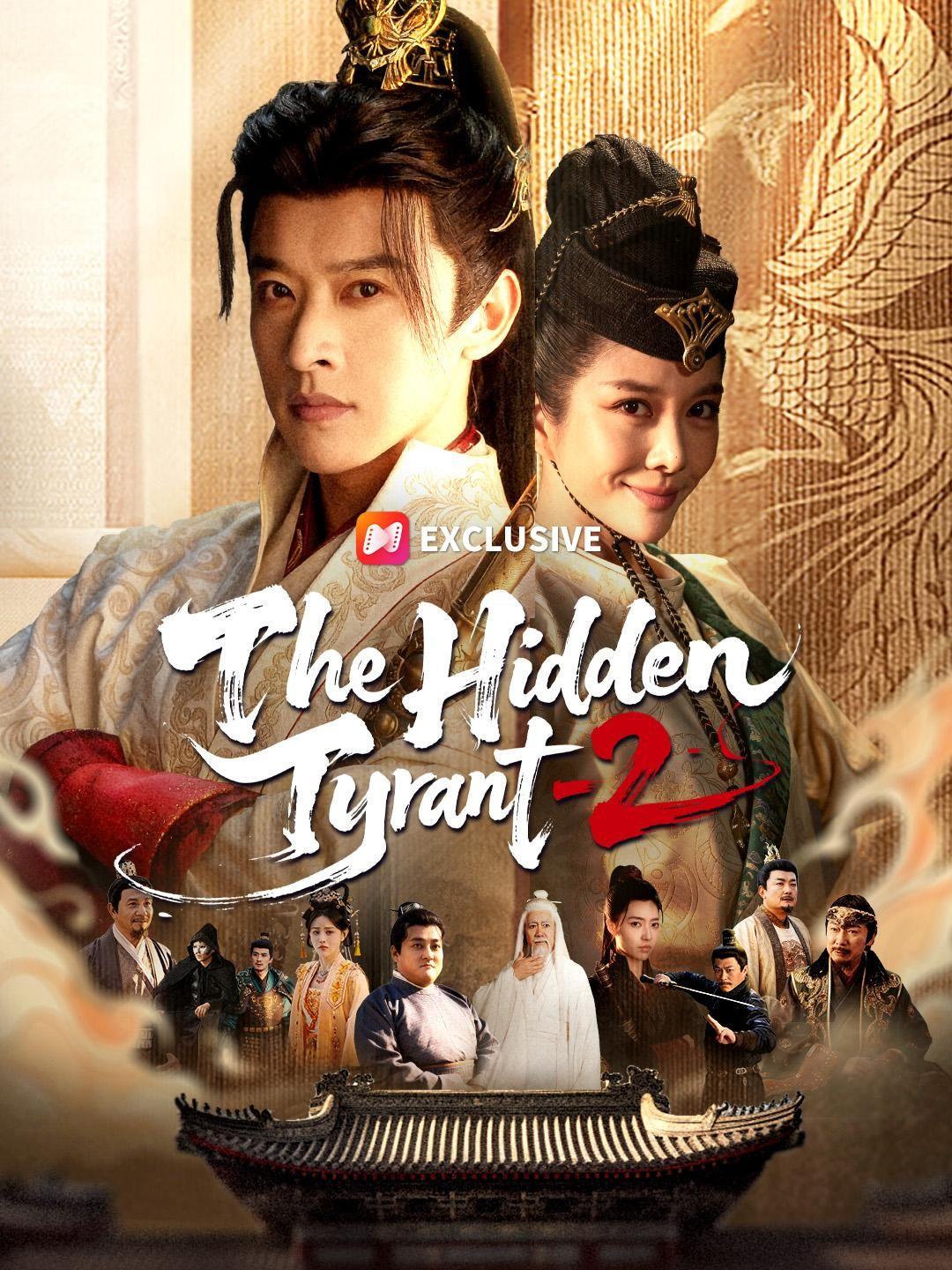
Family Feud and Identity Crisis
Luke's fiancée Elena cruelly dismisses his claims of being the heir to a powerful business empire, mocking his humble noodle stall job, while tensions explode between Elena and her adoptive father Allan, revealing deep-seated resentment and financial disputes within the family.Will Luke uncover the truth about his past and reclaim his rightful place, or will the family's bitter conflicts tear them apart forever?


Recommended for you


Rich Father, Poor Father: When the Crutch Becomes a Mic
Let’s talk about the crutch. Not as a medical device. Not as a symbol of frailty. But as a *microphone*—a conduit for truth in a room full of curated lies. In the latest episode of Rich Father, Poor Father, director Li Meng doesn’t just stage a confrontation; he engineers a sonic landscape where every sigh, every shift of fabric, every unspoken accusation resonates like a bass note in a cathedral. The setting—a banquet hall with gilded pillars and a carpet that swirls like ink in water—isn’t neutral. It’s complicit. The red drapes behind the throne chair aren’t decoration; they’re a warning flag. And the eight people clustered in the center? They’re not guests. They’re witnesses to a reckoning that’s been simmering since the first frame of Season 1. Lin Xiao stands like a statue carved from midnight marble—black dress, pearl necklace, star-tassel earrings that sway with the slightest turn of her head. Her arms are crossed, but it’s not defensiveness. It’s *containment*. She’s holding herself together so tightly that her knuckles whiten beneath her rings—two large solitaires, one on each hand, as if she’s armored against betrayal. When she speaks (again, we infer from lip movement and the subtle flare of her nostrils), her voice isn’t loud. It’s *precise*. Each word lands like a dropped coin in a silent well. And everyone leans in—not because they want to hear, but because they’re terrified of missing the nuance that could unravel everything. Then there’s Jiang Wei. Leather jacket, black tee, jade bi pendant resting just above his sternum like a talisman. He’s the wildcard. The one who grew up in the same alley as Old Man Chen but now drinks wine from crystal glasses. His expressions flicker: curiosity, guilt, defiance—all within three seconds. Watch his eyes when Lin Xiao mentions the ‘old factory incident.’ They don’t dart away. They *lock* onto Old Man Chen’s face, searching for confirmation, for absolution, for the lie he’s been waiting to hear. Because Jiang Wei knows something the others don’t: the crutch wasn’t bought after the accident. It was *gifted*—by Zhang Hao’s father, years ago, with a note that read: *‘For when you remember who you owe.’* That’s the kind of detail Rich Father, Poor Father excels at: the buried receipts of loyalty and leverage. Old Man Chen himself is the emotional epicenter. His jacket is practical, his hair streaked with gray, his posture slightly stooped—not from age, but from carrying too many unspoken truths. He grips the crutch not as a prop, but as a lifeline to coherence. When Zhang Hao smirks (and oh, that smirk—polished, practiced, dripping with inherited arrogance), Old Man Chen doesn’t flinch. He *waits*. And in that waiting, the room holds its breath. Because everyone knows: when he speaks, it won’t be a plea. It’ll be a deposition. His mouth moves slowly, deliberately, and the camera pushes in—not on his face, but on his hand, wrapped around the crutch’s foam grip, veins raised like map lines of a life lived under pressure. That’s when the shift happens. Zhang Hao’s arms uncross. Madame Liu’s shawl slips slightly off her shoulder. Lin Xiao’s lips part—not in shock, but in recognition. She’s heard this story before. Just not *here*. Not *now*. Madame Liu is the linchpin. Her cheongsam is a masterpiece of contradiction: traditional collar, modern cut, rhinestones that catch the light like scattered diamonds. Her earrings—long, dangling crystals—sway with every micro-expression, turning her face into a kaleidoscope of intent. She doesn’t speak much, but when she does, her voice (implied by the slight tilt of her chin and the way her throat moves) is honey laced with arsenic. She’s not defending Zhang Hao. She’s *managing* the fallout. Her gaze flicks between Lin Xiao and Old Man Chen like a referee tracking a tennis rally—measuring risk, calculating consequence. And in one breathtaking shot, the camera circles her as she turns, the embroidered fan on her shawl catching the light, and for a split second, the fan’s painted peony blooms seem to *pulse*—as if the past itself is breathing through her. What elevates Rich Father, Poor Father beyond typical family drama is its refusal to moralize. There’s no clear villain. Zhang Hao isn’t evil—he’s *entitled*, shaped by a world that taught him silence is power and empathy is weakness. Jiang Wei isn’t a traitor—he’s torn, caught between the man he was and the man he’s expected to become. Lin Xiao isn’t righteous—she’s exhausted, her elegance a shield against the grief she’s buried under pearls and posture. And Old Man Chen? He’s not a victim. He’s a witness. And in this room, witnessing is the most dangerous act of all. The climax isn’t a shout. It’s a whisper. When Old Man Chen finally says the words—*‘You knew. All of you knew.’*—the camera cuts to the throne chair, empty, majestic, absurd. Then back to Zhang Hao, whose smirk finally cracks, not into tears, but into something worse: *doubt*. He looks at Jiang Wei, then at Madame Liu, then at Lin Xiao—and for the first time, he doesn’t see allies. He sees accomplices. The crutch, meanwhile, remains upright, steady, a silent judge. Rich Father, Poor Father understands that in the theater of inheritance, the loudest voices aren’t the ones speaking. They’re the ones holding the weight of what’s been unsaid. And tonight, in this gilded cage, the crutch didn’t just support a man. It held up a mirror—and everyone in the room saw their reflection, distorted, undeniable, and utterly exposed. That’s not drama. That’s detonation. Quiet. Precise. Unforgiving.
Rich Father, Poor Father: The Crutch That Shattered the Ballroom
In a grand banquet hall draped in opulence—gold-embossed throne chairs, crimson velvet drapes, and a carpet patterned like frozen vines—the tension doesn’t simmer; it *cracks* like porcelain under pressure. This isn’t just a gathering of elites; it’s a live wire of class collision, where every glance carries weight, every gesture betrays history, and one man’s crutch becomes the fulcrum upon which dignity, deception, and desperation pivot. The scene opens with Lin Xiao, poised in a black dress adorned with a pearl-and-silk bow at her décolletage—her posture rigid, arms crossed, lips painted blood-red but trembling slightly at the corners. She’s not just observing; she’s *auditing*. Her earrings—star-shaped silver tassels—catch the light each time she turns her head, as if signaling to an unseen audience: *I see you. I remember.* Behind her, the ornate backdrop whispers of legacy, but the real story unfolds in the circle at center stage: eight figures arranged like chess pieces on a board that’s already tilted. At the heart of it stands Old Man Chen, gripping his aluminum crutch like a scepter he never asked for. His olive-green jacket is worn at the cuffs, the zipper slightly misaligned—a detail that screams ‘working-class pragmatism’ in a room where even the waiters wear bespoke vests. His eyes dart—not with fear, but with the hyper-awareness of someone who’s spent decades reading micro-expressions in crowded markets and back-alley negotiations. He’s flanked by two younger men: one, Jiang Wei, in a crocodile-textured leather jacket and a jade bi pendant hanging low over his chest—his stance relaxed, yet his fingers twitch near his pocket, as if rehearsing a line he’ll never speak. The other, Zhang Hao, wears a tailored olive suit with a Gucci belt buckle gleaming like a challenge. His smirk is polished, his arms folded with theatrical confidence—but watch his left wrist: a luxury chronograph, yes, but the strap is slightly loose, revealing a faint tan line beneath. A man who *wears* wealth, but hasn’t yet *lived* it long enough to forget the fit. Then there’s Madame Liu, draped in a white shawl embroidered with a fan motif, over a black cheongsam studded with rhinestones and cut with daring keyhole necklines. Her expression shifts like smoke—serene one moment, sharp the next. When Lin Xiao speaks (we don’t hear the words, but we see her jaw tighten, her rings glinting as she gestures), Madame Liu’s gaze drops—not in submission, but in calculation. She knows the script. She’s played this role before: the matriarch who smiles while counting the cracks in the foundation. And behind them all, silent sentinels in black uniforms stand by the double doors, their stillness amplifying the chaos in the center. This isn’t a party. It’s a tribunal. What makes Rich Father, Poor Father so devastatingly effective is how it weaponizes silence. No shouting. No melodramatic reveals. Just the creak of a crutch shifting weight, the rustle of silk as Lin Xiao uncrosses her arms—only to re-cross them tighter—and the way Zhang Hao’s smile falters when Old Man Chen finally speaks. His voice, though unheard, is visible in the tremor of his lips, the dilation of his pupils. He’s not pleading. He’s *accusing*. And the most chilling moment? When Jiang Wei steps forward—not to defend, but to *intercept*, placing a hand on Old Man Chen’s shoulder with the gentleness of a handler calming a startled animal. That touch isn’t comfort. It’s containment. It says: *I know your pain. I also know your place.* The camera lingers on Lin Xiao’s face as the realization dawns: this isn’t about money. It’s about *memory*. The crutch isn’t just support—it’s evidence. A relic from an accident no one will name, a debt no one will settle, a truth buried under layers of silk and sentimentality. When she finally speaks again, her voice (implied by her parted lips and the slight lift of her chin) carries the weight of years held in check. She doesn’t raise her tone. She raises her *expectation*. And in that instant, Zhang Hao’s smirk evaporates. Not because he’s guilty—but because he’s been *seen*. Rich Father, Poor Father doesn’t ask who’s right. It asks: who gets to define what ‘right’ even means when power wears a suit and poverty walks with a limp? The throne chair in the background remains empty—not because the king is absent, but because the throne itself is the illusion. The real power lies in who controls the narrative, who holds the crutch, who dares to look away first. Lin Xiao doesn’t blink. Madame Liu exhales, almost imperceptibly, as if releasing a breath she’s held since the wedding photo was taken. Jiang Wei’s jade pendant catches the light—cold, ancient, indifferent. And Old Man Chen? He tightens his grip on the crutch, knuckles white, and for the first time, he doesn’t look down. He looks *up*. Not at the throne. At the people standing before him. As if to say: I may walk with aid, but I stand on my own terms. That’s the quiet revolution Rich Father, Poor Father stages—not with speeches, but with silences that echo louder than any scream. In a world where inheritance is measured in assets and appearances, this scene reminds us: the heaviest burden isn’t carried in the hands. It’s carried in the eyes. And sometimes, the man with the crutch sees more than the man with the crown.
When Pearls Meet Plastic Buttons
That black dress with pearl bow vs. the leather-jacket rebel—Rich Father, Poor Father nails class tension in micro-expressions. Her crossed arms aren’t defiance; they’re armor. His jade pendant? A quiet rebellion. One room, seven people, infinite unspoken wars. 🔥
The Crutch That Shook the Ballroom
In Rich Father, Poor Father, the old man’s crutch isn’t just support—it’s a silent weapon. Every tremor in his voice, every grip on that metal rod, screams decades of swallowed pride. The contrast between his worn jacket and the gilded throne? Chef’s kiss. 🎭