



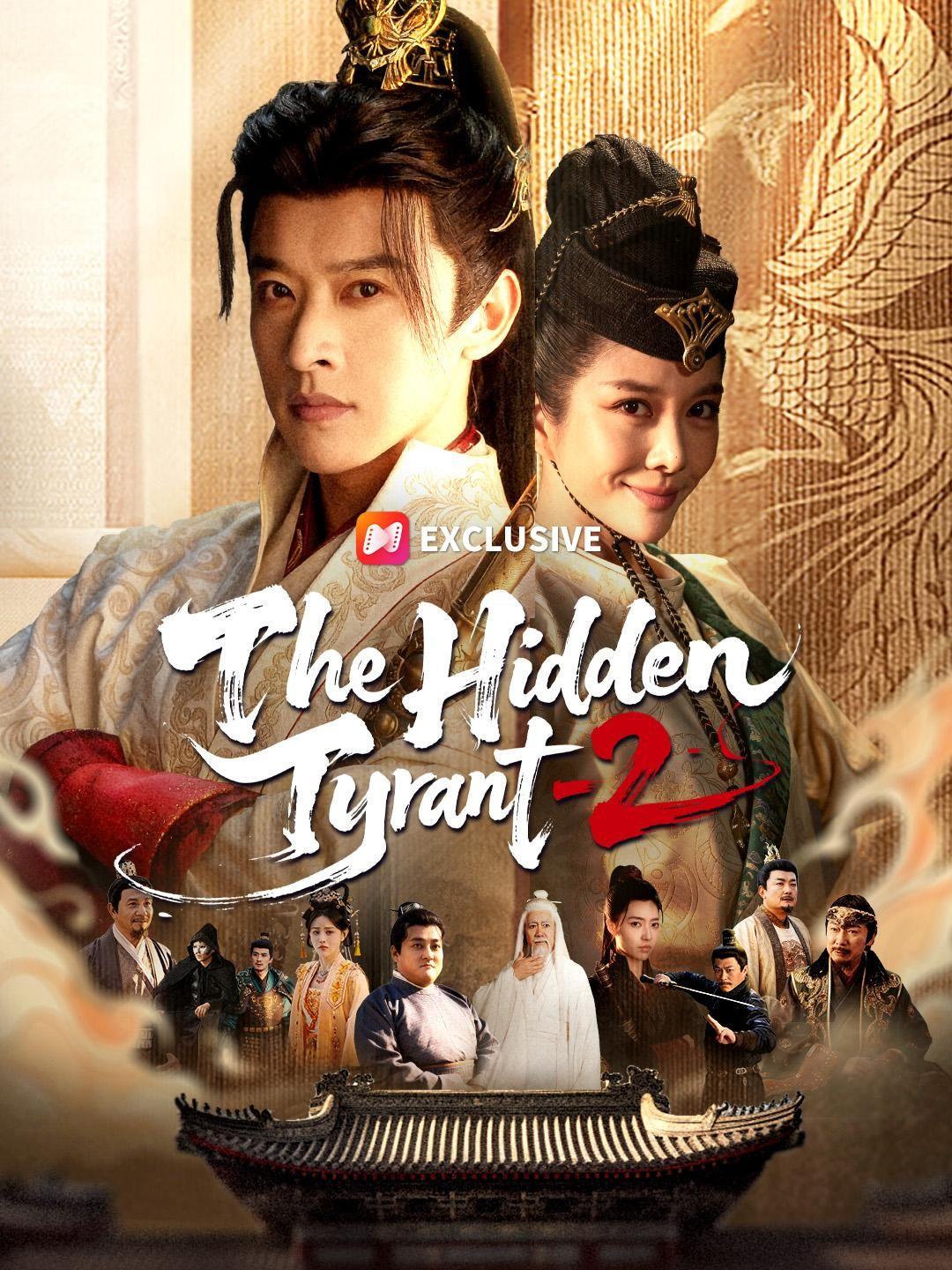
The Hidden Conspiracy
Tony Clark's investigation into Chloe Medicine Group's med leads to a confrontation with a mysterious boss who plans to use Gary Clark and the Huber family to eliminate Tony and obtain the formula, revealing a deeper conspiracy involving Justhell.Will Tony survive the boss's deadly plan and uncover the truth behind Justhell?


Recommended for you


The Formula of Destiny: The Weight of the Unspoken Scroll
Here’s the thing no one admits aloud: in The Formula of Destiny, the most dangerous object isn’t the sword resting on the table, nor the fire burning in the brazier. It’s the scroll. Not because of what’s written on it—but because of what *isn’t*. The moment Ren takes it from Kaito, the air changes. Not dramatically. Not with thunder or wind. Just a slight dip in temperature, a hesitation in the smoke’s ascent, as if the room itself is holding its breath. That’s how you know: this isn’t paperwork. This is prophecy wrapped in parchment. And Ren? He doesn’t read it. He *feels* it. His fingers trace the edge, not searching for text, but for texture—like a blind man reading braille etched in sorrow. Let’s unpack the choreography of that exchange. Kaito doesn’t extend the scroll. He lowers it, slowly, as if offering a live coal. Ren doesn’t reach eagerly. He waits. One beat. Two. Then, with the precision of a surgeon, he takes it—thumb and forefinger only, avoiding direct palm contact, as though the scroll might burn. That restraint tells us everything about their dynamic: this isn’t trust. It’s protocol. Every movement is codified. Even the way Ren bows his head—not deeply, just enough to acknowledge the gravity, not the giver—is a language unto itself. In The Formula of Destiny, respect isn’t shown with words. It’s measured in millimeters of inclination and seconds of silence. Now, consider the masks again. Kaito’s red grin isn’t static. Watch closely: when he speaks (though we never hear his voice), the lower jaw of the mask *shifts*, just slightly, revealing a seam of dark metal beneath the ceramic. It’s not decoration. It’s articulation. The mask *talks* through motion. And Ren’s response? He doesn’t nod. He tilts his head—once—to the left. A micro-gesture, barely perceptible, but in this world, it’s a full sentence. Translation: *I accept the terms. I understand the cost.* No verbal confirmation needed. The formula operates on resonance, not rhetoric. What’s fascinating is how the environment reacts to their interaction. The fire doesn’t flare when Kaito raises his hand. It *dims*. As if acknowledging a shift in authority. The smoke, previously rising in lazy spirals, suddenly fractures into jagged lines, as though disturbed by an invisible current. Even the concrete wall behind them seems to absorb light differently—darker in patches, like bruises forming in real time. This isn’t mood lighting. It’s environmental feedback. The space *knows* what’s happening. And it’s adjusting. Then there’s the third figure—the one who stands in the rear, barely visible, hood pulled low, hands clasped behind his back. We never see his face. Never hear his voice. But his presence is the silent variable in the equation. When Ren receives the scroll, that third figure shifts his weight—just a fraction—to the right. A tiny recalibration. Yet it’s enough to make you wonder: is he witness? Arbiter? Or something far more unsettling: the next in line? The Formula of Destiny thrives on these absences. The unsaid. The unseen. The third figure doesn’t need a mask. His anonymity *is* his mask. And in a world where identity is currency, being unidentifiable is the ultimate leverage. Let’s talk about the beads again. Early on, Kaito holds them like a rosary. But later, when he raises his hand during the scroll transfer, the beads dangle freely—not clutched, but *released*. That’s the pivot point. Up until that moment, he’s contained. After? He’s unleashed. The beads aren’t tools of prayer here. They’re counters. Each sphere represents a life spared, a debt forgiven, a vow broken. When they swing in the dim light, catching glints of blue and amber, you realize: they’re not black. They’re obsidian, polished to reflect whatever light dares approach. Which means they don’t hide truth—they *mirror* it. And Kaito? He’s been staring into that reflection for years. Ren’s transformation isn’t sudden. It’s cumulative. First, his stance widens—subconsciously bracing for impact. Then, his breathing syncs with the fire’s rhythm, inhale as flame surges, exhale as it recedes. By the time he turns toward the door, his posture has changed: spine straighter, gaze fixed ahead, not scanning, not doubting. He’s not walking *away* from the ritual. He’s walking *into* its consequence. And the scroll? It’s no longer in his hands. It’s tucked inside his robe, against his chest—close to the heart, but shielded. Not hidden. *Protected.* That distinction matters. In The Formula of Destiny, concealment is cowardice. Protection is duty. The banner on the wall—the sun with the snarling face—appears twice: once when Kaito enters, once when Ren departs. Same symbol. Different context. First, it looms over Kaito like a crown. Later, it hangs behind Ren like a shadow. The sun isn’t benevolent here. It’s judgmental. Its rays aren’t warmth—they’re scrutiny. And the snarl? That’s not anger. It’s warning. *You are seen. You are bound. You will answer.* That’s the core thesis of The Formula of Destiny: there are no private choices. Every decision echoes in the architecture of fate. The scroll isn’t a contract. It’s a receipt—for services rendered in a previous life, paid in blood we haven’t yet spilled. What haunts me isn’t the violence (there’s little, and what exists is implied, not shown). It’s the intimacy of the betrayal. When Kaito touches Ren’s mask, it’s not dominance. It’s intimacy. A violation, yes—but sacred. Like a priest anointing a initiate with oil that burns. Ren doesn’t pull away because he knows: to resist is to reject the formula itself. And to reject the formula is to cease existing in this world. So he stands still. Lets the touch linger. Lets the weight settle. That’s the tragedy The Formula of Destiny hides in plain sight: the most profound submissions are voluntary. Chosen. Embraced. And the ending—Kaito walking toward the fire, back to us, hood swallowing his features—doesn’t resolve anything. It deepens the mystery. Because as he moves, the light catches the inner lining of his hood: not green, as we thought, but *blood-crimson*, dyed with something that stains permanently. That detail wasn’t visible earlier. It reveals itself only now, in departure. Which means: he was hiding it. Not from us. From *Ren*. The formula isn’t just about power transfer. It’s about concealment as strategy. Every character wears layers—not just fabric, but intention. Kaito’s true face isn’t behind the mask. It’s behind the *hood*. And Ren? He’ll learn that soon enough. Because in The Formula of Destiny, knowledge isn’t given. It’s earned through endurance. Through carrying the scroll until your bones remember its shape. This isn’t a story about good vs. evil. It’s about obligation vs. autonomy—and how rarely they coexist. Ren thinks he’s accepting a role. He’s actually inheriting a curse disguised as legacy. The scroll won’t tell him what to do. It’ll remind him who he *was*, and force him to decide who he *must* become. And Kaito? He’s not the villain. He’s the keeper of the flame. The one who ensures the formula stays balanced—even if it costs him his own reflection in the beads. That’s the final truth The Formula of Destiny whispers, just before the screen fades: some destinies aren’t chosen. They’re *recalled*.
The Formula of Destiny: When the Mask Breathes
Let’s talk about what happens when ritual meets reckoning—when the fire doesn’t just light the room, but *judges* it. In The Formula of Destiny, we’re not watching a ceremony; we’re witnessing a transfer of power that feels less like tradition and more like inevitability. The opening shot—a hand clutching black prayer beads, backlit by a flickering brazier—sets the tone with brutal elegance. That hand isn’t trembling. It’s *waiting*. And in that stillness, you sense something ancient stirring beneath the floorboards. The beads aren’t just accessories; they’re anchors. Each sphere polished by decades of repetition, each one whispering a name no one dares speak aloud. This isn’t superstition. It’s architecture. Then enters Kaito—the figure in the crimson mask with fangs carved from bone-white resin, hood lined in emerald silk and gold-threaded brocade. His presence doesn’t announce itself; it *settles*, like smoke filling a sealed chamber. He doesn’t walk toward the others—he *arrives*, as if he’d been standing there all along, merely invisible until the light shifted. Behind him, Ren stands silent, masked in obsidian lacquer with gilded jaws, eyes wide and unblinking, as though he’s memorizing every breath Kaito takes. There’s no dialogue yet, but the tension is already spoken in the way Ren’s fingers twitch near his belt—where a tanto lies sheathed, not for show, but for use. You don’t wear that kind of mask unless you’ve already decided who lives and who becomes legend. What follows isn’t a confrontation—it’s a calibration. Kaito raises his hand, not in blessing, but in assessment. He studies Ren like a master inspecting a blade before the first cut. Then, slowly, deliberately, he reaches out—not to strike, but to *touch* Ren’s mask. Not the face beneath. Never the face. Just the mask. That gesture alone tells us everything: identity here is not personal. It’s inherited. It’s contractual. When Kaito’s thumb drags across the golden ridge of Ren’s jawline, the camera lingers on the micro-expression behind the eye slits—fear? Reverence? Or something colder: recognition. Ren doesn’t flinch. He *leans* into it. That’s the moment The Formula of Destiny reveals its core mechanic: submission isn’t weakness. It’s the first ingredient in the formula. Power isn’t seized here. It’s *offered*, then accepted under oath written in ash and blood. Later, when Ren receives the scroll—bound in hemp, sealed with wax the color of dried rust—you realize this isn’t a decree. It’s a ledger. A record of debts owed across lifetimes. Kaito doesn’t hand it over; he *presents* it, palms up, as if offering a sacrifice. Ren accepts it with both hands, bowing slightly—not in deference, but in acknowledgment of weight. The scroll isn’t blank. You can see the faint indentations of characters pressed deep into the paper, as if someone once wrote upon it with a heated stylus. That detail matters. It suggests the text was *burned* into existence, not inked. Truths too dangerous for ordinary script. And then—the silence after. Kaito steps back, the firelight catching the sharp edge of his mask’s grin. He doesn’t smile. Masks don’t smile. They *hold* smiles hostage. Ren turns away, scroll clutched tight, and for the first time, we see his posture shift: shoulders square, chin lifted—not defiant, but *resolved*. Something has passed between them that no words could carry. The air hums with residual energy, like the moment after lightning strikes but before the thunder arrives. That’s the genius of The Formula of Destiny: it understands that the most violent acts are often the quietest. The real rupture isn’t the grab, the choke, or the scroll exchange. It’s the second where Kaito’s gaze locks onto Ren’s—and Ren doesn’t look away. In that exchange, loyalty is forged, not pledged. Oath is taken, not spoken. The setting reinforces this: concrete walls, minimal furniture, a single banner bearing a sun with a snarling face at its center—neither god nor demon, but something older, hungrier. No altars. No incense burners. Just fire, steel, and silence. This isn’t a temple. It’s a threshold. Every object in the room serves dual purpose: the chair isn’t for sitting—it’s for binding. The table isn’t for writing—it’s for sealing. Even the smoke from the brazier curls upward in deliberate spirals, as if choreographed by unseen hands. The cinematography leans into chiaroscuro so extreme it feels like the characters are half-dissolved into shadow, their identities literally fraying at the edges. When Kaito lifts his hand again near the end, beads glinting like captured stars, you don’t wonder what he’ll do next. You wonder what he’s *remembering*. Because in The Formula of Destiny, the past isn’t prologue. It’s active code, running in the background, waiting for the right trigger. Ren’s transformation isn’t visual—it’s kinetic. Watch how his breathing changes after receiving the scroll. Shallow at first, then deeper, as if drawing oxygen from the weight in his hands. His fingers, previously restless, now rest flat against the scroll’s surface, as though grounding himself. That’s the second layer of the formula: burden as baptism. Kaito knows this. That’s why he watches Ren so closely—not to test him, but to *witness* him becoming what he must. There’s no mentorship here. Only transmission. Like handing a live wire to someone who’s already been shocked once—and survived. And let’s not ignore the masks. They’re not costumes. They’re interfaces. The red mask with fangs? It doesn’t hide Kaito. It *amplifies* him. The white teeth aren’t decorative—they’re calibrated to catch light at precise angles, making his expression unreadable even to those standing inches away. Ren’s black-and-gold mask, meanwhile, has subtle vents near the temples—functional, not ornamental. You notice them only in close-up, when sweat beads at his hairline and the mask exhales mist. These aren’t worn for drama. They’re worn for *survival*. In The Formula of Destiny, identity is a liability. The mask is armor. The hood? That’s the kill switch—pull it, and you reveal yourself. And in this world, revelation is fatal. The final shot—Kaito turning away, back to the fire, beads still in hand—doesn’t feel like an ending. It feels like a comma. Because the real story begins *after* the scroll is accepted. What’s written on it? Who demanded it? And why does Ren’s left sleeve, just for a frame, show a faded scar shaped like a serpent coiled around a key? Details like that don’t exist by accident. They’re breadcrumbs dropped by a storyteller who trusts the audience to follow. The Formula of Destiny doesn’t explain. It *implies*. And in doing so, it makes you complicit. You lean in. You squint at the shadows. You replay the sequence in your head, hunting for the moment the truth slipped through. This isn’t fantasy. It’s folklore with teeth. It’s the kind of narrative that lingers because it refuses to comfort. There are no heroes here—only roles, obligations, and the terrible grace of inevitability. When Kaito murmurs something inaudible as he walks offscreen, you don’t need subtitles. You feel it in your sternum. That’s the mark of great visual storytelling: it speaks in pulse, not prose. The Formula of Destiny doesn’t ask you to believe. It asks you to *remember*—as if you’ve lived this ritual before, in a life you can’t quite recall, but whose echoes still rattle in your ribs every time the fire flares.