



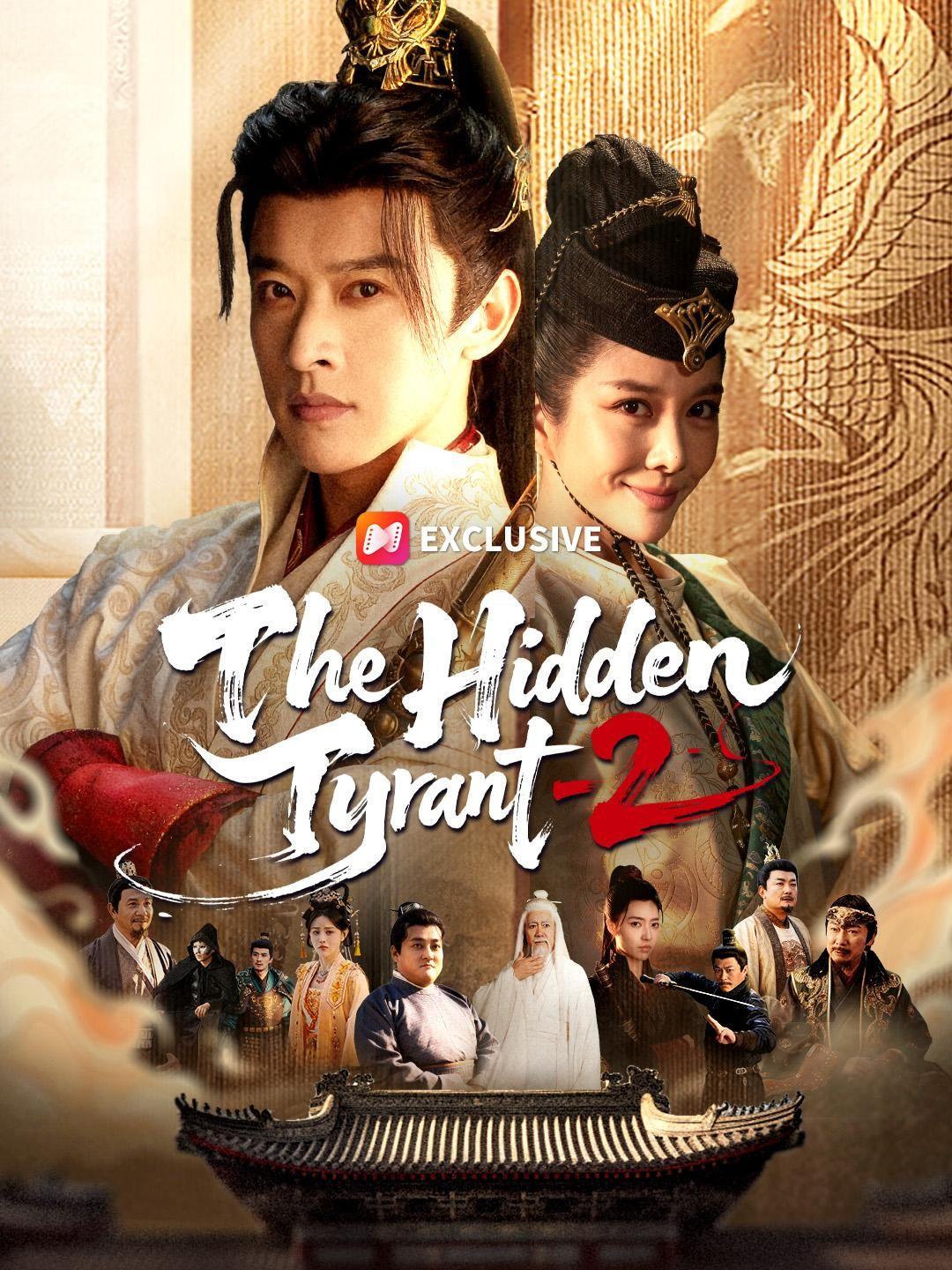
The Life-Extending Prescription
During a gathering, Tony presents what he claims to be the real prescription for life-extending pills to Mr. Brandon, sparking outrage and disbelief among the attendees, especially when Tony suggests the pills could be deadly.Will Mr. Brandon risk taking the pill from Tony's controversial prescription?


Recommended for you


The Formula of Destiny: When Ink Bleeds Into Bloodlines
There’s a particular kind of tension that only arises when tradition meets ambition in a room that smells of sandalwood and unspoken debts. In *The Formula of Destiny*, that room is lavishly appointed, yes—gilded frames, heavy drapes, a table so polished it reflects not just faces, but fractures. But the real drama isn’t in the décor; it’s in the way Lin Zhi’s cufflink catches the light as he leans forward, or how Master Chen’s knuckles whiten around the bamboo scroll—not from strain, but from the effort of *not* reacting. This isn’t a meeting. It’s an excavation. And everyone present is both archaeologist and artifact. Let’s begin with the scroll itself. Not digital, not printed, but *bamboo*—a medium that demands patience, that resists haste, that cracks under pressure. When Master Chen unfurls it, the sound is soft, almost sacred. Each slat is bound by thread thinner than a hair, yet strong enough to hold centuries of meaning. The characters aren’t calligraphy for show; they’re incised with deliberate force, as if the writer feared the wind might erase them. One phrase stands out: ‘Dan Cheng Ze Ming Gai’—‘When the pill is formed, fate changes.’ Not ‘can change.’ Not ‘might change.’ *Changes*. Absolute. Irreversible. That’s the hook of *The Formula of Destiny*: it doesn’t promise hope. It promises consequence. And in this circle, consequence is the currency more valuable than gold. Lin Zhi, for all his polished demeanor, is the anomaly. His suit is modern, his gestures calibrated, his speech peppered with phrases that sound scholarly but carry the cadence of negotiation. He doesn’t defer to Master Chen—he *engages* him. When he explains the composition—white atractylodes, windproof herb, clove—he does so not as a student reciting, but as a chemist revealing molecular structure. His eyes never leave Master Chen’s, searching for the micro-expression that confirms recognition. And when it comes—the slight lift of the eyebrow, the almost imperceptible nod—that’s when Lin Zhi allows himself a breath. Not triumph. Relief. Because he needed confirmation that the knowledge wasn’t lost. That the lineage hadn’t broken. Director Wu, meanwhile, operates in a different frequency. His energy is kinetic, his posture restless. He taps his fingers, shifts in his chair, interrupts—not out of rudeness, but out of desperation. He wants the formula to be *simple*. A list. A dosage. A transaction. He doesn’t want poetry; he wants profit. Yet every time he speaks, his voice wavers just enough to betray his insecurity. He’s used to commanding boardrooms, not deciphering ancestral codes. When he points at the scroll and says, ‘This is outdated,’ the camera holds on Master Chen’s face—not angry, but sorrowful. Because he knows Wu isn’t rejecting the past. He’s afraid of what the past might demand of him. *The Formula of Destiny* doesn’t just alter fate; it demands accountability. And Wu hasn’t paid his dues. Then there’s Xiao Yue. Oh, Xiao Yue. She doesn’t speak for nearly three minutes of screen time—and yet, she dominates every frame she occupies. Her dress isn’t just glittering; it’s *armored*, with chains draped over her shoulders like ceremonial regalia. Her earrings? Not mere accessories. They’re markers—of taste, of access, of a world where influence is worn, not argued. When she finally speaks, her voice is low, measured, and devastatingly precise. She doesn’t ask questions. She reframes them. ‘If the formula requires sacrifice,’ she says, turning to Lin Zhi, ‘who decides what’s worth losing?’ It’s not a challenge. It’s a trapdoor. And Lin Zhi, for the first time, hesitates. Because she’s not questioning the science. She’s questioning the ethics. And in *The Formula of Destiny*, ethics are the one ingredient no recipe can standardize. The scene where Lin Zhi writes the formula on paper is masterful in its restraint. No dramatic music. No slow-motion ink drip. Just his hand, steady, deliberate, forming characters that look deceptively simple—until you realize each stroke aligns with the scroll’s original notation. He’s not copying. He’s *validating*. And when he presents it, he doesn’t hand it over. He places it on the table, centered, as if offering an altar. The others lean in—not out of greed, but out of dread. Because now, the abstract has become tangible. The myth has a signature. And signatures can be forged. Or revoked. What elevates this beyond typical ‘mystery scroll’ tropes is how the film treats inheritance not as bloodline, but as *burden*. Master Chen doesn’t inherit wisdom; he inherits responsibility. Lin Zhi doesn’t seek power; he seeks absolution—for himself, perhaps, for his father, whose absence hangs heavier than any ornament in the room. Even Director Wu, for all his bluster, is trapped by expectation: the son who must prove he’s more than his title. *The Formula of Destiny* isn’t about creating immortality. It’s about confronting mortality—with full awareness of what you’ll have to surrender to delay it. The final exchange—between Xiao Yue and Lin Zhi, barely audible over the clink of glasses—is the quiet detonation. She says, ‘You think you’re restoring balance. But balance favors the keeper, not the seeker.’ And Lin Zhi doesn’t argue. He looks down at his hands, then back at her, and for the first time, his composure cracks. Not into weakness, but into clarity. He understands now: the formula was never meant to be *used*. It was meant to be *refused*. To possess it is to be owned by it. And in that realization, *The Formula of Destiny* reveals its true function—not as a recipe for longevity, but as a mirror for integrity. Who among them will walk away? Who will take the scroll and vanish into the night? Who will burn it, and with it, their chance at legacy? The last shot lingers on the blue box, now closed, sitting beside the half-finished glass of water. Condensation trails down its side like a tear. No one touches it. Not yet. Because the most dangerous step isn’t opening the box. It’s deciding what to do after you’ve seen what’s inside. *The Formula of Destiny* doesn’t end with revelation. It begins there. And as the credits roll, you’re left wondering: if you were seated at that table, which hand would you extend? The one that takes the scroll… or the one that pushes it away?
The Formula of Destiny: A Bamboo Scroll That Unravels Power
In the opulent, gilded chamber where silk curtains whisper secrets and mahogany tables reflect ambition like polished mirrors, *The Formula of Destiny* unfolds not as a grand spectacle, but as a slow-burning psychological duel—where every gesture, every pause, carries the weight of legacy and deception. At the center of this tension sits Lin Zhi, the younger man in the pinstripe suit, his glasses catching light like lenses focused on truth, yet his smile often betraying a practiced charm that feels just slightly too rehearsed. He speaks with fluid confidence, hands moving like conductors orchestrating an invisible symphony of persuasion—yet when he raises two fingers in a casual ‘V’, it’s less about victory and more about control: a subtle assertion that he knows what others don’t. His presence is magnetic, but not warm; he commands attention without offering trust. Across from him, Master Chen—a man whose face bears the quiet gravity of decades spent reading people rather than books—holds a bamboo scroll with reverence bordering on ritual. His fingers trace the carved edges, each slat inscribed with characters that seem to pulse with ancient authority. When he opens it, the camera lingers on the texture: the aged yellow bamboo, the fine thread binding it, the faint ink smudges suggesting repeated study. This isn’t just a document—it’s a relic, a covenant, perhaps even a curse disguised as wisdom. His expression shifts between curiosity, skepticism, and something deeper: recognition. He doesn’t merely read the text; he *listens* to it, as if the words hum beneath his fingertips. And when he glances up—eyes narrowing, lips tightening—it’s clear he’s not just evaluating content, but testing intent. Is Lin Zhi presenting knowledge… or weaponizing it? Then there’s Director Wu, the third pillar of this uneasy trinity, dressed in black with a gold-checkered tie that screams corporate power but feels oddly out of place among the traditional motifs. His reactions are visceral: he leans forward, points emphatically, brow furrowed as though trying to solve a riddle that refuses to yield. He speaks with urgency, his voice rising not in anger, but in the frustration of someone who believes he holds the map—but keeps finding dead ends. His gestures are sharp, decisive, almost theatrical—yet his eyes betray doubt. He wants to believe the scroll holds the key to *The Formula of Destiny*, but his body language suggests he fears it might expose something he’d rather keep buried. Every time he interjects, the air thickens. It’s not disagreement—it’s resistance. Resistance to change, to revelation, to the idea that power might not be inherited, but *deciphered*. And then—she enters the frame. Xiao Yue, draped in sequins that catch the chandelier’s glow like scattered stars, her earrings bearing the unmistakable double-C motif—not just fashion, but statement. She says little, yet her silence is louder than any monologue. Her gaze moves deliberately: first to Lin Zhi, then to the scroll, then to Master Chen’s hands. She doesn’t react with shock or awe; she observes, calculates, waits. When she finally reaches for the blue box on the table—her fingers brushing Lin Zhi’s wrist in a moment so brief it could be accidental, yet charged with implication—it’s not greed she conveys, but strategy. She understands that in this room, objects are proxies for power: the scroll, the box, the inkstone on the side table, even the glass of water half-full before Director Wu. Nothing is incidental. In one fleeting shot, she turns her head just enough to let the light catch the curve of her neck, and for a second, you see it—the flicker of amusement, not at the men, but at the game they think they’re playing while she already knows the rules. The turning point arrives when Lin Zhi rises—not with flourish, but with quiet inevitability. He walks to the writing desk, selects a brush, dips it into ink, and writes on rice paper with the precision of a surgeon. The camera zooms in on the characters: *Bai Zhi*, *Fang Feng*, *Ding Xiang*—herbs, yes, but also code names, ingredients in a formula that transcends medicine. He holds up the sheet, presenting it not as proof, but as invitation. And here’s where *The Formula of Destiny* reveals its true nature: it’s not about curing illness. It’s about *transformation*. Who controls the recipe controls the outcome. Who interprets the dosage controls the fate. Master Chen’s face tightens—not because he disbelieves, but because he *recognizes* the formulation. It matches fragments he’s seen in forbidden texts, whispered in temple corridors, dismissed as myth. Lin Zhi didn’t bring a solution; he brought a mirror. And in that reflection, each character sees not just their role in the plot, but their complicity in the system they’ve upheld. What makes this sequence so compelling is how the director uses mise-en-scène as narrative engine. The round table isn’t just furniture—it’s a stage for circular logic, where no one can escape the orbit of the central object: the blue box, now open, now closed, now passed hand-to-hand like a hot coal. The ornate chairs, gilded but rigid, suggest privilege that imprisons as much as it elevates. Even the lighting—warm, golden, yet casting long shadows behind each figure—hints that enlightenment comes at the cost of exposure. When Lin Zhi smiles again near the end, it’s different: less performative, more knowing. He’s not winning an argument. He’s watching them realize they’ve already lost—and that the real formula wasn’t written on bamboo or paper, but in the space between their choices. *The Formula of Destiny* isn’t a potion. It’s a test. And as the final shot lingers on Master Chen’s hand still holding the scroll, his thumb rubbing the edge as if seeking a hidden seam, we understand: the most dangerous ingredient isn’t listed anywhere. It’s time. Time to decide. Time to betray. Time to become someone else—or remain exactly who they’ve always been. Lin Zhi knows this. Xiao Yue knows this. Even Director Wu, despite his bluster, feels the clock ticking beneath the floorboards. The scroll may be ancient, but the dilemma it presents is terrifyingly modern: when knowledge becomes power, who gets to define its purpose? And more importantly—who dares to rewrite the formula before it rewrites them?