



The Plot Against Chloe
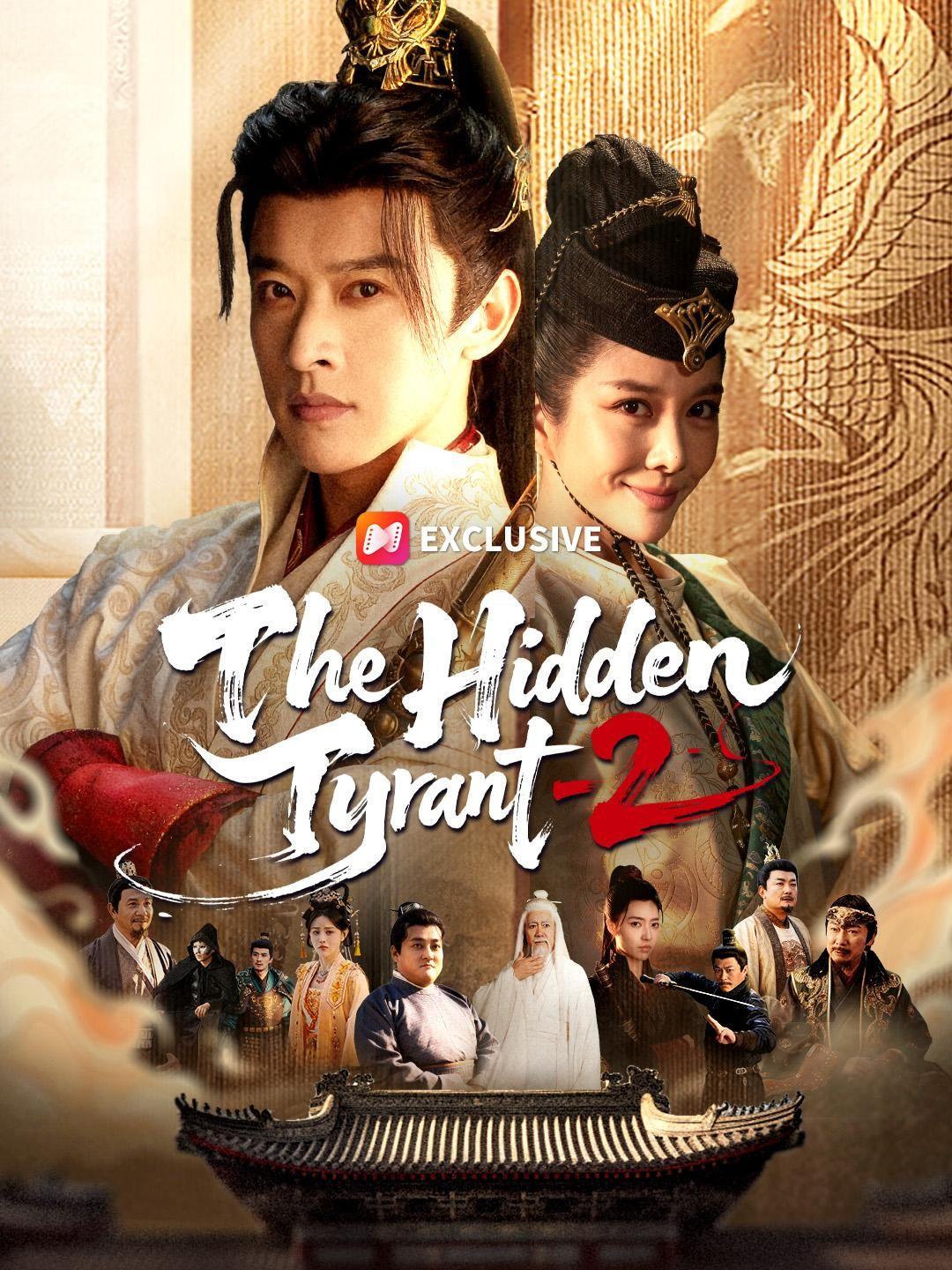
The antagonists plan to capture Chloe Morgan to manipulate Tony Clark, leveraging his marriage to her as a means to control him and destroy the Morgan family.Will Tony be able to protect Chloe from the Bloodie Gang and uncover the truth in time?


Recommended for you


The Formula of Destiny: The Anatomy of a Breakdown in Three Acts
If cinema were a science, *The Formula of Destiny* would be its most precise experiment in emotional detonation—measured in milliseconds, calibrated by facial tics, and detonated not with explosions, but with a single raised eyebrow. The scene we witness is not a confrontation; it’s an autopsy. And the cadaver? A relationship that died quietly, long before this moment, but only now reveals its rigor mortis. Let’s dissect it—not clinically, but with the reverence due to something that once pulsed with life. Act One: The Collapse. Lin Mei sits, back straight, legs crossed at the ankle, heels planted firmly on the tiled floor—yet her body betrays her. Her right hand moves to her face, not in theatrical despair, but in the instinctive reflex of someone trying to contain a flood. Her fingers press against her eye, thumb rubbing the inner corner, a gesture so intimate it feels invasive to watch. Her hair falls forward, partially obscuring her face, but not enough to hide the tremor in her lower lip. She wears red lipstick—bold, confident, defiant—and yet it’s smudged, as if she kissed someone recently, or cried too hard to care. The pearls around her neck shift with each breath, catching light like tiny moons orbiting a dying star. Zhou Jian stands nearby, not facing her, but angled away, as if physically resisting the pull of her pain. His shoes are polished, his trousers creaseless, his posture rigid—not out of arrogance, but out of fear. Fear of what he’ll say next. Fear of what she’ll do. Fear of the silence that follows. Act Two: The Accusation. Here, Lin Mei transforms. Her tears dry, not because she’s stopped hurting, but because anger has burned them away. She uncrosses her arms, leans forward slightly, and points—not wildly, but with surgical precision. Her index finger extends like a blade, aimed not at Zhou Jian’s chest, but at the space between them, where the truth has been buried. Her voice, though unheard, is audible in the tension of her jaw, the flare of her nostrils, the way her eyes narrow into slits of pure, unadulterated disappointment. This is not rage. Rage is loud. This is something colder: the realization that the person you trusted most has been lying to you in plain sight, and you were too in love to notice. Zhou Jian reacts not with denial, but with evasion—his gaze flickers upward, his mouth opens, closes, opens again. He tries to speak, but his words get stuck somewhere between his throat and his conscience. He raises his hand—not to interrupt, but to beg for time. To ask for one more second before the world ends. His suit jacket strains slightly at the shoulder, a visual metaphor for the pressure building inside him. *The Formula of Destiny* excels at these physical tells: the way a character’s clothing becomes a second skin, reflecting their internal state. Zhou Jian’s tie is still straight. His cufflinks gleam. But his humanity is fraying at the edges. Act Three: The Aftermath. The shouting stops. The pointing ceases. Lin Mei folds her arms again, but this time, it’s not protection—it’s closure. She looks at Zhou Jian, and for the first time, there’s no hope in her eyes. Only clarity. She doesn’t cry. She doesn’t yell. She simply *sees* him, fully, for the first time in years. And what she sees breaks her all over again—not with sound, but with stillness. Zhou Jian, meanwhile, stands frozen, caught between two versions of himself: the man he was when they met, and the man he’s become. His expression cycles through disbelief, guilt, resignation, and finally, something resembling grief—not for her, but for the future they won’t have. He blinks slowly, as if trying to reset his vision, to see her as she was, not as she is now. The camera lingers on his face, capturing the micro-expressions that no script could dictate: the slight twitch near his temple, the way his Adam’s apple rises and falls without sound, the faint sheen of sweat at his hairline. These are the details that make *The Formula of Destiny* feel less like fiction and more like surveillance footage of a soul disintegrating. What’s remarkable is how the environment participates in the drama. The mountain mural behind Lin Mei doesn’t change, yet it feels different in each shot—sometimes serene, sometimes ominous, depending on her expression. The curtains hang heavy, unmoving, as if holding their breath. Even the marble table reflects their distorted images, fragmented and disjointed, mirroring their fractured connection. The lighting remains soft, never harsh, which makes the emotional brutality all the more unsettling. There’s no villain here, no clear-cut betrayal. Just two people who loved each other deeply, misunderstood each other completely, and now stand in the ruins of what they built, wondering how it all collapsed without a single loud noise. Lin Mei’s jewelry tells its own story. The Chanel necklace—double-stranded, with the iconic interlocking Cs—is not just an accessory; it’s a statement. She chose it deliberately, perhaps for this meeting, perhaps as a reminder of who she is when she’s not defined by him. Her earrings, delicate gold drops, sway with every movement, like pendulums measuring time she can no longer afford to waste. Her bracelet—silver, studded with tiny diamonds—catches the light when she gestures, a fleeting sparkle in the gloom, symbolizing the last remnants of hope she’s unwilling to extinguish entirely. Zhou Jian, by contrast, wears nothing but his suit, his tie, his watch—symbols of order, of structure, of a life built on predictability. And yet, in this moment, predictability has failed him. *The Formula of Destiny* understands that the most devastating conflicts aren’t fought with weapons, but with silence, with hesitation, with the unbearable weight of unsaid things. By the final frame, Lin Mei has stopped speaking. Zhou Jian has stopped reacting. They exist in the same room, but in different dimensions. The camera pulls back slightly, revealing the full scope of the space—the empty chair beside her, the untouched coffee cup on the table, the way the sunlight slants across the floor, illuminating dust particles dancing in the air like forgotten memories. This is where *The Formula of Destiny* leaves us: not with resolution, but with resonance. We don’t know what happens next. We don’t need to. The damage is done. The truth is spoken. And sometimes, that’s enough. The real tragedy isn’t that they’re breaking up. It’s that they both knew it was coming—and did nothing to stop it. That’s the formula, after all: love plus neglect equals inevitability. And in the end, the most heartbreaking thing about *The Formula of Destiny* is how familiar it feels. Because we’ve all stood in that room. We’ve all been Lin Mei. We’ve all been Zhou Jian. And we’ve all wondered, in the quiet aftermath, whether love was ever really the variable—or just the catalyst.
The Formula of Destiny: When Silence Screams Louder Than Words
In the opening frame of *The Formula of Destiny*, we are dropped into a living room that breathes luxury but hums with tension—cream leather sofas, geometric marble tables, and a muted mountain mural behind them suggesting serenity that’s clearly been shattered. A man in a navy suit stands rigidly, hands buried in his pockets, head bowed as if weighed down by something heavier than regret. His posture is not one of guilt, exactly—it’s more like resignation, the kind you wear when you’ve already lost the argument before it began. Across from him, seated on the edge of the sofa, is Lin Mei, her black velvet dress clinging to her like a second skin, her pearl necklace—a Chanel double-strand—glinting under soft ambient light, almost mocking in its elegance. She wipes her eyes with her right hand, fingers trembling slightly, then lifts her face, revealing red lipstick smeared at the corner of her mouth—not from passion, but from tears she tried too hard to suppress. Her expression shifts rapidly: sorrow, disbelief, fury, all layered like paint on a canvas still wet. This isn’t just crying; it’s performance art of emotional collapse, and yet, there’s no theatricality in it. It feels raw, unedited, like we’ve accidentally walked into someone’s private reckoning. What makes this scene so gripping is how little is said—and how much is communicated through micro-gestures. Lin Mei doesn’t scream. She doesn’t throw things. Instead, she clutches her chest, fingers curling inward as though trying to hold her heart together. Her earrings—gold filigree drops—catch the light each time she turns her head, a subtle reminder that she’s still dressed for an occasion, perhaps even for him. That detail alone speaks volumes: she came prepared for a celebration, or at least a civil conversation, and instead found herself unraveling in real time. Meanwhile, the man—Zhou Jian—doesn’t look at her directly until much later. He glances sideways, lips parted, eyes darting as if searching for an exit strategy, or maybe just a better version of himself. His tie remains perfectly knotted, his shirt crisp, his pocket square immaculate. Everything about him says control. Yet his eyebrows twitch, his jaw tightens, and once, just once, he brings his hand to his nose—not in disgust, but in exhaustion, as if the very air between them has become unbearable to breathe. The editing rhythm here is deliberate: alternating close-ups, never lingering too long on either face, forcing us to read the subtext in their silences. When Lin Mei finally speaks—her voice low, strained, punctuated by shaky inhales—we don’t hear the words, but we feel their weight. Her eyes widen, pupils dilating, as if she’s just realized something terrible she’d refused to acknowledge. She points, not aggressively, but with the precision of someone who’s rehearsed this moment in her mind a hundred times. Zhou Jian flinches—not visibly, but his shoulders hitch, his breath catches. He raises his hand, palm out, not to stop her, but to stall time itself. In that gesture lies the entire tragedy of *The Formula of Destiny*: two people who know each other too well, trapped in a loop of miscommunication where every word spoken only deepens the wound. Later, Lin Mei crosses her arms—not defensively, but protectively, as if shielding herself from the truth she’s about to voice. Her lips press into a thin line, then part again, and this time, her tone changes. It’s not pleading anymore. It’s accusation wrapped in sorrow. She doesn’t shout, but her voice carries the kind of quiet intensity that makes your spine stiffen. Zhou Jian listens, blinking slowly, as if trying to process not just her words, but the person she’s become in this moment. There’s a flicker of recognition in his eyes—not of guilt, but of loss. He sees her slipping away, and he knows he’s the reason, yet he remains frozen, unable to move toward her or away from her. That paralysis is the core of *The Formula of Destiny*: love that has calcified into habit, trust that’s eroded into suspicion, and intimacy that now feels like a crime scene. The background remains unchanged throughout—the curtains sway gently, the mountain mural looms impassive, the floor tiles reflect their fractured reflections. The setting is serene, almost indifferent, which only amplifies the emotional chaos unfolding within it. This contrast is intentional: the world keeps turning, elegant and orderly, while these two people are coming undone in slow motion. Lin Mei’s bracelet—a delicate silver chain with tiny diamonds—catches the light as she gestures, a small sparkle against the darkness of her dress, symbolizing what’s left of their shared history: beautiful, fragile, and dangerously close to breaking. What’s especially compelling about *The Formula of Destiny* is how it refuses easy resolutions. There’s no dramatic slap, no sudden confession, no tearful embrace. Just two people caught in the aftermath, trying to reconstruct meaning from rubble. Zhou Jian eventually looks up—not at her, but past her, toward the ceiling, as if seeking divine intervention or simply trying to remember who he used to be. His expression shifts from confusion to dawning horror, then to something quieter: acceptance. He doesn’t speak again in this sequence, but his silence becomes louder than any dialogue could be. Lin Mei watches him, her face unreadable now, the storm having passed, leaving behind a strange calm. She exhales, long and slow, and for the first time, she doesn’t look at him. She looks *through* him, as if he’s already gone. This scene encapsulates everything *The Formula of Destiny* does so well: it treats emotion like physics—predictable in its laws, devastating in its execution. Every glance, every hesitation, every suppressed sob follows a logic rooted in human behavior, not plot convenience. We’re not told why they’re fighting. We don’t need to be. The weight of years, of unspoken expectations, of promises made and broken, hangs in the air like dust motes in sunlight. And in that suspended moment, between Lin Mei’s final sigh and Zhou Jian’s silent surrender, we understand the true formula: love isn’t destroyed by betrayal alone. It’s eroded by the thousand tiny silences we choose over honesty, the compromises we call peace, and the belief that some wounds will heal if we just stop touching them. *The Formula of Destiny* doesn’t offer answers. It offers mirrors—and sometimes, that’s far more dangerous.