



Revenge and Conspiracy
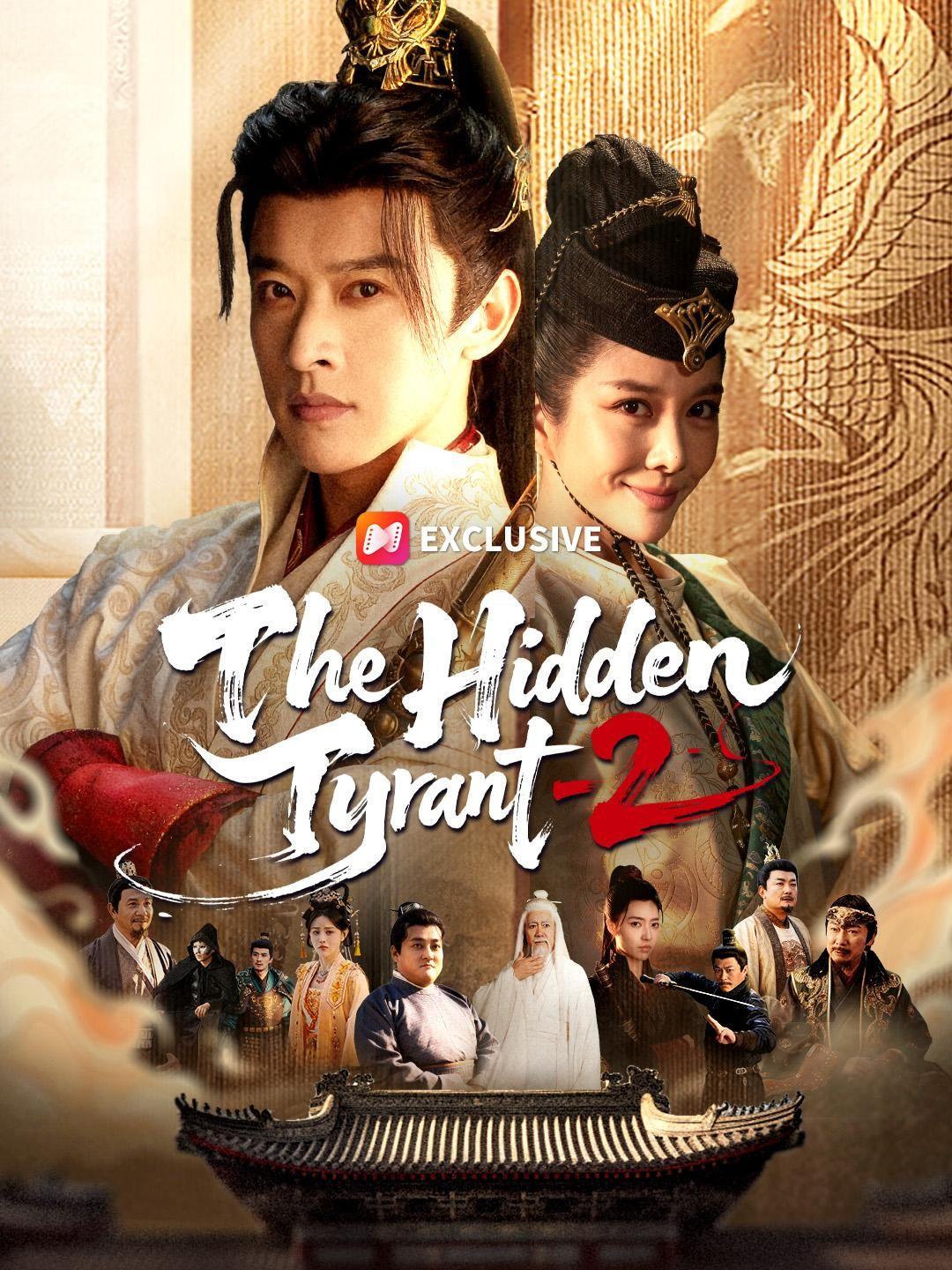
Tony Clark returns to Skyline Manor, revealing his newfound wealth and status by acquiring the exclusive Heaven Villa, shocking everyone including his arrogant rival Chris Clark. Tony vows revenge for past wrongs against him and his mother, hinting at deeper conspiracies. Meanwhile, a mysterious woman, Sally Huber, questions his intentions as he arrives to discuss the Cyan Mount project with her family on behalf of the Morgans.Will Tony's quest for revenge uncover the hidden truths behind his mother's death and the sinister plans of the Morgan family?


Recommended for you


The Formula of Destiny: When Silence Carries the Baton
There’s a moment—just two seconds, maybe less—when the man in the beige jacket lifts his right hand, fingers splayed, and the four security guards snap upright from their deep bows. No word is spoken. No whistle blows. Yet the shift is seismic. That single motion, captured in crisp daylight on a suburban street lined with young maples and beige villas, becomes the hinge upon which The Formula of Destiny swings its first major arc. It’s not the baton the guards hold that matters—it’s the absence of need for it. Power, in this world, doesn’t announce itself with force. It asserts itself with timing, with posture, with the quiet certainty that others will respond *before* you finish the thought. Let’s talk about Zhou Yi. Dressed in maroon wool, black shirt, tie knotted with precision, he embodies the archetype of the self-made heir—polished, impatient, convinced that effort alone should guarantee respect. His gestures are sharp: pointing, clenching, turning his head with the impatience of a man used to being heard immediately. But here, in this quiet lane, his urgency meets inertia. He speaks—mouth open, brows furrowed—but the camera never gives us his words. Instead, it cuts to reactions: the guards remain bowed until *Master Chen* signals release; Lin Hao watches from the periphery, expression unreadable; and Zhao Ruxiang, standing near the entrance of what might be a private residence or boutique estate, doesn’t even glance his way. Her indifference is louder than any shout. She knows the rules of this game better than he does. Her name—Zhao Ruxiang, Zhao Jia Qian Jin—appears beside her like a signature on a deed. She doesn’t need to prove herself. She *is* the proof. The visual language of The Formula of Destiny is meticulous. Notice how the guards’ uniforms are identical down to the placement of the shoulder insignia, yet each man’s stance differs subtly: one grips his baton too tightly, another keeps his eyes lowered just a fraction longer—tiny fractures in the facade of unity. Master Chen, by contrast, moves with economy. His beige jacket has asymmetrical pockets, a modern twist on tradition; his trousers, initially plain, reveal that hidden patterned lining when he pivots—a visual metaphor for depth beneath simplicity. He doesn’t wear a badge, yet he commands more obedience than any officer present. Why? Because he understands the psychology of submission: it’s not fear that makes men bow. It’s recognition. They recognize something in him—an aura, a history, a *rightness*—that their training didn’t prepare them for, but their instincts obey anyway. Lin Hao enters the scene like a question mark. Olive jacket, white tee, cargo pants with utilitarian pockets—he’s dressed for function, not display. His hair is styled with care, but not vanity. When he first appears, he’s looking up, not at people, but at the building’s upper windows—specifically, one that’s slightly ajar, revealing a sliver of warm interior light. Is someone watching? Is he waiting for a signal? The show doesn’t tell us. It lets us sit with the uncertainty. Later, when the group disperses, he remains. He doesn’t follow Master Chen. He doesn’t confront Zhou Yi. He simply stands, hands behind his back, chin level, eyes scanning the space as if memorizing its contours. This isn’t passivity. It’s reconnaissance. In The Formula of Destiny, the most dangerous players are often the ones who haven’t yet declared their hand. Zhao Ruxiang’s entrance is staged like a throne room arrival. The camera starts low—her legs first, in black tights and patent heels, the pleats of her leather skirt catching the light like armor. Then it rises: the curve of her waist, the drape of her blazer, the delicate necklace resting just above her collarbone—a single teardrop crystal, refracting the overcast sky. Her lips are painted red, but her expression is neutral, almost bored. She crosses her arms, not defensively, but as a statement: *I am complete. I require nothing from you.* When the text ‘Zhao Ruxiang’ fades in beside her, it’s not introduction. It’s confirmation. We’ve been told who she is; now we’re being shown why it matters. What’s fascinating is how sound—or the lack thereof—shapes the tension. The original clip contains no dialogue, only ambient noise: distant birds, the soft hum of a passing car, the rustle of fabric as guards straighten. In that silence, every breath, every shift of weight, becomes audible. When Zhou Yi points again, his finger trembles slightly. When Master Chen walks away, his shoes make no sound on the asphalt—either he’s wearing soft soles, or the editing mutes his footsteps to emphasize his detachment. Lin Hao, by contrast, shifts his weight with a faint creak of denim. These details aren’t accidents. They’re compositional choices that turn atmosphere into narrative. The Formula of Destiny excels at subverting expectations of genre. This isn’t a crime drama, though batons and uniforms suggest it might be. It’s not a romance, though Zhao Ruxiang’s presence radiates magnetic tension. It’s not even strictly a family saga—though the title ‘Zhao Jia Qian Jin’ implies lineage. It’s something rarer: a study of *deference* as currency. Who do we bow to, and why? Is it money? Blood? Charisma? In this world, it’s all three—and none of them alone suffice. Zhou Yi has money and ambition, but he lacks the unspoken legitimacy that makes men rise without being told. Master Chen has that legitimacy, but he wields it sparingly, almost reluctantly. Lin Hao has neither—at least, not yet—but he has observation, patience, and the kind of stillness that makes others uneasy. Consider the spatial dynamics. The road is narrow, forcing proximity. The yellow centerline divides the frame visually, separating Zhou Yi (on one side) from Master Chen and the guards (on the other). When Lin Hao enters, he positions himself *outside* the line—not aligned with either faction. He occupies the margin, where truth often hides. Zhao Ruxiang stands off-frame initially, then steps into view only after the main confrontation cools—a reminder that the most powerful characters don’t rush the stage. They let the drama unfold, then enter when the air is thick with consequence. And what of the batons? They’re never used. Not once. They’re carried, yes—gripped firmly, swung lightly at the hips—but they remain inert. Symbolically, they represent potential violence, yet the real conflict here is psychological. The true weapon is the bow: a voluntary surrender of height, of autonomy, of ego. When four men lower themselves before one, it’s not weakness. It’s a transaction. They give him their posture; he grants them purpose. Zhou Yi doesn’t understand this exchange. He sees subservience, not symbiosis. His frustration isn’t about losing control—it’s about not grasping the system he’s trying to dominate. The final shots linger on Lin Hao and Zhao Ruxiang, separated by space but connected by gaze. He looks toward her; she doesn’t return it, but her posture softens, just a fraction. A crack in the armor. Is it interest? Recognition? Or merely the acknowledgment that a new variable has entered the equation? The Formula of Destiny doesn’t answer. It invites us to calculate the variables ourselves: X = Lin Hao’s intent, Y = Zhao Ruxiang’s loyalty, Z = Master Chen’s next move. And the constant? Power, reshaped daily by those brave enough to stand unbowed—or wise enough to know when to bend. This isn’t just storytelling. It’s behavioral archaeology. Every gesture, every costume choice, every framing decision serves to expose the invisible contracts we make with authority. The guards bow because they’ve been trained to. Zhou Yi points because he believes volume equals validity. Master Chen walks away because he knows silence outlasts noise. And Zhao Ruxiang? She waits. Because in The Formula of Destiny, the last person to speak is often the one who already won.
The Formula of Destiny: The Bow That Never Breaks
In the quiet residential lanes of a modern Chinese suburb, where manicured hedges line paved roads and SUVs gleam under overcast skies, a scene unfolds that feels less like daily life and more like a carefully choreographed ritual of power—The Formula of Destiny. At its center stands Zhao Ruxiang, not merely a character but a presence: black pleated leather skirt, sheer tights, red lipstick sharp as a blade, arms crossed with the calm of someone who has already won before the game begins. Her name appears in elegant vertical script beside her—Zhao Jia Qian Jin—‘Zhao’s Thousand Gold,’ a title that whispers legacy, wealth, and unspoken authority. She doesn’t speak in the frames we see, yet her silence speaks volumes: she is the fulcrum upon which the entire dynamic tilts. Opposite her, though not yet in direct confrontation, is Lin Hao, the man in the olive jacket and white tee—casual, grounded, almost deliberately unassuming. His stance is relaxed, hands in pockets, eyes scanning the environment with the alertness of someone who knows he’s being watched, but refuses to flinch. He isn’t part of the initial tableau—the one with four uniformed security guards bowing deeply before a man in beige traditional attire—but he arrives just as the tension peaks. His entrance isn’t dramatic; it’s *inevitable*. Like a tide returning after low water, he simply appears, and the air shifts. The guards straighten, the man in beige turns, and the man in maroon—Zhou Yi, whose tailored suit and patterned tie suggest ambition dressed in velvet—pauses mid-gesture, his finger still extended, his expression caught between accusation and disbelief. What makes this sequence so compelling is how much is communicated without dialogue. The bowing of the guards isn’t servility—it’s protocol, a visual grammar of hierarchy. Their uniforms bear patches reading ‘BAOAN’ (Security), and one even displays the number ‘082’, grounding the fiction in real-world detail. Yet their obeisance isn’t toward rank alone; it’s toward *presence*. The man in beige—let’s call him Master Chen for narrative clarity—doesn’t command them with words. He lifts a hand, palm outward, and they rise. Not because he shouted, but because his posture says: *I am done with your deference.* That single gesture carries the weight of years of unspoken understanding. When he walks away, the guards fall into step behind him—not escorting, but *accompanying*, like attendants to a sage. Zhou Yi watches them go, mouth slightly open, as if trying to reconcile what he just witnessed with the world he thought he understood. His confusion is palpable. He points again, then clenches his fist, then exhales sharply—each micro-expression a chapter in his internal collapse of certainty. This is where The Formula of Destiny reveals its true architecture: it’s not about who holds the baton or wears the badge, but who controls the rhythm of attention. Master Chen walks with deliberate slowness, head high, gaze fixed ahead—not arrogant, but *unbothered*. He doesn’t glance back at Zhou Yi, nor does he acknowledge the guards beyond the initial dismissal. His indifference is the ultimate power move. Meanwhile, Lin Hao, standing apart near the curb, observes everything. His eyes flick from the departing group to Zhao Ruxiang, who now leans against a pillar, arms still crossed, lips parted just enough to suggest she’s about to speak—or perhaps has already spoken, off-camera. The camera lingers on her necklace: a delicate silver chain with a teardrop pendant, catching light like a hidden signal. Is it inherited? A gift? A warning? The show leaves it ambiguous, and that ambiguity is its strength. The setting itself functions as a silent character. The road is marked with yellow dividing lines—order imposed on chaos. Trees frame the scene, green and lush, but their leaves rustle faintly, suggesting wind, instability. Behind Zhao Ruxiang, a wooden door with vertical grain implies tradition; behind Lin Hao, a concrete wall suggests modernity’s cold efficiency. The contrast isn’t accidental. The Formula of Destiny thrives in these liminal spaces—between old money and new ambition, between discipline and rebellion, between performance and truth. When the guards bow, it’s theatrical. When Lin Hao steps forward later—his jacket slightly rumpled, his stance firm but not aggressive—he disrupts the theater. He doesn’t bow. He doesn’t point. He simply *stands*, and in doing so, redefines the rules of engagement. One detail haunts the sequence: the man in beige’s trousers. In one shot, they’re plain khaki. In another, as he turns, a flash of vibrant green-and-red patterned fabric appears beneath the hem—like a secret identity peeking through. Is it a design choice? A continuity error? Or a subtle hint that even the most composed figures harbor contradictions? The show invites us to wonder. Similarly, Zhou Yi’s tie—a bold geometric print in crimson and navy—feels like armor. He wears confidence like a second skin, yet his expressions betray vulnerability. When he looks at Master Chen walking away, his jaw tightens. He’s not angry; he’s *hurt*. This isn’t a rivalry of equals. It’s a reckoning between someone who believes power is seized and someone who knows power is *recognized*. Zhao Ruxiang remains the enigma. Her introduction is cinematic: slow zoom, soft focus background, text overlay that names her with reverence. She doesn’t smile. She doesn’t frown. She *waits*. And in waiting, she commands. The camera circles her once—just enough to emphasize her silhouette against the warm-toned building facade—and then cuts back to Lin Hao, who now shifts his weight, as if preparing to move. The implication is clear: the next act begins when he decides to step into the frame. The Formula of Destiny doesn’t rush its revelations. It lets silence breathe, lets gestures linger, lets the audience lean in, desperate to decode what’s unsaid. What elevates this beyond typical drama is its refusal to moralize. No one here is purely good or evil. The guards follow orders, yes—but their bows carry dignity, not shame. Master Chen exudes authority, yet his clothing hints at eccentricity. Zhou Yi is ambitious, but his confusion feels human, relatable. Lin Hao is the wildcard, the observer who may become the catalyst. And Zhao Ruxiang? She is the equation no one has solved yet—the variable that changes everything. The title The Formula of Destiny isn’t metaphorical; it’s literal. Every glance, every step, every folded sleeve is part of a calculation. Who will align? Who will resist? Who will disappear? As the sequence ends—with Lin Hao still watching, Zhao Ruxiang still waiting, and Zhou Yi turning slowly toward his black SUV—the tension doesn’t resolve. It *settles*, like sediment in still water, heavy and promising upheaval. We don’t know what happens next, but we know this: the bow was not an end. It was a punctuation mark. And in The Formula of Destiny, punctuation always leads to a new sentence—one sharper, riskier, and far more dangerous than the last.