



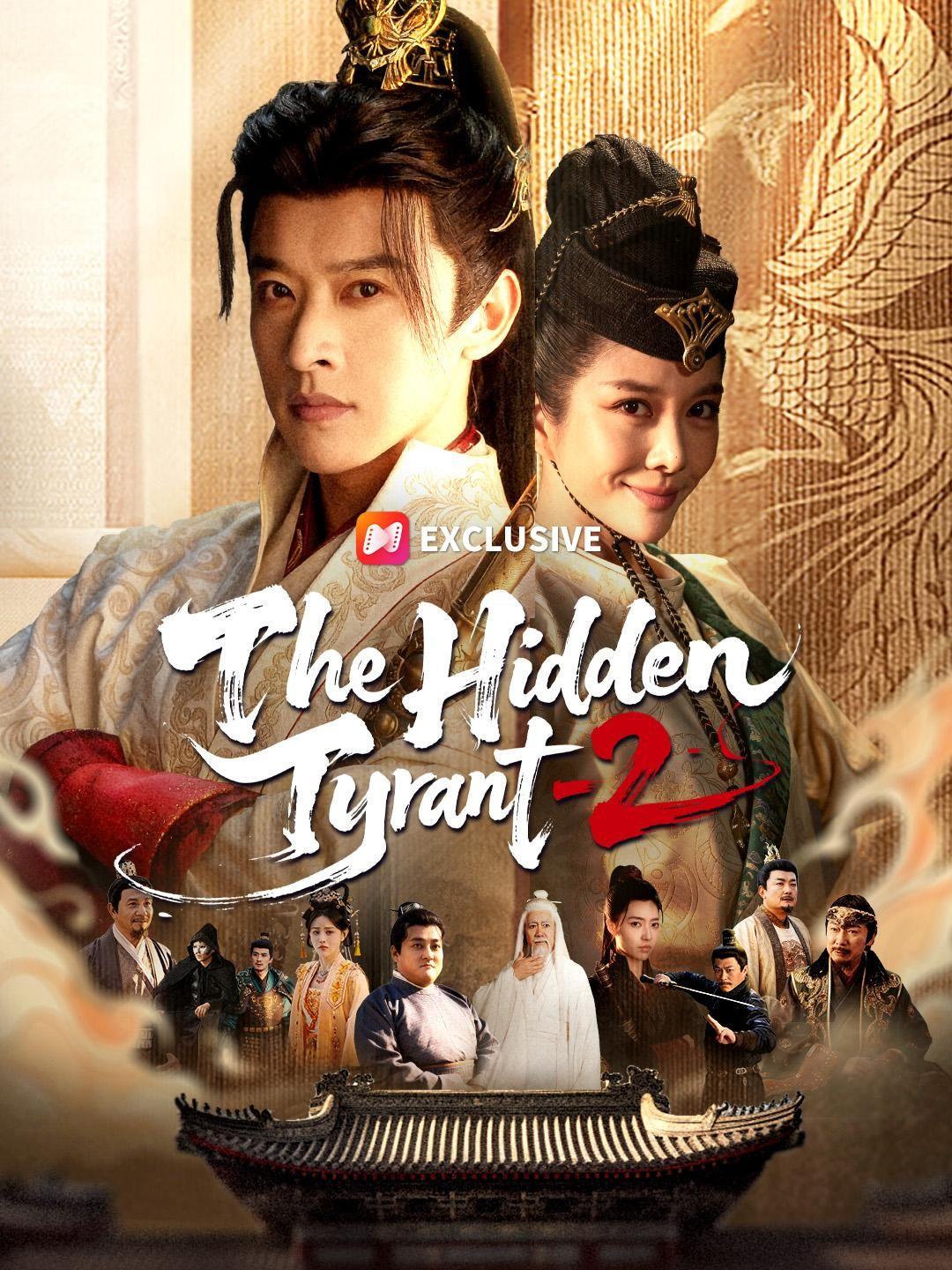
The Deadly Painting
Tony Clark warns Mr. Justin about the dangerous Evilloong Painting given by the Clark family, hinting at their malicious intentions, while also navigating romantic tensions with Chloe and Sally.Will Tony uncover the Clark family's true motives behind the deadly painting?


Recommended for you


The Formula of Destiny: When Silence Speaks Louder Than Inheritance
There’s a particular kind of tension that settles in a room when three generations of men stand—or sit—in proximity, each carrying the weight of unspoken history like a physical burden. In *The Formula of Destiny*, that tension isn’t manufactured; it’s *breathed* into existence through composition, costume, and the unbearable slowness of a single glance held too long. Li Wei, seated beside the bed, embodies restraint—his suit immaculate, his posture upright, his fingers interlaced so tightly the knuckles bleach white. Yet his eyes betray the storm beneath: they flicker between Chen Guo, the aging patriarch propped up on blue satin pillows, and the doorway, where Zhang Tao waits like a verdict about to be delivered. The room itself feels curated—white tufted headboard, minimalist wall art of ink-washed plum blossoms, a chrome side table holding a stainless-steel water pitcher. Everything is clean, controlled, expensive. And yet, the air is thick with decay: the faint medicinal scent, the slight tremor in Chen Guo’s hand as he lifts it to emphasize a point, the way Li Wei’s jaw tightens every time the older man mentions ‘the agreement.’ Chen Guo is the fulcrum. His hair, wild and silver, defies the neatness of the room—a visual metaphor for the chaos he’s about to unleash. He wears navy pajamas with white piping, a uniform of domesticity that contrasts sharply with the gravity of his words. When he speaks, his mouth moves deliberately, syllables measured like drops from a leaky faucet. He doesn’t raise his voice. He doesn’t need to. His authority is baked into the silence that follows each sentence. In one frame, he looks directly at Li Wei—not with anger, but with disappointment so profound it feels like erosion. In another, his gaze shifts to Zhang Tao, and something shifts in his expression: not warmth, not approval, but recognition. As if he sees not the man before him, but the boy he once was—the one who promised loyalty over a bowl of dumplings in a cramped kitchen, years before money and ambition rewrote the rules. That memory, implied but never shown, hangs in the air like smoke. Zhang Tao, meanwhile, operates in a different register entirely. Where Li Wei is containment, Zhang Tao is release. His olive jacket is practical, unadorned except for a tiny embroidered logo on the chest—‘Luxury,’ ironically, given the emotional poverty of the scene. He stands with his weight shifted onto one leg, hands loose, posture relaxed to the point of insolence. But watch his eyes. They don’t wander idly; they scan, assess, triangulate. He’s not just listening—he’s mapping. Mapping Li Wei’s reactions, Chen Guo’s vulnerabilities, Lin Xiao’s positioning. And Lin Xiao—ah, Lin Xiao. She enters the frame like a shadow given form: black blazer, cropped waist, hair parted with military precision. Her jewelry is not ornamental; it’s armor. The double-strand diamond necklace, the teardrop earrings—they catch light like surveillance cameras, reflecting every micro-expression around her. She doesn’t speak in the bedroom, but her silence is strategic. She’s not there to mediate. She’s there to witness. To record. To decide who survives the fallout. The outdoor sequence is where *The Formula of Destiny* truly reveals its thematic core: inheritance isn’t about property or titles—it’s about narrative control. As Zhang Tao steps into the twilight, the environment softens—green shrubs, warm ambient lighting, the distant hum of city life. But the psychological pressure intensifies. Lin Xiao approaches him not as a supplicant, but as a co-conspirator. Her touch on his shoulder isn’t tender; it’s grounding, like a pilot placing a hand on the yoke before takeoff. Their exchange is rapid, punctuated by pauses that feel longer than they are. She speaks with clipped precision, her lips forming words that land like stones in still water. Zhang Tao responds with a series of expressions—surprise, amusement, calculation—that suggest he’s hearing something he didn’t expect, something that recalibrates his entire strategy. When he strokes his chin, it’s not contemplation; it’s rehearsal. He’s already drafting his next line, his next move, his next lie. What’s fascinating is how the film uses space to reflect power dynamics. Indoors, Chen Guo commands the center—the bed is his throne, the IV line his scepter. Outdoors, the power shifts. Zhang Tao walks ahead, Lin Xiao follows, but she’s not trailing; she’s pacing him, matching his stride, her heels clicking in rhythm with his footsteps. The camera lingers on her profile as he walks away—her arms cross, her lips press into a thin line, and then, almost imperceptibly, she smiles. Not joy. Satisfaction. The kind of smile you wear when you’ve just confirmed that the trap is set, the bait taken, and the clock is ticking. In *The Formula of Destiny*, truth isn’t revealed in monologues; it’s exposed in the split-second hesitation before a handshake, in the way a character adjusts their cuff when lying, in the deliberate choice to turn away instead of confront. And let’s talk about the details—the ones that whisper louder than dialogue ever could. The X-shaped pin on Li Wei’s lapel? It reappears in the final outdoor shot, catching the streetlight as he watches Zhang Tao and Lin Xiao from a distance—still inside the house, still bound by duty, still unable to step into the new world they’re building outside. Chen Guo’s IV line? It’s never shown again after he exits the bedroom—symbolizing that his influence, though potent, is now external, spectral. Lin Xiao’s belt buckle, encrusted with rhinestones, glints as she turns—mirroring the diamonds at her neck, suggesting that every part of her is designed to reflect, deflect, and dominate light. These aren’t props. They’re characters in their own right. The brilliance of *The Formula of Destiny* lies in its refusal to resolve. We don’t see the will signed. We don’t hear the final ultimatum. We don’t know if Zhang Tao will honor his word or burn the documents in the garden. Instead, the film ends with Lin Xiao standing alone on the pavement, arms folded, watching the horizon—not with hope, but with readiness. She’s not waiting for fate. She’s preparing to redefine it. In a world where bloodlines are negotiable and loyalty is priced per minute, the only constant is the formula itself: action + silence + timing = destiny. And in this equation, everyone is both scientist and subject. Li Wei, Chen Guo, Zhang Tao, Lin Xiao—they’re not just players in a drama. They’re architects of their own unraveling. And as the camera pulls back, leaving her silhouette against the fading light, we understand: the most dangerous inheritance isn’t money or land. It’s the story you tell yourself about who you are—and who you’re willing to become to keep it.
The Formula of Destiny: A Bedside Confession and a Street Reckoning
In the quiet tension of a dimly lit bedroom, where the faint glow of a bedside lamp casts long shadows across silk sheets and a floral-patterned headboard, *The Formula of Destiny* begins not with fanfare, but with silence—weighted, deliberate, almost suffocating. Li Wei, dressed in a pinstripe suit that speaks of corporate discipline yet bears the subtle disarray of someone who’s been pacing for hours, sits rigidly beside the bed. His posture is formal, his hands clasped tightly over his knee, but his eyes betray him: darting, flinching, blinking too fast. He wears a silver X-shaped lapel pin—not a fashion statement, but a symbol, perhaps of contradiction, of crossed paths, or even self-punishment. Across from him, Chen Guo, an elderly man with unruly silver hair and pajamas that look freshly laundered but slightly too large, leans forward with the urgency of a man who knows time is no longer his ally. His voice, though soft, carries the gravel of lived experience; he gestures with one hand while the other rests on a clear IV line snaking into his forearm—a detail that anchors the scene in medical reality, yet feels strangely theatrical in its precision. This isn’t just a hospital room; it’s a stage where legacy, guilt, and unspoken truths are being rehearsed for final delivery. What makes this sequence so compelling is how little is said outright—and how much is communicated through micro-expressions. When Li Wei glances toward the door, his brow furrows not in confusion, but in dread. He knows who’s coming. And indeed, moments later, Zhang Tao enters—not with the solemnity of a doctor, but with the casual confidence of someone who’s already decided the outcome. Dressed in an olive-green utility jacket over a plain white tee, his haircut sharp and modern, Zhang Tao exudes a kind of youthful arrogance that clashes violently with the somber mood. Behind him, a second figure in a white coat lingers—silent, observant, possibly complicit. Zhang Tao doesn’t sit. He stands, arms loose at his sides, one hand tucked into his pocket like he’s waiting for a bus rather than confronting a dying man. His smile is polite, but his eyes never quite meet Chen Guo’s. That’s the first crack in the facade: avoidance as strategy. Chen Guo, sensing the shift, straightens his spine, his expression hardening into something between challenge and resignation. He speaks again—not pleading, not accusing, but *declaring*. His words, though unheard in the silent frames, are written across his face: I know what you did. I know what you’re hiding. And I’m not afraid to say it aloud. Then there’s Lin Xiao—the woman who appears only briefly indoors, but whose presence reverberates through the entire narrative arc. She sits near the foot of the bed, her black cropped blazer sleek and severe, her diamond necklace catching the light like a warning beacon. Her hair falls in glossy waves, parted precisely, framing a face that is both composed and watchful. She says nothing in the bedroom scenes, yet her stillness is louder than any dialogue. She doesn’t look at Li Wei. She doesn’t look at Zhang Tao. She looks only at Chen Guo—her gaze steady, unreadable, carrying the weight of someone who has already made her choice. Is she family? A lawyer? A lover from another life? The ambiguity is intentional. In *The Formula of Destiny*, identity is never fixed; it shifts with context, with power, with who holds the pen when the will is signed. The transition from interior to exterior is masterfully executed—not with a cut, but with a dissolve that feels like exhaling after holding your breath. Zhang Tao steps outside, the warm amber glow of evening streetlights spilling onto the pavement. The air changes: from sterile intimacy to open vulnerability. Here, Lin Xiao meets him—not with confrontation, but with a slow, deliberate approach. Her outfit now fully visible: a pleated leather mini-skirt, sheer black tights, stiletto heels with gold buckles that click against the asphalt like a metronome counting down to revelation. She touches his shoulder—not aggressively, but possessively. Her fingers linger just long enough to register as both comfort and control. Zhang Tao reacts with a flicker of discomfort, then a smirk, then a thoughtful stroke of his chin. He’s playing a role, yes—but which one? The loyal son? The opportunistic heir? Or the man who’s finally ready to stop pretending? Their conversation outdoors is a dance of subtext. Lin Xiao’s lips move quickly, her red lipstick vivid against the fading daylight. Her earrings—teardrop crystals—catch the light each time she tilts her head, signaling emphasis, irony, or threat. Zhang Tao listens, nods, laughs once—too loud, too sharp—and then turns away, only to pivot back seconds later, drawn by something she says. That moment—when he places his hand over hers on his shoulder—is the emotional hinge of the entire segment. It’s not affection. It’s alliance. It’s transaction. It’s the moment two people agree to rewrite the script together. And behind them, the building looms: ‘102 Building’ etched above the gate, a neutral address that suddenly feels like a prison number, a courtroom docket, a tombstone inscription. What elevates *The Formula of Destiny* beyond typical melodrama is its refusal to moralize. There’s no clear villain here—only humans caught in the gravitational pull of consequence. Li Wei isn’t evil; he’s trapped by expectation. Chen Guo isn’t noble; he’s using his final days as leverage. Zhang Tao isn’t reckless; he’s calculating every gesture, every pause, every smile. And Lin Xiao? She’s the wildcard—the variable no one accounted for in their equations. Her final pose, arms crossed, lips curved in a half-smile as Zhang Tao walks away, tells us everything: she’s not waiting for permission. She’s already moved the pieces. The camera lingers on her—not as a passive observer, but as the new architect of fate. In this world, destiny isn’t written in stars or bloodlines. It’s drafted in whispered conversations, in the way a hand rests on a shoulder, in the silence between heartbeats. *The Formula of Destiny* doesn’t promise resolution—it promises reckoning. And reckoning, as we’ve learned from Chen Guo’s weary eyes and Zhang Tao’s practiced grin, always arrives on time.