



Confrontation at Minghwa Road
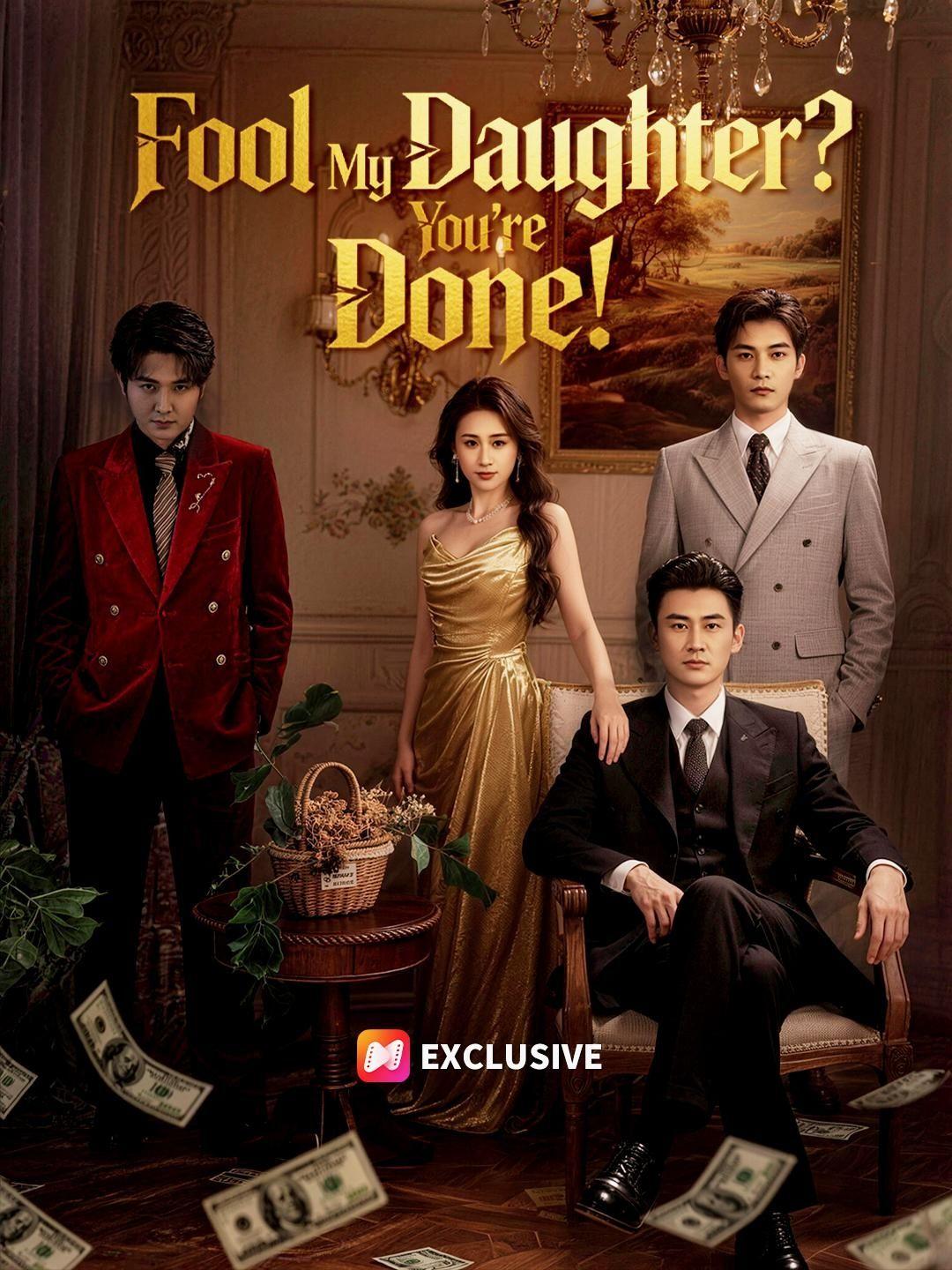
Jeremy Howard faces a group of aggressors pretending to be the CEO, leading to a violent confrontation where Zoe is injured, prompting Jeremy to fiercely protect her, threatening the attackers and revealing his deep concern for her safety.Will Jeremy's threats deter the attackers, or will the situation escalate further?


Recommended for you


Lost and Found: When the Village Becomes a Stage
*Lost and Found* opens not with music, but with the hum of a city—distant traffic, rustling leaves, the faint buzz of a cell tower piercing the sky. Then, silence. A man in a beige suit—Mr. Lin, the corporate emissary—stands alone before a black Mercedes, phone clutched like a talisman. His expression is unreadable, yet every muscle taut with anticipation. He is not waiting for a person. He is waiting for confirmation that the world still obeys his terms. Behind him, eight men in black suits form a living wall, their sunglasses reflecting nothing but trees and sky. They are not guards. They are punctuation marks—periods at the end of a sentence no one dares question. When Mr. Lin ends the call, he doesn’t smile. He exhales, almost imperceptibly, and steps forward. The men part. Not because he commands it, but because the space *belongs* to him. This is the first lie *Lost and Found* tells us: that power is static. It isn’t. It’s liquid. And it spills the moment someone forgets to hold the cup. Cut to the village square. Sunlight dapples through bamboo groves. A round table draped in white cloth holds remnants of a feast: half-eaten dumplings, empty beer bottles, sunflower seed shells scattered like confetti. Zhang Mei, wearing a floral blouse and gray trousers, moves with purpose—her hands quick, her gaze sharp. She’s not a bystander. She’s the choreographer of chaos. Beside her, Li Tao—striped polo, black pants, a fresh bruise blooming purple near his temple—grins like a man who’s just remembered he holds the remote control. His laughter is too loud, too timed. He’s not amused. He’s *testing*. Testing how far he can push before the facade cracks. And crack it does—when Chen Wei arrives. Not in a sedan, but on foot, his gray pinstripe suit immaculate, his tie pinned with a silver clip, his pocket square folded into a precise triangle. He doesn’t greet anyone. He simply *occupies* the space. His presence is a cold draft in a warm room. Then—the confrontation. Zhang Mei doesn’t shout. She *approaches*. Her hand lands on Chen Wei’s lapel, not roughly, but with the certainty of someone who knows exactly how much pressure will make a man pause. Her mouth moves. We don’t hear her words, but we see their effect: Chen Wei’s jaw tightens. His eyes narrow—not with anger, but with recognition. He sees her not as a threat, but as a variable he failed to account for. Meanwhile, Li Tao watches, head tilted, lips parted, already scripting his next move. He knows the village dynamics better than the mayor. He knows that in this world, injury is currency, and spectacle is leverage. So when he stumbles—deliberately, theatrically—onto the pavement, scattering glass and seeds, he doesn’t cry out. He *gasps*, as if surprised by his own fragility. The women rush to him, their concern genuine, but their timing suspiciously perfect. One helps him up. Another wipes his brow. A third glances toward Chen Wei, her expression unreadable—sympathy? Strategy? Both? The turning point arrives with the green bottle. Not a weapon. Not yet. Just a discarded vessel, lying half-buried in paper scraps and sunflower husks. Li Tao’s hand closes around it. His eyes lock onto Zhang Mei, who now stands beside Chen Wei, her arm linked with his—not possessively, but protectively. The tension coils tighter. Then—*he lifts it*. Not toward Chen Wei. Toward *her*. The motion is swift, almost elegant. The bottle shatters mid-air, a spray of emerald fragments catching the sun like broken stained glass. Zhang Mei doesn’t flinch. She steps *forward*, placing herself between Chen Wei and the debris. And in that instant, Chen Wei reacts—not with rage, but with instinct. His arm wraps around her waist, pulling her close, his body shielding hers. His face, usually carved from marble, softens—just for a fraction of a second—into something vulnerable. He’s not protecting a subordinate. He’s protecting a truth he didn’t know he valued. What follows is the quiet unraveling. Zhang Mei’s temple bleeds—a thin, steady line of crimson tracing her cheekbone. She doesn’t wipe it. She lets it run, a silent accusation. Chen Wei’s voice, when he speaks, is low, urgent. He’s not issuing orders. He’s negotiating with reality. Li Tao, now standing again, watches them, his grin gone, replaced by something colder: calculation. He sees the shift. He sees that Chen Wei’s control is slipping—not because of force, but because of *feeling*. And in *Lost and Found*, feeling is the ultimate vulnerability. The final sequence is masterful: Mr. Lin returns, walking slowly toward the group, papers in hand, his expression unreadable once more. But this time, the camera stays low—focused on his shoes, then on Li Tao’s, then on Zhang Mei’s worn black flats. The power dynamic has shifted, but no one has declared victory. The villagers watch, some murmuring, others silent, all aware that the script has been rewritten—not by a director, but by a dropped phone, a grabbed lapel, and a bottle thrown not in anger, but in despair. *Lost and Found* isn’t about good versus evil. It’s about the theater of everyday life, where everyone plays a role until the moment they forget their lines—and reveal who they really are. Zhang Mei isn’t just a wife or a mother. She’s the axis upon which the entire village rotates. Chen Wei isn’t just a boss. He’s a man learning that authority without empathy is just noise. And Li Tao? He’s the trickster god of this microcosm—chaotic, self-serving, yet weirdly essential. Because without him, the system would never be tested. Without his staged fall, no one would see the cracks in the foundation. *Lost and Found* reminds us that in the spaces between intention and impact, between performance and truth, that’s where humanity lives. Not in the boardroom. Not in the banquet hall. But on the cracked pavement, surrounded by broken glass and sunflower seeds, where a single drop of blood can rewrite everything. The title isn’t ironic. It’s prophetic. What was lost—the illusion of control, the safety of roles—has been found again, not restored, but transformed. And that’s the most dangerous kind of discovery of all.
Lost and Found: The Phone Drop That Shattered Power
In the opening frames of *Lost and Found*, we’re thrust into a world where authority is not just worn—it’s *performed*. A man in a beige suit, crisp white shirt, and an orange-gray striped tie stands beside a black luxury sedan, phone pressed to his ear. His brow furrows, lips part slightly—not in panic, but in controlled alarm. He’s not just receiving news; he’s recalibrating reality. The camera lingers on his face, capturing micro-expressions that betray a man accustomed to command suddenly confronting something beyond his script. Behind him, a line of men in identical black suits and sunglasses stand like statues—silent, synchronized, unnervingly still. They don’t blink. They don’t shift weight. They are extensions of his will, or perhaps, his armor. When he lowers the phone, the silence thickens. He doesn’t speak. He simply walks forward, and they part like water before a stone. This isn’t leadership—it’s ritual. And rituals, as we soon learn in *Lost and Found*, are fragile things. Then comes the rupture. Not with gunfire or shouting, but with a woman in a red-patterned blouse, her hair pulled back in a practical ponytail, rushing toward a man in a gray double-breasted suit—Chen Wei, the polished antagonist whose presence alone seems to lower the temperature of the air. She doesn’t beg. She doesn’t plead. She *acts*. Her hand shoots out, fingers gripping Chen Wei’s lapel, pulling him down to her level. Her voice, though unheard, is written across her face: desperation sharpened into defiance. In that moment, the hierarchy cracks. The suited enforcers hesitate. Chen Wei’s composure flickers—not because he fears her, but because he recognizes the danger of unpredictability. She is not part of the system. She is its glitch. And then—the fall. The man in the striped polo, Li Tao, stumbles backward, arms flailing, eyes wide with theatrical shock. He hits the pavement hard, scattering sunflower seeds and broken glass from a green bottle. His injury is visible—a smear of red near his temple—but his expression is pure performance: exaggerated pain, feigned helplessness, a plea for witness. The women around him rush in, one clutching his arm, another patting his back, their faces oscillating between concern, guilt, and calculation. This is where *Lost and Found* reveals its true texture: it’s not about who falls, but who *chooses* to catch them—or who lets them stay down. Li Tao’s collapse isn’t accidental; it’s strategic. He knows the rules of this village-stage better than anyone. He knows that blood draws attention, and attention draws power—or at least, the illusion of it. The climax arrives not with a punch, but with a bottle raised high. Li Tao, still on the ground, grabs the green glass vessel—its neck jagged, its contents long spilled—and swings it upward. Not at Chen Wei. Not at the woman in the blue apron, Zhang Mei, who now bears a thin rivulet of blood down her temple, her eyes wet with tears she refuses to shed. No—he aims it at *her*. At Zhang Mei. The slow-motion shatter is brutal: emerald shards explode outward, catching light like cursed jewels. Zhang Mei flinches, but doesn’t retreat. Instead, she steps *into* the arc of destruction, arms outstretched—not to shield herself, but to intercept Chen Wei, who instinctively moves to protect her. In that suspended second, three truths collide: Li Tao’s performance has gone too far; Zhang Mei’s loyalty is absolute; and Chen Wei, for all his tailored arrogance, is not immune to the gravity of human fracture. What follows is not resolution, but recalibration. Chen Wei holds Zhang Mei close, his hands firm on her shoulders, his voice low—likely words of reassurance, or perhaps command disguised as comfort. But his eyes? They scan the crowd. They lock onto Li Tao, now being helped up by two women, his face a mask of wounded innocence. There’s no triumph in Chen Wei’s posture. Only fatigue. The sedan that arrived with such fanfare earlier now drives away, tires whispering against asphalt, leaving behind a scene of scattered stools, a ruined banquet table, and the lingering scent of soy sauce and shattered glass. The final shot lingers on Chen Wei’s feet as he turns away—black shoes scuffing the cobblestones, each step measured, deliberate. He’s not retreating. He’s repositioning. Because in *Lost and Found*, power isn’t seized in grand gestures. It’s reclaimed in the quiet aftermath, when everyone else is still gasping for breath. This is the genius of *Lost and Found*: it understands that drama isn’t born from conflict alone, but from the *gap* between expectation and reality. We expect the boss to dominate. Instead, he’s disarmed by a housewife’s grip. We expect the victim to cower. Instead, she becomes the shield. We expect the villain to win. Instead, he walks away, carrying the weight of a truth he can’t erase: that in a world built on appearances, the most dangerous weapon is authenticity—even when it’s faked so well it becomes real. Li Tao’s blood may be stage makeup, but Zhang Mei’s tears? Those are earned. And Chen Wei? He’ll never look at a phone call the same way again. Because next time, the voice on the other end might not be reporting a problem. It might be the sound of the floor giving way beneath him. *Lost and Found* doesn’t just tell a story—it makes you feel the tremor in your own bones when the script changes mid-scene. That’s not cinema. That’s survival.