



The Reunion and the Rift
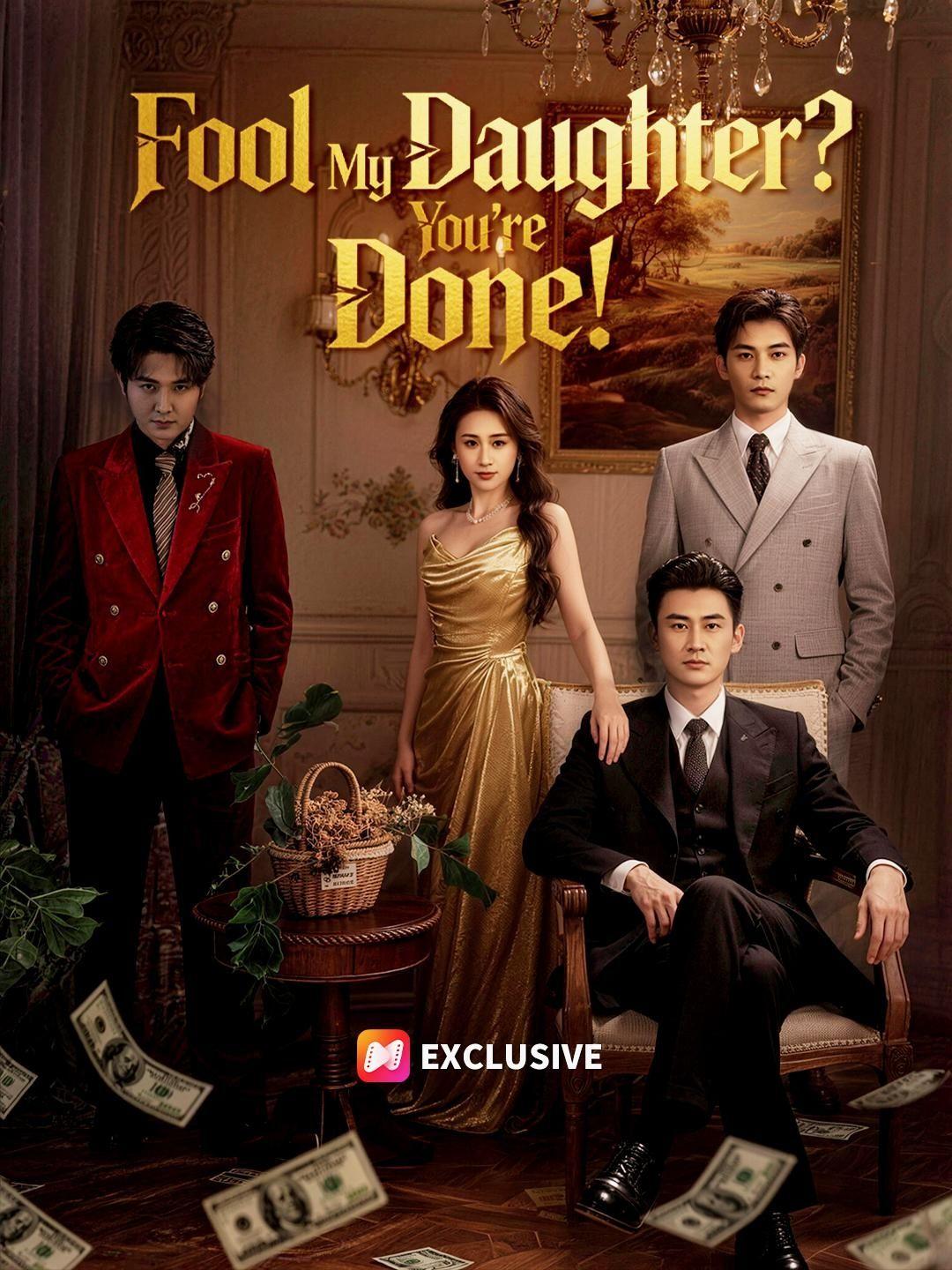
Zoe returns to Floraland and is confronted by a man claiming to be her husband, Jeremy, but she denies it due to his lack of a braided string she gave him years ago. The confrontation escalates as insults are thrown, revealing deep-seated bitterness and unresolved emotions.Will Zoe ever find the real Jeremy, and what truths will be uncovered about their past?


Recommended for you


Lost and Found: When the Village Holds Its Breath
The courtyard is alive—not with celebration, but with the charged stillness that precedes a storm. Tables draped in white cloths hold platters of watermelon, peeled pears, and steamed buns, yet no one eats. Everyone watches. Not the food. Not the trees swaying in the breeze. They watch *her*: Li Meihua, standing rigid in her blue-and-white apron, the red flower in her hair trembling slightly with each shallow breath. In her hands, the wilted dahlias—pink, shriveled, their stems snapped halfway—feel less like a bouquet and more like a confession. This is the heart of Lost and Found: not the search for missing items, but the excavation of buried truths, performed in broad daylight, with an audience of neighbors who’ve known each other since childhood. The tension isn’t manufactured; it’s inherited, passed down like heirloom teacups, chipped but still used. Wang Er enters not with subtlety, but with the swagger of a man who’s rehearsed his entrance in front of a cracked mirror. His navy jacket is slightly too big, his white T-shirt stained near the collar—not from sweat, but from something older, something he hasn’t washed out. He grins, loud and uneven, as if trying to convince himself he belongs here. When he grabs Li Meihua’s arm, it’s not violent, but possessive—a grip that says *I remember you*, not *I respect you*. Her reaction is immediate: a recoil so slight it might be missed by the casual observer, but the camera catches it—the way her shoulder lifts, the way her fingers tighten around the flowers until a petal crumbles onto the stone floor. That tiny disintegration is the first crack in the dam. Zhang Lian, in her translucent pink blouse with black ribbon trim, moves like smoke—quiet, deliberate, impossible to ignore. She doesn’t shout. She doesn’t intervene physically—at first. Instead, she positions herself between Li Meihua and Wang Er, her body a silent barrier. Her expressions shift faster than the wind: concern, amusement, irritation, and beneath it all, a sharp intelligence that reads the room like a ledger. She knows Wang Er’s history. She knows Li Meihua’s silences. And she knows that today, something must break. When she finally speaks—her voice soft but carrying—the words are simple, yet loaded: ‘He’s not here to apologize. He’s here to be seen.’ That line hangs in the air, heavier than the humid afternoon. It reframes everything. Wang Er isn’t begging forgiveness; he’s demanding witness. He wants the village to *see* his pain, his regret, his performance of remorse—even if it’s all a facade. Lost and Found excels in its use of physical comedy as emotional shorthand. Wang Er’s theatrical collapse—knees hitting the pavement, one hand clutching his stomach, the other still gripping the dead flowers—is absurd, yes, but also tragically human. He’s not a villain; he’s a man who’s run out of better scripts. His face, contorted in mock agony, reveals more than any monologue could: the shame he’s tried to bury, the fear of being truly known. And Li Meihua? She doesn’t laugh. She doesn’t scold. She stares at him with an expression that’s neither anger nor pity, but something rarer: *assessment*. She’s weighing his worth, not as a person, but as a variable in her life’s equation. Can she afford to forgive him? Can she afford not to? The answer isn’t in her eyes—it’s in the way she finally releases the flowers, letting them drop into Wang Er’s lap like a verdict. The arrival of the man in the pinstripe suit—Chen Wei, though his name isn’t spoken aloud—changes the physics of the scene. His presence is a cold draft in a warm room. He walks with the unhurried confidence of someone who’s never had to beg for attention. The villagers instinctively straighten their spines. Zhang Lian’s smile tightens. Li Meihua’s breath hitches—not in fear, but in recognition. This man isn’t a stranger. He’s the counterweight to Wang Er’s chaos. Where Wang Er shouts, Chen Wei listens. Where Wang Er performs, Chen Wei observes. His briefcase isn’t just leather and metal; it’s a container of consequences. And when he stops a few feet away, not speaking, just *being*, the entire courtyard holds its breath. Even the cicadas seem to pause. What makes Lost and Found unforgettable is how it treats silence as dialogue. The longest stretch of the scene contains no spoken words—just Li Meihua turning her head toward Chen Wei, Wang Er scrambling to his feet while still clutching the flowers, Zhang Lian stepping back with a sigh that’s half-resignation, half-relief. In that silence, we learn everything: Li Meihua is torn between duty and desire, Wang Er is terrified of being forgotten, and Zhang Lian has been holding this secret longer than anyone realizes. The red flower in Li Meihua’s hair? It’s not decoration. It’s a flag. A signal. A plea. And when she finally removes it—not angrily, but with the calm of someone removing a bandage—and places it gently on the table beside a half-eaten pear, the symbolism is deafening. She’s shedding a role. She’s choosing herself. The film’s brilliance lies in refusing catharsis. There’s no grand reconciliation. No tearful embrace. No dramatic exit. Instead, Li Meihua picks up a teapot, pours herself a cup, and sits down at the nearest table—alone, but not isolated. The villagers glance at her, then at each other, then back at her. The meal resumes, awkwardly, tentatively. Someone laughs—too loudly. Another clinks glasses. Wang Er lingers near the doorway, the wilted flowers now tucked into his jacket pocket like a shameful talisman. Zhang Lian sits beside Li Meihua, not speaking, but her hand rests lightly on the table, close enough to touch if needed. And Chen Wei? He doesn’t sit. He nods once, turns, and walks away—leaving behind not answers, but possibilities. Lost and Found isn’t about finding what was lost. It’s about realizing that some things were never meant to be found—they were meant to be released. Li Meihua’s journey isn’t toward resolution, but toward agency. She no longer waits for permission to feel, to speak, to choose. The village may gossip tomorrow. The flowers will stay wilted. But for the first time, Li Meihua is no longer the keeper of the secret. She’s the author of the next chapter. And as the camera pulls back, showing the courtyard bathed in golden light, the real question lingers: What will she write?
Lost and Found: The Wilted Flower That Shook the Village
In a sun-dappled courtyard outside a rustic earthen house—its tiled roof sagging slightly under decades of monsoon rains, red lanterns swaying like tired sentinels—the air hums with the clatter of chopsticks, laughter, and the low murmur of kinship. This is not just a banquet; it’s a stage set for emotional detonation. At its center stands Li Meihua, her floral-patterned blouse modest, her blue apron embroidered with traditional longevity motifs, a red silk flower pinned behind one ear like a secret she’s been holding too long. She holds a small bouquet of wilted pink dahlias—petals bruised, stems bent—as if they’re evidence in a trial no one asked to convene. Her face, at first, is a study in quiet endurance: eyes downcast, lips pressed into a line that speaks of years spent smoothing over others’ chaos. But then—something shifts. A man in a navy jacket, Wang Er, bursts into frame with the theatrical timing of a village clown who’s forgotten his cue. His grin is wide, his voice booming, his gestures exaggerated—yet there’s a tremor beneath it all, a desperation masked as bravado. He calls himself ‘Bob the slob’ in on-screen text, a self-deprecating label that only deepens the irony: he’s not sloppy—he’s *performing* sloppiness, like a man trying to convince himself he’s harmless before he does something irreversible. The crowd at the tables—some in striped polo shirts, others in faded denim—clap politely, unaware they’re witnessing the prelude to a rupture. Their applause is mechanical, ritualistic, the kind you give when someone’s trying too hard to be liked. But Li Meihua doesn’t clap. She watches Wang Er with the wary stillness of a cat sensing a storm. When he grabs her wrist—not roughly, but insistently—her breath catches. Not fear, exactly. Recognition. A flicker of memory in her eyes: perhaps this isn’t the first time he’s done this. Perhaps the flowers aren’t a gift—they’re a relic. A symbol of a promise made and broken, now returned in decay. The camera lingers on her hands: knuckles slightly swollen, nails short and clean, the kind of hands that have kneaded dough, scrubbed floors, and held children through fevers. They are hands that know labor, not theatrics. And yet, when Wang Er begins his monologue—gesturing wildly, pointing at the sky, clutching his chest as if struck by divine revelation—Li Meihua’s composure cracks. Her mouth opens, not in speech, but in shock. Her eyebrows lift, her pupils dilate. It’s the expression of someone who’s just realized the script has changed—and she wasn’t given a copy. Lost and Found isn’t just about misplaced objects or forgotten letters. It’s about the things we carry that refuse to stay buried: guilt, unspoken love, the weight of expectations. Wang Er’s performance escalates—he drops to his knees, not in supplication, but in melodrama, the wilted flowers now cradled against his chest like a wound. The villagers stir, some leaning forward, others exchanging glances. One man in an orange striped shirt chuckles nervously, as if unsure whether to intervene or fetch popcorn. Meanwhile, Zhang Lian, the woman in the sheer pink-and-blue patterned blouse, steps forward—not to help, but to *mediate*. Her posture is upright, her tone measured, yet her eyes betray a simmering tension. She knows more than she lets on. When she gently touches Li Meihua’s chin, forcing her to look up, it’s not comfort—it’s confrontation disguised as care. ‘You can’t keep pretending,’ her gesture seems to say. ‘He’s here. The past is here. And you’re still holding those flowers.’ What follows is a masterclass in nonverbal storytelling. Li Meihua doesn’t scream. She doesn’t cry. She *stares*. Her gaze moves from Wang Er’s desperate face to Zhang Lian’s composed one, then to the distant figure of a man in a pinstripe suit walking toward them—calm, deliberate, carrying a briefcase like a judge entering court. His arrival changes the atmosphere instantly. The laughter dies. The clapping stops. Even the wind seems to hush. This is the third act’s pivot: the outsider who holds the key. Is he a lawyer? A long-lost brother? A creditor? The film refuses to tell us outright. Instead, it trusts the audience to read the micro-expressions: Li Meihua’s throat tightening, Zhang Lian’s slight flinch, Wang Er’s sudden silence as he sees the suited man approach. In that moment, the wilted flowers become a metaphor for everything that’s been left to wither in the open air—love, truth, accountability. Lost and Found thrives in these liminal spaces: between laughter and tears, between performance and sincerity, between what’s said and what’s swallowed. The setting—a rural courtyard with corn stalks drying against the wall, plastic stools arranged like chess pieces—grounds the absurdity in reality. This isn’t a city drama with sleek apartments and existential crises. This is life where every emotion is witnessed, where privacy is a luxury, and where a single outburst can ripple through an entire community. Li Meihua’s arc is especially compelling because she doesn’t transform overnight. She doesn’t suddenly become bold or vengeful. She remains rooted, even as the world tilts around her. Her power lies in her refusal to play Wang Er’s game. When he begs, she doesn’t yield. When Zhang Lian pressures her, she doesn’t collapse. She simply *holds* the flowers longer, as if daring them to rot completely in her hands. The genius of the scene lies in its restraint. There’s no music swelling at the climax. No slow-motion fall. Wang Er’s tumble to the ground is clumsy, undignified—a man undone not by fate, but by his own inability to speak plainly. And Li Meihua? She doesn’t help him up. She looks away. Then, slowly, she turns back—not with pity, but with a quiet resolve that suggests she’s finally ready to stop being the keeper of everyone else’s secrets. The final shot lingers on her face, the red flower still pinned behind her ear, the blue apron now slightly askew. The wilted bouquet is gone—perhaps dropped, perhaps handed off, perhaps buried in the dirt beneath the stools. What remains is the question: What will she do now? Will she confront the suited man? Will she walk away from the village entirely? Or will she return to the table, pour herself a cup of tea, and pretend none of this happened—until next time? Lost and Found reminds us that the most devastating revelations often arrive not with fanfare, but with a rustle of fabric, a misplaced flower, and the unbearable weight of a silence that’s lasted too long. Li Meihua isn’t just a mother, a wife, or a hostess. She’s the archive of this village’s unspoken history—and for the first time, she’s considering burning the records.