



The Pendant Clue
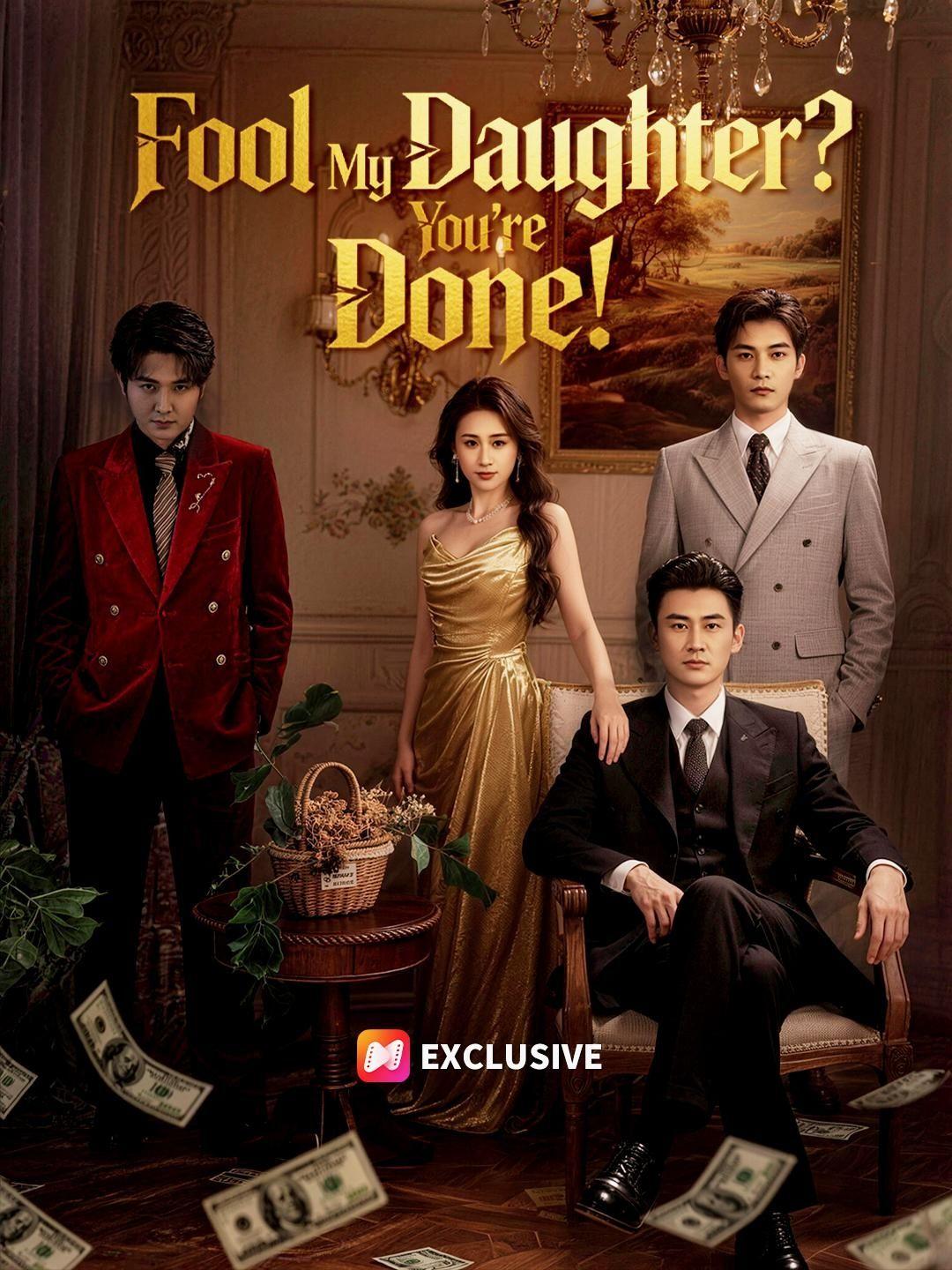
Jeremy Howard becomes convinced that a pendant is the key to finding Zoe, the love he lost, and immediately sets off to search for her. Despite business distractions and social obligations, he prioritizes his quest, ordering DNA verification for Sabrina Zeller and surveillance on Zoe to ensure no mistakes.Will Jeremy's pursuit lead him to Zoe, or will new obstacles arise?


Recommended for you


Lost and Found: When the Past Delivers an Engagement Letter
The lighting in the room is deliberate—cool, cinematic, almost noir-like, with shadows pooling in the corners like forgotten memories. A single vertical LED strip casts a thin beam of white light down the wall, slicing through the gloom like a verdict. In this carefully constructed atmosphere, three people orbit one another like planets caught in a failing gravitational system. Li Wei, seated, is the center of gravity—still, heavy, radiating quiet despair. Chen Lihua, his mother, is the volatile moon—bright with emotion, unstable, pulling away just as quickly as she draws near. And Zhang Jun, entering late, is the comet: sudden, dazzling, destructive in its trajectory. He doesn’t realize he’s carrying not joy, but a catalyst. The opening shot—tight on the personnel form—is genius in its mundanity. We see her photo: round face, gentle smile, dark hair parted neatly. The kind of photo you’d print for a government ID or a company badge. Innocuous. Harmless. Yet in Li Wei’s hands, it becomes a weapon. The form itself is bureaucratic poetry: fields for ‘Name’, ‘Gender’, ‘Hometown’, ‘Position’, ‘Education Level’, ‘Reason for Leaving’. Each category is a tiny cage. ‘Front Desk Staff’. ‘High School’. ‘Resigned’. The last one is the key. Not ‘Fired’. Not ‘Transferred’. *Resigned*. Voluntary. Chosen. That word alone fractures the narrative Li Wei has been telling himself—that she was struggling, that she needed help, that he could still fix it. Now he sees: she chose to walk away. From the job. From the city. From *him*. Chen Lihua’s reaction is the emotional core of the scene. She doesn’t scream. She doesn’t collapse. She *reads*. Her eyes scan the form with the intensity of a detective reviewing a confession. When she looks up at Li Wei, her expression is not accusatory—it’s wounded. As if the betrayal isn’t that her daughter left, but that she didn’t trust them enough to say goodbye properly. Her voice, when it comes, is low, cracked—not with age, but with the strain of holding back tears. She asks, “Did she ever mention him?” Li Wei doesn’t answer. He can’t. Because the truth is worse: he *did* hear rumors. A colleague mentioned a ‘nice guy from the finance sector’. He dismissed it. Too busy. Too distracted by his own career climb. Now, the form feels like a mirror held up to his neglect. Then Zhang Jun arrives. His entrance is smooth, confident, almost rehearsed. He’s wearing a cream suit that costs more than Li Wei’s monthly rent—and he knows it. The red envelope in his hand isn’t just stationery; it’s symbolism. In Chinese culture, red signifies luck, celebration, union. But here, it’s inverted. It’s the color of warning. Of blood. Of finality. The camera zooms in as he offers it—not to Chen Lihua, not to the absent daughter, but directly to Li Wei. A gesture of inclusion, or perhaps, dominance. He wants Li Wei’s blessing. He assumes Li Wei has the right to give it. Li Wei takes it. Slowly. His fingers brush Zhang Jun’s, and for a split second, there’s contact—human, fragile. Then he pulls back. The envelope is heavy. Not physically, but emotionally. Inside, the invitation card is printed on thick ivory stock, gold foil embossed with lotus motifs and the date: *October 12th*. Below, in elegant script: *We cordially invite you to celebrate the engagement of Lin Xiaoyu and Zhang Jun.* Her full name. Official. Public. Sealed. What follows is a masterclass in non-verbal storytelling. Li Wei doesn’t crumple the envelope. He doesn’t throw it. He opens it. Carefully. As if handling evidence. Zhang Jun, meanwhile, begins to speak—about how Xiaoyu had been working double shifts to save for the ring, how she’d secretly enrolled in hospitality management courses, how she wanted the wedding to be ‘simple but meaningful’. Each sentence lands like a stone in still water. Li Wei’s face remains composed, but his eyes—those dark, intelligent eyes—flicker with something raw. Recognition. Shame. Grief. He realizes now: she wasn’t hiding from them. She was building a future *without* them. And she succeeded. Chen Lihua, who had been silently observing, suddenly stands. She doesn’t speak. She doesn’t gesture. She simply walks out—her footsteps measured, her back unbent. It’s the most powerful action in the scene. She refuses to witness the completion of this transaction. Her departure is not anger; it’s erasure. She is removing herself from a story she no longer recognizes. Zhang Jun glances after her, confused, then turns back to Li Wei, smiling awkwardly, as if trying to recover the mood. “She really wanted you to be the first to know,” he says, voice softer now, almost pleading. Li Wei finally speaks. Three words. “I need a minute.” Not rude. Not cold. Just final. Zhang Jun hesitates, then nods, backing toward the door. As he reaches for the handle, Li Wei adds, quietly: “Tell her… I’m happy for her.” The lie hangs in the air, thick and suffocating. Zhang Jun smiles, relieved, and exits. The door clicks shut. Now, alone, Li Wei does something unexpected. He picks up the personnel form again. He flips it over. On the back, in faint pencil, is a note—so small, so hastily written, it’s almost invisible: *Mom, I’m sorry. I had to go. Love, Yu.* Not ‘Xiaoyu’. Not ‘Daughter’. Just *Yu*. A nickname only family would use. A secret only they would understand. And he missed it. He never turned the page. This is where Lost and Found earns its title—not in the physical search for objects, but in the desperate, futile hunt for meaning after the truth has already been delivered. Li Wei is lost in the gap between who he thought she was and who she became. Zhang Jun is found—in his certainty, his privilege, his blind faith in happy endings. Chen Lihua is both lost and found: lost to the version of her daughter she imagined, found in the clarity of her own refusal to pretend. The scene ends with Li Wei placing the red envelope on the coffee table, next to the personnel form. He doesn’t touch either. He just sits. The camera holds on his face—no tears, no shouting, just the slow dawning of a new reality. The red poinsettia beside him remains vibrant, mocking in its cheerfulness. Outside, the city hums, indifferent. Inside, a family has fractured, not with a bang, but with the soft, devastating rustle of paper. What makes this sequence unforgettable is its restraint. No music swells. No dramatic cuts. Just silence, light, and the unbearable weight of what’s left unsaid. Lost and Found, in this context, is a meditation on the stories we tell ourselves to survive—and how easily they collapse when confronted with a single red envelope and a form filled out in someone else’s handwriting. Li Wei will attend the engagement. He’ll smile. He’ll raise a glass. And inside, he’ll carry the knowledge that love, once untethered from honesty, becomes just another kind of loss. And sometimes, the hardest thing to find isn’t the person who left—but the version of yourself that believed they’d never go.
Lost and Found: The Red Envelope That Shattered a Family
In the dimly lit living room of what appears to be a modest yet tastefully furnished apartment, the air hangs thick with unspoken tension—like smoke trapped behind glass. The scene opens not with dialogue, but with a document: a personnel registration form, crisp white paper held in trembling fingers. A young woman’s photo stares out from the top right corner—smiling, neat hair, eyes bright with hope. Her name is never spoken aloud, yet her presence dominates the frame like a ghost haunting the present. This is not just paperwork; it’s evidence. Evidence of a life lived, a job held, a future once imagined. And now, it’s being scrutinized—not by HR, but by two people who should know her best: Li Wei and his mother, Chen Lihua. Li Wei sits rigid on the edge of the sofa, his charcoal double-breasted suit immaculate, the silver brooch pinned to his lapel catching the faint blue glow of the LED strip behind him like a cold star. His posture is controlled, almost theatrical—yet his knuckles whiten as he grips the pages. He doesn’t speak at first. He *reads*. Every line, every checkbox, every handwritten note in faded ink. His mother, Chen Lihua, wears a floral-patterned blouse that feels deliberately dated—like she’s clinging to a version of herself from before the world shifted beneath her feet. Her face is a map of grief and disbelief. She doesn’t cry openly; instead, her lips tremble, her breath hitches, and her eyes dart between the form and her son’s profile, searching for confirmation—or denial—that this isn’t real. The silence is broken only by the rustle of paper. Then, Chen Lihua whispers something—too soft for the camera to catch, but her mouth forms the shape of a question. Li Wei finally looks up. His expression is not anger, not even disappointment. It’s worse: resignation laced with betrayal. He says nothing, but his gaze says everything. He knows. He’s known for longer than he’s admitted. The form lists her position as ‘Front Desk Staff’ at a hotel—‘Hotel Management’ under major field, ‘Entry-Level’ under rank. But the most damning detail? Under ‘Reason for Leaving’, it reads: ‘Resigned due to personal reasons’. No elaboration. No explanation. Just those five words, floating like ash in a still room. Then, the door opens. A new figure enters—Zhang Jun, dressed in a cream-colored suit, striped tie sharp as a blade, a small crown-shaped pin on his lapel hinting at authority, perhaps even pretension. He carries a red envelope. Not just any envelope—the kind reserved for weddings, engagements, celebrations. The camera lingers on it as he extends it toward Li Wei. The gold-embossed characters read: ‘Engagement Invitation’. Lost and Found, in this moment, becomes less about missing objects and more about lost identities, found truths, and the unbearable weight of timing. Zhang Jun smiles—polite, practiced, utterly unaware of the earthquake he’s just triggered. He assumes he’s delivering good news. He has no idea he’s handing Li Wei a detonator. Li Wei doesn’t take the envelope immediately. He stares at it, then at Zhang Jun, then back at the personnel form still clutched in his left hand. The contrast is brutal: one document speaks of humble labor, quiet survival; the other, of ceremony, social ascent, union. Zhang Jun, sensing hesitation, leans in slightly, voice warm but insistent: “It’s time, Wei. She’s ready. We’re all ready.” The pronoun ‘we’ hangs in the air like a challenge. Who is ‘we’? The family? The circle of friends? Or just Zhang Jun and the woman whose photo still watches from the form? Chen Lihua rises abruptly, her chair scraping against the floor. She doesn’t look at Zhang Jun. She walks past him, toward the hallway, her back straight, her shoulders tight. She doesn’t slam the door—but the click of it closing is louder than any shout. That’s when Li Wei finally moves. He takes the red envelope. Not with gratitude. With the slow, deliberate motion of a man accepting a sentence. He turns it over in his hands, as if expecting to find a hidden clause, a footnote, a way out. There is none. Just elegant calligraphy and the scent of expensive paper. What follows is not a confrontation, but a disintegration. Zhang Jun, still standing, begins to explain—about how she’d been saving, how she’d taken night classes, how she’d wanted to surprise them. Li Wei listens, nodding slightly, but his eyes are distant. He’s not hearing Zhang Jun. He’s hearing the echo of his mother’s choked whisper earlier: “She never told us she was seeing someone…” The form, the envelope, the silence—all converge into a single, devastating realization: she didn’t leave the job because of ‘personal reasons’. She left because she was building another life—one that excluded them. Lost and Found, here, is not a mystery to be solved, but a wound to be acknowledged. And wounds don’t heal when you pretend they’re bandages. The final shot lingers on Li Wei, alone now, the red envelope open on his lap, the invitation card half-slid out. He holds the personnel form in one hand, the invitation in the other. Two versions of her. Two truths. Neither can coexist. He doesn’t cry. He doesn’t rage. He simply exhales—a long, slow release, as if letting go of something he never knew he was holding onto. The camera pulls back, revealing the empty space beside him where his mother sat, where Zhang Jun stood, where *she* should have been. The red poinsettia on the coffee table glows unnaturally bright in the low light, a splash of false cheer in a room drowning in gray. This isn’t just a family drama. It’s a portrait of modern alienation—where love is measured in documents, loyalty in omissions, and happiness in envelopes you weren’t meant to open. Lost and Found, in this context, becomes ironic: they’ve found the truth, but at the cost of losing her. And the most haunting question isn’t ‘Why did she leave?’ It’s ‘When did we stop being the people she could tell?’ The brilliance of this sequence lies not in what is said, but in what is withheld. No grand monologues. No melodramatic reveals. Just paper, posture, and the unbearable weight of unsaid things. Li Wei’s restraint is his tragedy; Chen Lihua’s silent exit is her protest; Zhang Jun’s oblivious kindness is his fatal flaw. Together, they form a triangle of miscommunication so precise it feels surgical. And the red envelope? It’s not an invitation. It’s a tombstone for the version of their family that believed honesty was still possible.