



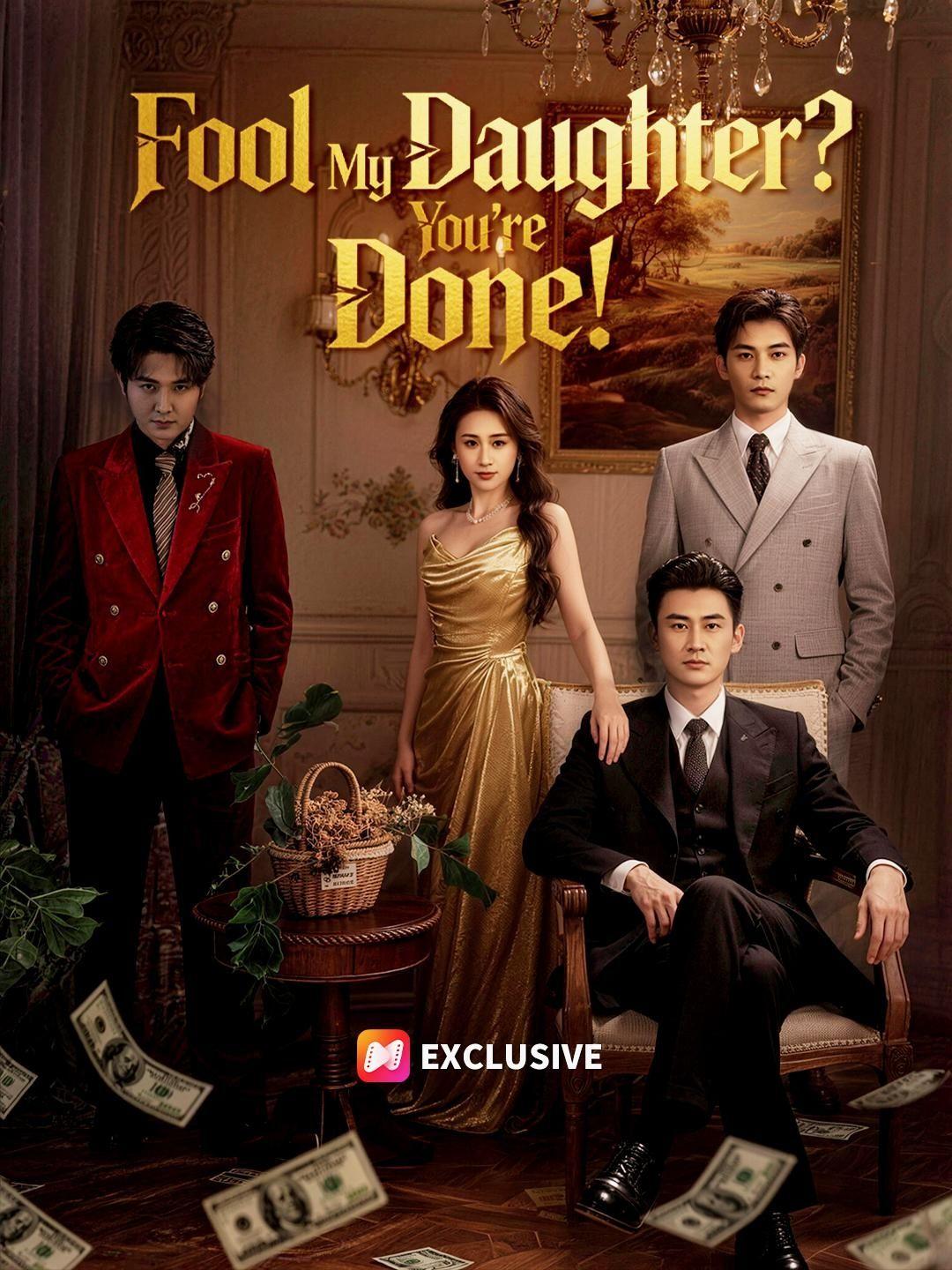
Royal Invitation Clash
Della and her mother face insults and humiliation at an event, where their royal invitation is doubted, and Della is mocked for being an illegitimate child, leading to a heated confrontation.Will Jeremy Howard step in to defend his daughter and the love he lost?


Recommended for you


Lost and Found: When the Past Walks In With a Handbag
Let’s talk about the handbag. Not just any handbag—the brown leather-and-monogrammed-canvas number clutched by Madame Chen like it’s the last life raft on a sinking ship. In the opening frames of Lost and Found, it’s an accessory. By minute three, it’s a weapon. By minute five, it’s a symbol of everything that’s been buried, everything that’s about to erupt. Because in this world—where wealth is measured in chandeliers and silence is the loudest sound—the smallest object can carry the weight of decades. And Madame Chen’s bag? It’s not just holding lipstick and keys. It’s holding a confession. The scene unfolds in a banquet hall that smells of polished wood, expensive perfume, and suppressed panic. Xiao Yu stands near the entrance, her cream dress fluttering slightly as if caught in an invisible current. Her braid is neat, her earrings simple pearls—she looks like she belongs in a tea shop, not a room where every glance carries consequence. Then Aunt Lin appears, her lavender blouse buttoned to the throat, her hair pulled back in a severe bun that speaks of discipline and denial. Their meeting is not warm. It’s charged. Xiao Yu extends her hand. Aunt Lin takes it—but her grip is too tight, her fingers digging in as if trying to anchor herself to reality. The camera zooms in on their hands: Xiao Yu’s smooth, youthful skin against Aunt Lin’s knuckles, faintly veined, marked by years of holding things together. There’s no dialogue, but the tension is audible. You can *feel* the history between them—the unspoken apologies, the missed birthdays, the letters never sent. Lost and Found thrives in these silences, in the spaces between words where truth hides, waiting for the right moment to leap out. Then Madame Chen enters the frame—not with fanfare, but with purpose. She doesn’t walk; she *advances*. Her striped top is bold, geometric, a visual metaphor for the binary thinking she brings to the situation: right or wrong, guilty or innocent, family or outsider. Her pearl necklace, heavy and elegant, swings slightly with each step, like a pendulum counting down to judgment. And that handbag—oh, that handbag. She holds it low, in front of her, as if shielding her heart. But when she speaks (again, no subtitles, but her mouth forms sharp, precise shapes), her free hand rises—not to gesture, but to *accuse*. She points, not at Xiao Yu directly, but at the space between them, as if drawing a line in the air that cannot be crossed. Her voice, though unheard, is unmistakable in its cadence: clipped, authoritative, laced with the kind of certainty that only comes from years of believing your version of the story is the only one that matters. What follows is a masterclass in nonverbal storytelling. Xiao Yu doesn’t cry. She doesn’t argue. She *listens*. And in that listening, she transforms. Her initial shock gives way to a quiet intensity—her eyes narrowing, her posture straightening, her chin lifting just enough to signal she won’t be erased. When Madame Chen finally closes the distance and lifts her hand to Xiao Yu’s face, the room freezes. It’s not a caress. It’s an inspection. A verification. Madame Chen’s fingers trace the line of Xiao Yu’s jaw, her thumb brushing the corner of her mouth, as if searching for a birthmark, a scar, a sign that confirms what she’s feared—or hoped—for all these years. Xiao Yu doesn’t flinch. She stares back, unblinking, her expression unreadable. And in that moment, we realize: this isn’t about recognition. It’s about *reclamation*. Madame Chen isn’t just seeing Xiao Yu—she’s seeing a ghost she thought she’d buried. Lost and Found isn’t about finding a missing person. It’s about confronting the person you tried to forget. The men in the background—Mr. Zhou in the olive suit, his tie perfectly knotted, his wine glass held like a prop in a play he didn’t audition for—watch with the detached interest of anthropologists observing a rare ritual. He exchanges a glance with his companion, the man in white, whose smile is too wide, too practiced. They’re not allies. They’re witnesses. And their presence underscores the central theme of the scene: this confrontation isn’t private. It’s public theater. Every emotion is amplified by the audience, every gesture interpreted, misinterpreted, whispered about later over coffee. The banquet hall, with its towering columns and ornate ceiling, becomes a stage. The guests are the chorus. And Xiao Yu, Aunt Lin, and Madame Chen are the tragic trio, bound by blood, lies, and the unbearable weight of what they’ve kept hidden. What’s brilliant about Lost and Found is how it uses physicality to convey psychology. Watch Aunt Lin’s hands when she’s speaking to Xiao Yu—how they move from clasped in front of her to open, palms up, as if offering surrender. How her shoulders drop when Xiao Yu says something that cracks her composure. And Madame Chen—her transformation is even more subtle. At first, she’s all control: upright spine, steady gaze, fingers locked around that bag. But as the conversation deepens, her breathing changes. Her lips tremble, just once. Her eyes glisten—not with tears, but with the effort of holding them back. And then, the climax: she raises her hand to Xiao Yu’s face, and for a split second, her expression softens. Not with love, but with something worse: *recognition*. The kind that shatters illusions. The kind that forces you to rewrite your entire life story in real time. Xiao Yu sees it. She sees the crack in the armor. And she doesn’t exploit it. She simply nods, a small, solemn movement that says, *I know what you’re seeing. And I’m still here.* The final moments of the sequence are haunting. Madame Chen steps back, her hand falling to her side, the bag swinging slightly. She turns away, but not before glancing once at Aunt Lin—whose face is a mask of sorrow, guilt, and something else: relief? Resignation? We don’t know. And Xiao Yu—she doesn’t follow. She stands still, her gaze fixed on the door through which Madame Chen entered, as if watching the past walk out of the room. The camera lingers on her profile, the braid over her shoulder, the pearl earring catching the light. She looks younger than she did at the start. Or maybe she just looks *true*. Lost and Found doesn’t give us closure. It gives us questions. Who is Xiao Yu, really? Why did she come here tonight? What did Aunt Lin promise her? And what was in that handbag—besides keys and lipstick—that Madame Chen was so afraid to let go of? The answers aren’t in the dialogue. They’re in the pauses, the glances, the way a single touch can unravel a lifetime of silence. This isn’t just a scene. It’s a warning: be careful what you bury. Because one day, the past will walk into the room, holding a handbag, and demand to be found.
Lost and Found: The Hand That Trembles at the Banquet
In the opulent, gilded hall of what appears to be a high-society wedding reception or gala—complete with chandeliers dripping like frozen champagne bubbles, patterned carpets that whisper of old money, and walls lined with wood paneling that has seen decades of whispered scandals—the tension doesn’t simmer. It *boils*. And it all centers on three women whose faces tell a story no script could fully capture: Xiao Yu, the young woman in the cream dress with the braid over her shoulder; Aunt Lin, the older woman in lavender silk whose posture is rigid as a porcelain vase about to crack; and Madame Chen, the woman in the black-and-white striped top, clutching a designer handbag like a shield. Lost and Found isn’t just a title here—it’s the emotional arc of the entire scene, a slow-motion unraveling of identity, betrayal, and the unbearable weight of unspoken truths. Xiao Yu enters the frame with wide eyes and parted lips—not out of excitement, but shock. Her dress, delicate and girlish, contrasts sharply with the gravity of the room. She moves like someone who’s just stepped into a dream she didn’t know she was having. When she reaches Aunt Lin, their hands meet—not in greeting, but in desperation. Aunt Lin’s fingers tremble as she grips Xiao Yu’s wrist, her voice low, urgent, almost pleading. The camera lingers on their clasped hands, the way Xiao Yu’s knuckles whiten, the way Aunt Lin’s thumb rubs a frantic circle on the girl’s pulse point. This isn’t a reunion. It’s an interrogation disguised as comfort. And yet, Xiao Yu doesn’t pull away. She leans in, her breath shallow, her gaze darting between Aunt Lin’s face and the crowd behind them—people holding wine glasses like weapons, smiling politely while their eyes dissect every micro-expression. Lost and Found begins not with a missing person, but with a missing *truth*, and Xiao Yu is standing right in the middle of its crater. Madame Chen watches from a few steps away, her expression shifting like light through stained glass: first curiosity, then recognition, then something darker—disbelief, perhaps, or dawning horror. She clutches her bag tighter, her pearls catching the light like tiny, accusing eyes. When she finally steps forward, her voice cuts through the ambient murmur like a knife drawn slowly from its sheath. She doesn’t shout. She *accuses* with tone alone. Her words are lost to the audio track, but her body language screams volumes: one hand pressed to her chest, the other gesturing toward Xiao Yu as if presenting evidence in a courtroom. Her mouth opens wide—not in laughter, but in disbelief so profound it borders on theatrical. And then, the moment that redefines the scene: she reaches out, not to hug, not to scold, but to *touch* Xiao Yu’s face. Her fingers lift the girl’s chin, forcing her to meet her gaze. Xiao Yu flinches—not violently, but with the subtle recoil of someone who’s been struck before. Madame Chen’s eyes widen, her lips part, and for a heartbeat, the entire room seems to hold its breath. Is this recognition? Or is it accusation made flesh? The gesture is intimate, violating, and utterly ambiguous—a perfect metaphor for the blurred lines between maternal concern and social condemnation that run through Lost and Found like veins of gold in marble. Meanwhile, the men stand off to the side, sipping red wine like spectators at a tragedy they’re too polite to interrupt. One man in the olive suit—let’s call him Mr. Zhou—holds his glass with practiced ease, but his eyes never leave the women. His jaw tightens when Madame Chen touches Xiao Yu’s face. He glances at his companion in the white double-breasted suit, who offers a thin smile and a shrug, as if to say, *This is none of our business.* But it is. Everything in this room is connected. The clock on the wall ticks with cruel indifference. A waiter passes silently, tray held high, pretending not to see the storm brewing near the floral centerpiece. The background chatter fades into a hum, leaving only the silent language of the three women: the trembling hands, the forced smiles, the way Aunt Lin’s shoulders slump just slightly when Madame Chen speaks, as if each word is a stone dropped into the well of her conscience. What makes Lost and Found so compelling isn’t the melodrama—it’s the restraint. No one collapses. No one screams. Yet the emotional violence is palpable. Xiao Yu’s transformation across the sequence is masterful: from startled innocence to quiet defiance, then to weary resignation, and finally, to a flicker of resolve. Watch her eyes in the close-ups—how they narrow just slightly when Madame Chen speaks, how her lips press together in a line that says *I know more than you think*. She’s not passive. She’s calculating. And when she finally speaks—her voice soft but clear, cutting through the tension like a scalpel—the room shifts. Aunt Lin blinks rapidly, as if trying to unsee something. Madame Chen takes a half-step back, her hand dropping from Xiao Yu’s face, her expression now unreadable: shock, regret, or calculation? We don’t know. And that’s the genius of it. Lost and Found refuses to give us easy answers. It asks us to sit with the discomfort, to wonder: Who is really lost here? Is it Xiao Yu, who seems to have emerged from nowhere into this gilded cage? Is it Aunt Lin, who clearly knows more than she’s saying, her loyalty torn between blood and duty? Or is it Madame Chen, whose outrage feels performative—like she’s playing a role she’s rehearsed for years, but suddenly forgot the lines? The setting itself becomes a character. The ornate doors behind them, studded with glass panes, reflect distorted versions of the scene—fragmented, unreliable, much like memory itself. The floral arrangements on the tables are pristine, untouched, as if the world outside this confrontation is still perfectly ordered. But inside the circle of these three women, order is dissolving. A single tear escapes Aunt Lin’s eye—not dramatic, just a quiet betrayal of her composure—and it catches the light like a diamond. Xiao Yu sees it. She doesn’t wipe it away. She simply nods, once, slowly, as if acknowledging a debt that can never be repaid. That nod is the turning point. It’s not forgiveness. It’s acceptance. Acceptance that some truths, once spoken, cannot be unsaid. That some relationships, once fractured, can only be reassembled with visible seams. Later, when Madame Chen turns away, her back stiff, her hand still clutching the bag like a talisman, we see the cost of her performance. Her shoulders sag, just for a second, before she straightens again. She’s not victorious. She’s exhausted. And Xiao Yu—now standing alone, her braid swaying slightly as she turns her head—looks not at the people around her, but *through* them. Her gaze is distant, focused on something only she can see. Perhaps it’s the future. Perhaps it’s the past. Perhaps it’s the version of herself she’ll become after tonight. Lost and Found doesn’t end with resolution. It ends with suspension—the kind of silence that hums with possibility. The wine glasses remain half-full. The guests resume their conversations, but their eyes keep flicking toward the trio, like moths drawn to a flame they know will burn them. And in that moment, we understand: this isn’t just a scene from a short drama. It’s a mirror. A reflection of every time we’ve stood in a room full of people, holding a secret too heavy to speak, waiting for someone to say the words that will change everything—or nothing at all. Lost and Found reminds us that sometimes, the most devastating discoveries aren’t about where someone has gone, but who they’ve become when no one was looking.