



Revelation and Retribution
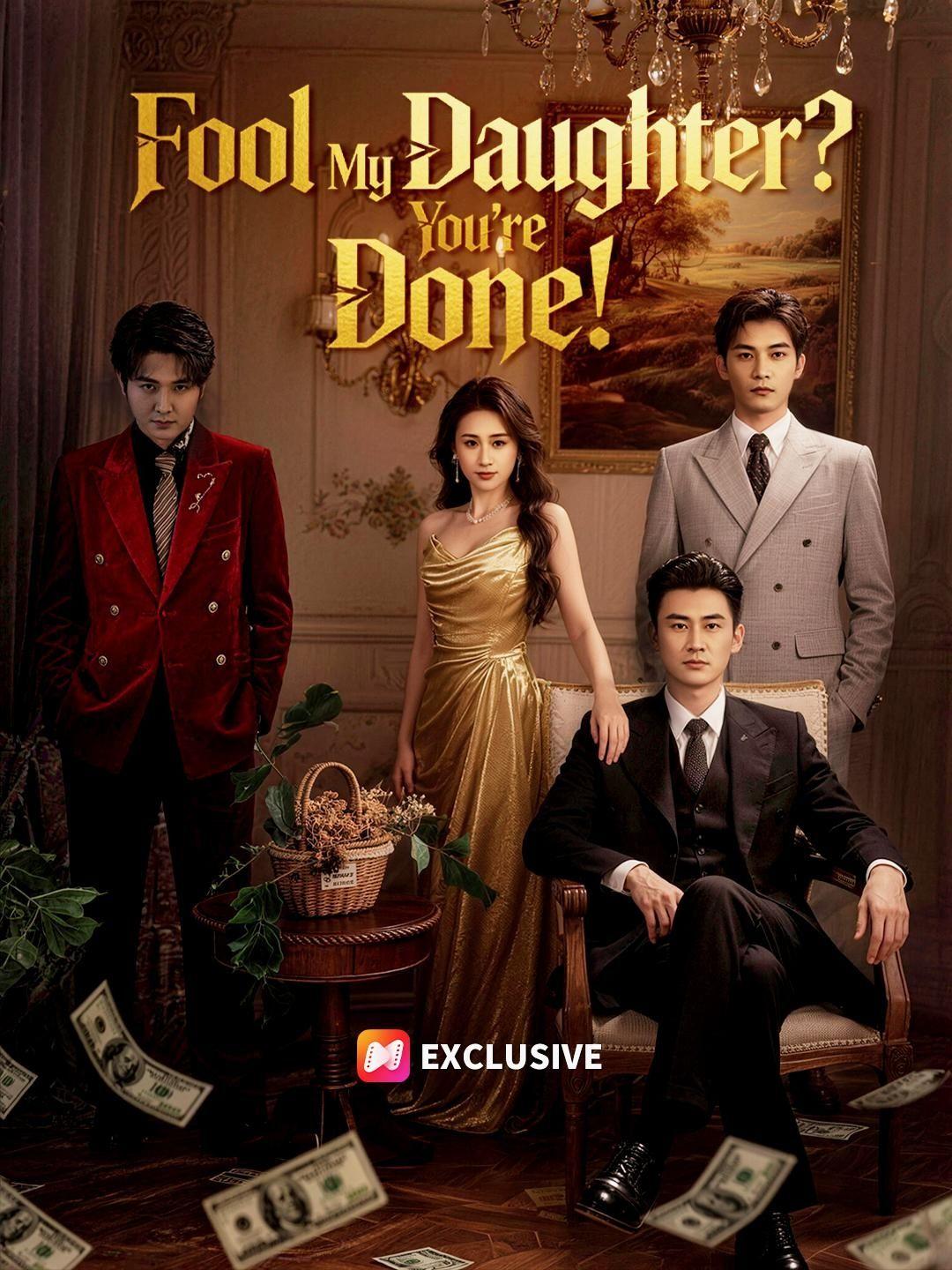
Jeremy Howard arrives at his daughter's engagement ceremony only to find chaos caused by Calvin, who brought Sabrina Zeller and another woman claiming to be Jeremy's wife and child. The situation escalates as insults fly, revealing deeper family tensions and unresolved issues. Jeremy steps in to defend his true family, shocking everyone by acknowledging the two women as his wife and daughter, turning the tables on the instigators.Will Jeremy's public acknowledgment of his family heal old wounds or ignite new conflicts?


Recommended for you


Lost and Found: When the Smile Hides the Knife
There’s a moment—just one frame, barely a blink—that tells you everything you need to know about this scene. It’s not when Lin Zeyu strides through the arched doorway, flanked by his silent sentinels. It’s not when Guo Ming launches into his manic pantomime of revelation. It’s later. After the shouting, after the grabbing, after the room has gone still and heavy with unsaid things. It’s when Lin Zeyu turns his head—not toward the chaos, not toward Xiao Yu, but toward the man in the beige suit, Li Jian—and smiles. Not a warm smile. Not even a polite one. A thin, precise curve of the lips, the kind that doesn’t reach the eyes. His eyes remain cold, assessing, calculating. That smile is the knife. And it’s already buried deep. This is the genius of Lost and Found: it understands that the most dangerous conflicts aren’t fought with fists or firearms, but with micro-expressions, with the tilt of a chin, with the way a man adjusts his cufflink while listening to a lie. The setting—a grand banquet hall with gilded moldings and floral stained glass—creates the perfect illusion of civility. White tablecloths, crystal glasses, soft lighting. Everything suggests refinement, harmony, celebration. But beneath the surface, the floorboards creak with unresolved history. Every guest is a character in a play they didn’t audition for, and tonight, the script has been rewritten without their consent. Let’s talk about Xiao Yu. She’s the emotional anchor of the sequence, though she speaks almost nothing. Her power lies in her silence. When Lin Zeyu approaches her, his hand landing on her arm, she doesn’t recoil—not immediately. She freezes. Her pupils dilate. Her breath hitches, just once, audible only to those standing close. That’s the moment the audience realizes: this isn’t just a confrontation. It’s a reckoning. She knows what he’s going to say before he says it. She’s been waiting for it. And yet, when he leans in, his voice low and urgent, she doesn’t pull away. She *leans in too*. Not toward him—but toward the truth. That tiny movement says more than a monologue ever could. She’s not a victim here. She’s a participant. A reluctant one, perhaps, but a participant nonetheless. Her cream dress, with its ruffled shoulders and delicate straps, contrasts violently with the hardness of the moment. It’s armor made of lace. Now consider Auntie Chen. She wears tradition like a second skin—the qipao, the jade earrings, the neat bun—but her eyes betray her. They dart between Lin Zeyu and Xiao Yu, then to Guo Ming, then back again, like a chess player scanning the board for the next fatal move. When Guo Ming is seized, she doesn’t gasp. She doesn’t cry out. She simply closes her eyes for a full three seconds, as if praying—or burying something. When she opens them again, there’s resignation. Not defeat. Resignation. She knew this day would come. She may have even hoped for it. Because sometimes, the only way to heal a wound is to tear the scab off, no matter how much it bleeds. Lost and Found isn’t just about finding what was lost—it’s about confronting what was deliberately hidden. And Auntie Chen? She’s been guarding that secret for years. Her silence isn’t complicity. It’s sacrifice. Guo Ming, meanwhile, is the id unleashed. He’s the part of all of us that wants to scream the truth into a room full of liars. His performance is exaggerated, yes—wide eyes, open mouth, theatrical pointing—but it’s not fake. It’s *amplified*. He knows these people respond only to spectacle, so he gives them a show. He doesn’t care if they think him ridiculous. Ridicule is preferable to irrelevance. And when he’s lifted off his feet by the black-suited men, his expression shifts from panic to glee. Why? Because he’s succeeded. He’s broken the spell of decorum. He’s made the invisible visible. His final wink at Lin Zeyu isn’t mockery—it’s acknowledgment. *I see you. And now, everyone else does too.* Li Jian is the most fascinating figure in the room. He doesn’t wear sunglasses. He doesn’t stand in the shadows. He stands *in the light*, arms crossed, tie perfectly knotted, watching the unraveling with the detached interest of a scientist observing a chemical reaction. When he finally speaks to Xiao Yu, his voice is soft, almost intimate—but his words are edged with steel. He doesn’t accuse. He *invites*. He offers her a choice, wrapped in velvet. And in that moment, we understand: Li Jian isn’t Lin Zeyu’s rival. He’s his mirror. Both men operate in the same world, governed by the same rules—loyalty is transactional, emotion is leverage, and truth is a weapon to be deployed strategically. The difference? Lin Zeyu still believes in the fiction of control. Li Jian knows it’s all smoke and mirrors. The climax isn’t the physical restraint—it’s the emotional surrender. When Xiao Yu finally looks up at Lin Zeyu, her eyes glistening but not spilling over, she doesn’t speak. She simply nods. Once. A tiny, almost imperceptible motion. That nod changes everything. It’s not agreement. It’s acceptance. She accepts that this is her life now. That there is no going back to innocence. That the man in the pinstripe suit, for all his cold precision, is the only person who truly sees her—and that terrifies her more than any threat. And then, the aftermath. The room doesn’t erupt into chaos. It settles into a new kind of silence—one thick with implication. Guests exchange glances. Some leave quietly, pretending they saw nothing. Others linger, sipping wine, eyes bright with gossip. Yan Wei, the woman in black sequins, finally moves. She walks not toward the exit, but toward Xiao Yu. She doesn’t speak. She simply places a hand on her shoulder—brief, firm, supportive—and then walks away. No words needed. In that touch is solidarity. Recognition. A promise: *You’re not alone in this.* Lost and Found thrives on these unspoken contracts. It understands that in high-stakes social drama, what isn’t said matters more than what is. The real tension isn’t in the shouting—it’s in the pause before the sentence finishes. It’s in the way Lin Zeyu’s fingers tighten on Xiao Yu’s arm when Li Jian smiles. It’s in the way Guo Ming’s laughter fades into a grimace as he’s led away, not defeated, but *transformed*. He entered the room as a clown. He leaves as a prophet. What makes this scene unforgettable isn’t the production design or the costumes—though both are impeccable. It’s the psychological realism. These characters don’t behave like movie tropes. They behave like real people caught in a web of obligation, love, guilt, and ambition. Lin Zeyu isn’t a villain. He’s a man who built a life on foundations he knew were shaky—and now the earthquake has arrived. Xiao Yu isn’t a damsel. She’s a young woman realizing that her choices have consequences far beyond her own heart. And Guo Ming? He’s the necessary chaos agent—the one who reminds us that sometimes, the only way to find what’s been lost is to burn the house down and sift through the ashes. The final shot lingers on Lin Zeyu, standing alone in the center of the hall, the crowd dispersing around him like water around a stone. He doesn’t look victorious. He looks exhausted. Haunted. The smile is gone. In its place is something quieter, deeper: resolve. He knows the game has changed. The rules are different now. And he will adapt. Because in the world of Lost and Found, survival isn’t about winning—it’s about being the last one standing when the dust settles. And as the camera pulls back, revealing the grandeur of the hall now empty except for him, we realize: the real banquet hasn’t even started yet. The appetizers were just the prelude. The main course—the confrontation with the past, the reckoning with identity, the choice between loyalty and truth—is still to come. And we, the audience, are already seated at the table, forks in hand, waiting.
Lost and Found: The Moment the Banquet Unraveled
In the opulent hall of what appears to be a high-society banquet—marble floors gleaming under crystal chandeliers, stained-glass arches framing the entrance like a cathedral of privilege—the air hums with restrained tension. This is not a wedding, nor a gala; it’s something far more volatile: a social detonation waiting for its spark. And that spark arrives in the form of Lin Zeyu, the man in the olive pinstripe double-breasted suit, his hair slicked back with military precision, a silver tie clip anchoring his composed facade. He walks in not with confidence, but with *purpose*—each step measured, each glance calibrated. Behind him trail four men in black suits and sunglasses, their presence less like bodyguards and more like silent witnesses to an impending reckoning. They don’t speak. They don’t need to. Their stillness is louder than any shout. The room is already divided—not by tables, but by emotional currents. On one side stands Xiao Yu, the young woman in the off-shoulder cream dress, her hair pinned up with delicate strands framing her face like a porcelain doll caught in a storm. Her hands are clasped tightly in front of her, knuckles white. She doesn’t look at Lin Zeyu directly—not yet—but her eyes flicker toward him like a compass needle drawn to magnetic north. Beside her, slightly behind, is Auntie Chen, wearing a dark green qipao embroidered with plum blossoms and birds—a garment that speaks of tradition, dignity, and quiet endurance. Her expression is unreadable, but her posture is rigid, as if she’s bracing for impact. Across the aisle, another woman—Yan Wei—wears a strapless black sequined gown, diamonds catching the light like scattered stars. She watches everything with a faint, knowing smile, lips parted just enough to suggest she knows more than she lets on. Lost and Found isn’t just a title here; it’s the central paradox of the scene: who is lost? Who will be found? And at what cost? Then enters the disruptor: Guo Ming, the man in the olive-green blazer and wire-rimmed glasses. His entrance is not silent. It’s theatrical. He claps once—sharp, percussive—and then raises his hand like a conductor summoning an orchestra of chaos. His face shifts from wide-eyed delight to exaggerated shock in half a second, mouth forming an O, eyebrows vaulting toward his hairline. He points—not politely, but *accusatorily*—at Lin Zeyu, then at Xiao Yu, then back again, as if revealing a secret so obvious it’s absurd he hadn’t seen it sooner. His gestures are broad, almost cartoonish, yet they carry weight because everyone in the room *reacts*. Lin Zeyu’s brow furrows, not with anger, but with dawning realization—something has slipped. Something he thought buried is now standing in the center of the room, shouting in sign language. What follows is a masterclass in nonverbal escalation. Lin Zeyu doesn’t raise his voice. He doesn’t lunge. He simply steps forward, places a hand on Xiao Yu’s arm—not roughly, but firmly—and leans in. His lips move, but we don’t hear the words. We see only the tightening of Xiao Yu’s jaw, the way her breath catches, the slight tremor in her fingers as she tries to pull away. That single touch becomes the fulcrum upon which the entire scene pivots. Is it protection? Possession? A plea? The ambiguity is deliberate. Meanwhile, Guo Ming continues his performance—now bowing deeply, hands pressed together in mock supplication, then snapping upright to point again, this time at the man in the beige suit, Li Jian, who stands with arms crossed, a smirk playing at the corner of his mouth. Li Jian is the wildcard. He’s not aligned with Lin Zeyu, nor with Guo Ming—he’s observing, calculating, waiting to see which side the wind blows before committing. His striped tie, orange and gray, feels like a visual metaphor: neither fully warm nor cold, but somewhere in between, adaptable, dangerous. The tension peaks when Li Jian finally speaks—not to Lin Zeyu, but to Xiao Yu. His tone is soft, almost tender, but his eyes are sharp. He says something that makes her flinch. Not physically, but emotionally. Her shoulders draw inward, her gaze drops, and for the first time, she looks *afraid*. Not of him—but of what he represents. Of the truth he might expose. Lin Zeyu’s reaction is immediate: he turns, his expression hardening into something colder than marble. He doesn’t shout. He doesn’t threaten. He simply *looks* at Li Jian—and in that look is the unspoken promise of consequence. The room holds its breath. Even the waitstaff frozen near the side tables seem to lean in. Then, the collapse. Not physical—though it comes soon after—but emotional. Guo Ming, sensing the shift, throws his hands up in surrender, then drops them to his sides, shoulders slumping. But it’s a feint. In the next beat, he lunges—not at Lin Zeyu, but *past* him, toward Xiao Yu, as if to shield her or snatch her away. That’s when the black-suited men move. Not all at once. First one grabs Guo Ming’s shoulder. Then another. Then two more flank him, hands locking around his upper arms, lifting him slightly off the ground. His face contorts—not in pain, but in disbelief. His mouth opens, but no sound comes out. He’s been outmaneuvered. And yet, even as he’s being restrained, he grins. A wild, triumphant grin. Because he’s done what he came to do: he’s made the invisible visible. He’s forced the truth into the light, where it can no longer be ignored. The final tableau is devastating in its symmetry. Lin Zeyu stands tall, Xiao Yu beside him, her hand now resting lightly on his forearm—not clinging, but connected. Auntie Chen watches, her expression shifting from stoic to sorrowful, as if mourning a future that will never be. Yan Wei, ever the observer, glances toward the exit, then back, her smile now tinged with pity. And Guo Ming, suspended mid-air between two enforcers, locks eyes with Lin Zeyu—and winks. Just once. A tiny, defiant gesture that says: *You think you’ve won? I’ve only just begun.* Lost and Found isn’t about objects or people misplaced and recovered. It’s about identity, legacy, and the unbearable weight of secrets in a world where appearances are currency. Lin Zeyu thought he had control—his suit, his posture, his entourage. But control is an illusion when the past refuses to stay buried. Xiao Yu is the key—not because she holds the truth, but because she *is* the truth, embodied. And Guo Ming? He’s the catalyst, the jester who speaks madness to power, knowing full well that sometimes, the only way to find what’s lost is to shatter the vessel holding it. The banquet hall, once a symbol of order and elegance, now feels like a stage set waiting for the next act. The guests haven’t left. They’re still there, sipping champagne, pretending not to watch—but their eyes tell another story. They know. They’ve always known. They just needed someone brave—or foolish—enough to say it aloud. Lost and Found isn’t over. It’s barely begun. And the most chilling part? No one fired a gun. No one raised their voice above a whisper. The violence was all in the glances, the silences, the way a hand rested on an arm. That’s how real power works. Not with explosions—but with the slow, inevitable crumbling of certainty. Lin Zeyu may walk out of this room still upright, but something inside him has fractured. And Xiao Yu? She’s no longer the girl in the cream dress. She’s become the center of the storm. The question isn’t whether she’ll survive it. It’s whether she’ll ever want to return to calm waters again.