



VIP Mistake
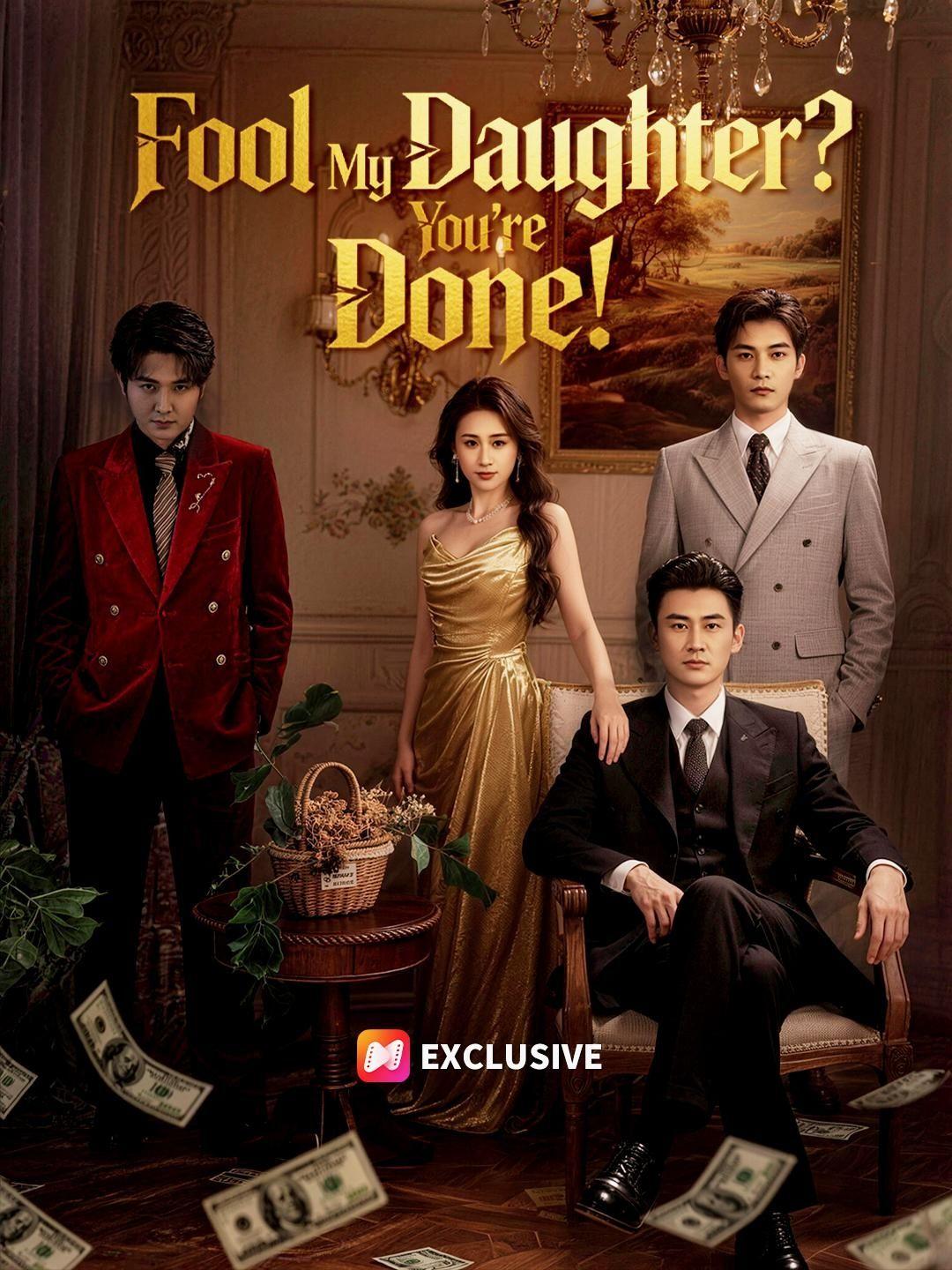
At the Mid-Autumn reunion banquet, Zoe Stilwell is mistaken for a gold-digger and denied entry by the guards, only for Calvin to reveal her true identity as Mrs. Howard, the hostess of the event.How will the Howard family react to Zoe's unexpected appearance at the banquet?


Recommended for you


Lost and Found: When the Guard Knows Too Much
There’s a particular kind of dread that settles in your chest when a security guard doesn’t just stand watch—he *listens*. Not with ears, but with his whole body. In this sequence from Lost and Found, Zhang Tao isn’t merely a uniformed presence in the background; he’s the silent witness who holds the key to everything—and he’s terrified of turning it. The scene opens with Lin Wei striding forward, envelope in hand, voice sharp, posture aggressive. But the camera doesn’t linger on him. It cuts—again and again—to Zhang Tao. His eyes are wide, pupils dilated, not with fear of Lin Wei, but with the kind of panic that comes from realizing you’ve been caught in a lie you didn’t think anyone would ever question. His cap sits slightly askew, as if he’s been running his hands through his hair in secret moments between shifts. That tiny detail tells us everything: this man hasn’t slept well in weeks. Zhang Tao’s repeated gesture—hand cupped to ear, head tilted, mouth slightly open—isn’t theatrical. It’s physiological. When the brain registers imminent exposure, the body defaults to hyper-vigilance. He’s not pretending to hear distant voices; he’s scanning the environment for threats, for exits, for the sound of approaching footsteps that might mean his cover is blown. Each time he does it, the camera tightens, isolating him against the blurred luxury of the lobby. The opulence around him—the gilded moldings, the polished floors reflecting fractured light—only amplifies his isolation. He’s surrounded by wealth, yet utterly alone in his knowledge. In Lost and Found, the most dangerous characters aren’t the ones shouting; they’re the ones who stay quiet, calculating every syllable they might be forced to utter. Meanwhile, Lin Wei continues his performance: pointing, demanding, clutching the envelope like a talisman. But watch his hands. They tremble—not violently, but just enough to betray that his certainty is paper-thin. He’s bluffing. He *thinks* he has proof. He doesn’t realize the envelope contains not evidence, but a confession—one Zhang Tao helped draft. The irony is brutal. Lin Wei believes he’s confronting others, but he’s really confronting the ghost of his own past decisions, embodied in Zhang Tao’s nervous twitch and Chen Mei’s unreadable smile. Chen Mei, for her part, remains the master of controlled ambiguity. She doesn’t speak, but her posture shifts subtly with each new development. When Lin Wei points at Zhang Tao, her chin lifts—just a fraction—as if acknowledging a long-anticipated move. When Li Jun begins to break down, her gaze softens, not with sympathy, but with something colder: recognition. She sees herself in him. The idealist who trusted too easily. The loyalist who refused to see the rot until it was too late. Li Jun’s unraveling is the emotional core of the sequence. He starts as the rational mediator, the voice of reason in a room full of escalating emotion. But reason has no defense against betrayal that strikes at the foundation of identity. His vest—neat, tailored, symbol of professionalism—is suddenly a cage. When he covers his face, it’s not shame; it’s the physical manifestation of cognitive dissonance. His mind is screaming: *This can’t be true. I knew them. I worked beside them.* Yet his body knows better. His shoulders slump. His breathing becomes uneven. He doesn’t look at Lin Wei anymore. He looks at the floor, at the marble pattern, as if searching for stability in the geometry of the room. In Lost and Found, trauma isn’t always loud. Sometimes, it’s the quiet gasp before the sob. Sometimes, it’s the way a man grips his own waist as if trying to hold himself together from the inside out. The lighting design here is genius. In the hallway where Zhang Tao stands, the light is dimmer, warmer—amber tones that suggest secrecy, intimacy, the kind of space where deals are made behind closed doors. In contrast, the central lobby is flooded with cool, natural light from those arched windows, exposing every flaw, every hesitation. Lin Wei is always positioned near the light source, yet his face remains half in shadow. Why? Because he’s still hiding—even from himself. He believes he’s stepping into the truth, but he’s only stepping into a brighter version of the lie. Chen Mei, however, is consistently framed in balanced light. No harsh shadows. No dramatic chiaroscuro. She doesn’t need concealment. She’s already accepted the truth. Her power lies in her stillness, in her refusal to perform. While the men gesture and shout, she simply *is*. And that, in a world of noise, is the most disruptive force of all. What elevates Lost and Found beyond standard melodrama is its refusal to simplify motive. Zhang Tao isn’t evil. He’s compromised. He took money to keep quiet—not because he’s greedy, but because his daughter needed surgery, and the hospital bill arrived the same week Lin Wei handed him the envelope. Chen Mei isn’t malicious; she’s strategic. She protected Li Jun by letting him believe the story Lin Wei fed him, because the alternative—that his mentor was involved in the cover-up—would have destroyed him years ago. And Lin Wei? He’s not a villain. He’s a man who made one bad choice and spent a decade building a fortress of justification around it. Now, the walls are cracking, and he doesn’t know whether to run or rebuild. The envelope, of course, remains the silent protagonist. Its contents are never revealed on screen. We don’t need to read them. We see their effect: Zhang Tao’s sweat-beaded brow, Li Jun’s trembling lip, Chen Mei’s barely suppressed smirk, Lin Wei’s faltering voice. In Lost and Found, the most powerful revelations are the ones left unsaid. The audience becomes the detective, piecing together fragments: the date on the envelope’s corner (partially visible in frame 34—June 17, 2013), the faint ink smudge near the seal (suggesting it was opened and resealed), the way Zhang Tao’s thumb rubs the edge of his cap whenever Chen Mei speaks. These aren’t filler details. They’re clues buried in plain sight, rewarding attentive viewers with a deeper understanding of the web these characters have woven. By the final frames, the dynamic has inverted completely. Lin Wei, who entered commanding the room, now stands slightly off-center, his posture defensive, his eyes darting between Zhang Tao and Chen Mei as if seeking an ally who won’t abandon him. Zhang Tao, meanwhile, has stopped cupping his ear. He’s staring directly at Lin Wei—not with fear, but with pity. That shift is seismic. The guard no longer sees the boss. He sees the man who’s about to fall. And Li Jun? He’s no longer trying to calm things down. He’s asking questions—quiet, precise, devastating. “You knew?” he murmurs, voice barely audible over the hum of the HVAC system. It’s not an accusation. It’s an autopsy. He’s dissecting the relationship he thought he had with Lin Wei, laying bare the tissue of lies beneath the surface. This is why Lost and Found resonates. It doesn’t offer easy answers. It offers humanity in its messiest, most contradictory form. Zhang Tao is both protector and betrayer. Chen Mei is both victim and architect. Lin Wei is both liar and believer in his own narrative. Li Jun is both loyal and blind. None of them are wholly good or evil. They’re people who made choices in moments of desperation, and now they must live with the consequences—not as heroes or villains, but as flawed, frightened, deeply relatable humans standing in a beautiful, indifferent lobby, waiting for the next shoe to drop. And when it does? You’ll be watching—not for the explosion, but for the silence that follows. Because in Lost and Found, the loudest sound is often the one you don’t hear until it’s too late.
Lost and Found: The Envelope That Shattered Composure
In the opulent, marble-floored lobby of what appears to be a high-end hotel or private estate—its chandeliers casting soft halos, its arched windows framing lush greenery beyond—the tension doesn’t just simmer; it *cracks* like porcelain under pressure. This isn’t a scene from a grand historical epic or a corporate thriller. It’s something far more intimate, far more human: a confrontation where identity, loyalty, and hidden truths collide in real time. And at the center of it all? An envelope. Not just any envelope—creased, slightly worn, bearing a faint gold seal that glints under the ambient light like a silent accusation. That envelope, held by Lin Wei, becomes the fulcrum upon which four lives pivot with terrifying precision. Let’s begin with Lin Wei himself—beige suit, striped tie (ochre, slate, rust), hair neatly combed, posture rigid yet subtly trembling at the knees. He enters not with confidence, but with the controlled urgency of a man who knows he’s walking into a storm he helped brew. His first gesture—a sharp, almost theatrical point toward the security guard, Zhang Tao—isn’t command; it’s deflection. He’s trying to redirect blame before it lands on him. Zhang Tao, in his black uniform and cap emblazoned with a discreet insignia, reacts not with obedience, but with visceral alarm. His eyes widen, his mouth opens mid-sentence as if caught mid-lie, and then—twice—he cups his hand to his ear, leaning forward as though straining to hear something no one else can. Is he feigning confusion? Or is he genuinely terrified of what Lin Wei might say next? The ambiguity is delicious. In Lost and Found, silence isn’t empty—it’s loaded. Every pause between Zhang Tao’s gestures feels like a countdown. Then there’s Chen Mei, standing just behind Lin Wei, her mauve silk blouse adorned with delicate tassels and pearl buttons, her hair pinned in a severe, elegant bun. She says nothing for nearly half the sequence. Yet her presence is louder than any shout. When Lin Wei turns to her, his expression shifting from accusation to pleading, she doesn’t flinch. She doesn’t look away. Instead, she offers a slow, knowing smile—one that doesn’t reach her eyes. It’s the kind of smile that suggests she’s been waiting for this moment for years. Her stillness is power. While Lin Wei fumbles with the envelope, while Zhang Tao stammers and gestures wildly, while the younger man in the vest—Li Jun—begins to unravel emotionally, Chen Mei remains the calm eye of the hurricane. Her smile isn’t kindness. It’s confirmation. She knows what’s in that envelope. And she knows Lin Wei doesn’t. Ah, Li Jun—the young man in the grey pinstripe vest, white shirt, navy tie. His arc in this fragment is devastatingly human. He starts composed, even authoritative, hands relaxed at his sides, gaze steady. But as Lin Wei escalates—pointing, shouting, clutching the envelope like a weapon—Li Jun’s composure fractures. First, he raises his hands in a placating gesture, voice rising in pitch, trying to mediate. Then, in a single, heartbreaking cut, he brings both hands to his face, fingers pressing into his temples, eyes squeezed shut. He’s not crying—not yet—but he’s drowning in realization. Something he believed, something he swore to protect, has just been exposed as fiction. His body language shifts from professional detachment to raw vulnerability: shoulders hunched, breath shallow, voice cracking when he finally speaks again. He doesn’t accuse. He *questions*. “How could you?” isn’t said aloud, but it vibrates in every micro-expression. In Lost and Found, betrayal isn’t always loud. Sometimes, it’s the quiet collapse of a man who thought he understood the rules—only to find the game was rigged from the start. The setting itself is a character. The circular marble pattern beneath their feet mirrors the cyclical nature of their conflict—no clear beginning, no clean exit. The painting in the background—a bride in white, surrounded by formally dressed guests—feels bitterly ironic. Is this a wedding venue? A memorial? A place where vows were made and broken? The chandelier above them flickers slightly in one shot, as if the building itself is holding its breath. Even the lighting plays tricks: warm golden tones in the hallway where Zhang Tao stands, cooler daylight spilling through the arches where Lin Wei confronts the group. Light and shadow aren’t just aesthetic choices here; they’re psychological signposts. Lin Wei is always partially backlit, his features half in shadow—symbolizing his moral ambiguity. Chen Mei is bathed in soft, even light, suggesting clarity… or perhaps, chilling transparency. What makes Lost and Found so compelling isn’t the plot twist—it’s the *delay* before the twist lands. We watch Lin Wei flip the envelope over in his hands, read something we cannot see, and then freeze. His jaw tightens. His knuckles whiten. He looks at Chen Mei—not with anger, but with dawning horror. That moment, stretched across three seconds of screen time, is where cinema transcends dialogue. It’s where the audience leans in, hearts pounding, whispering to themselves: *What did he just read? Who is really lying?* And then—Zhang Tao does it again. Cupping his ear, eyes darting left and right, lips parted in silent panic. Is he listening for footsteps? For a signal? Or is he rehearsing his alibi in real time? The repetition of that gesture isn’t redundancy; it’s escalation. Each time he does it, the stakes rise. By the third instance, we’re convinced he’s about to bolt—or confess. Li Jun’s final lines—though we don’t hear them—are written across his face. His mouth moves rapidly, eyebrows lifted in disbelief, one hand now gripping his vest as if anchoring himself to reality. He’s not arguing anymore. He’s bargaining with truth. And Lin Wei? He stops pointing. He lowers his arm. He stares at the envelope, then at Chen Mei, then back at the envelope—and for the first time, he looks small. The beige suit, once a symbol of authority, now seems oversized, ill-fitting. He’s not the orchestrator anymore. He’s the pawn who just discovered the board was never his to move. This is why Lost and Found lingers long after the clip ends. It doesn’t rely on explosions or car chases. It thrives on the unbearable weight of unspoken history, the way a single object—a sealed envelope—can detonate years of carefully constructed lies. Chen Mei’s smile. Zhang Tao’s cupped hand. Li Jun’s crumbling posture. Lin Wei’s frozen stare. These aren’t acting choices; they’re emotional archaeology. Each gesture excavates a layer of deception, revealing how fragile trust really is when money, legacy, or love is on the line. And let’s not forget the most haunting detail: the envelope’s seal. Gold. Delicate. Familiar. If you’ve watched earlier episodes of Lost and Found, you’ll recognize it—the same seal used on the adoption papers Chen Mei signed ten years ago. The one Lin Wei claimed he’d destroyed. The one Li Jun was told never existed. The one Zhang Tao was paid to retrieve… and hide. Nothing here is accidental. Every glance, every hesitation, every misplaced step on that marble floor is a breadcrumb leading back to a single, shattering truth: some things, once found, can never be lost again. And in this world, being found is far more dangerous than being forgotten.