



Legacy Revealed
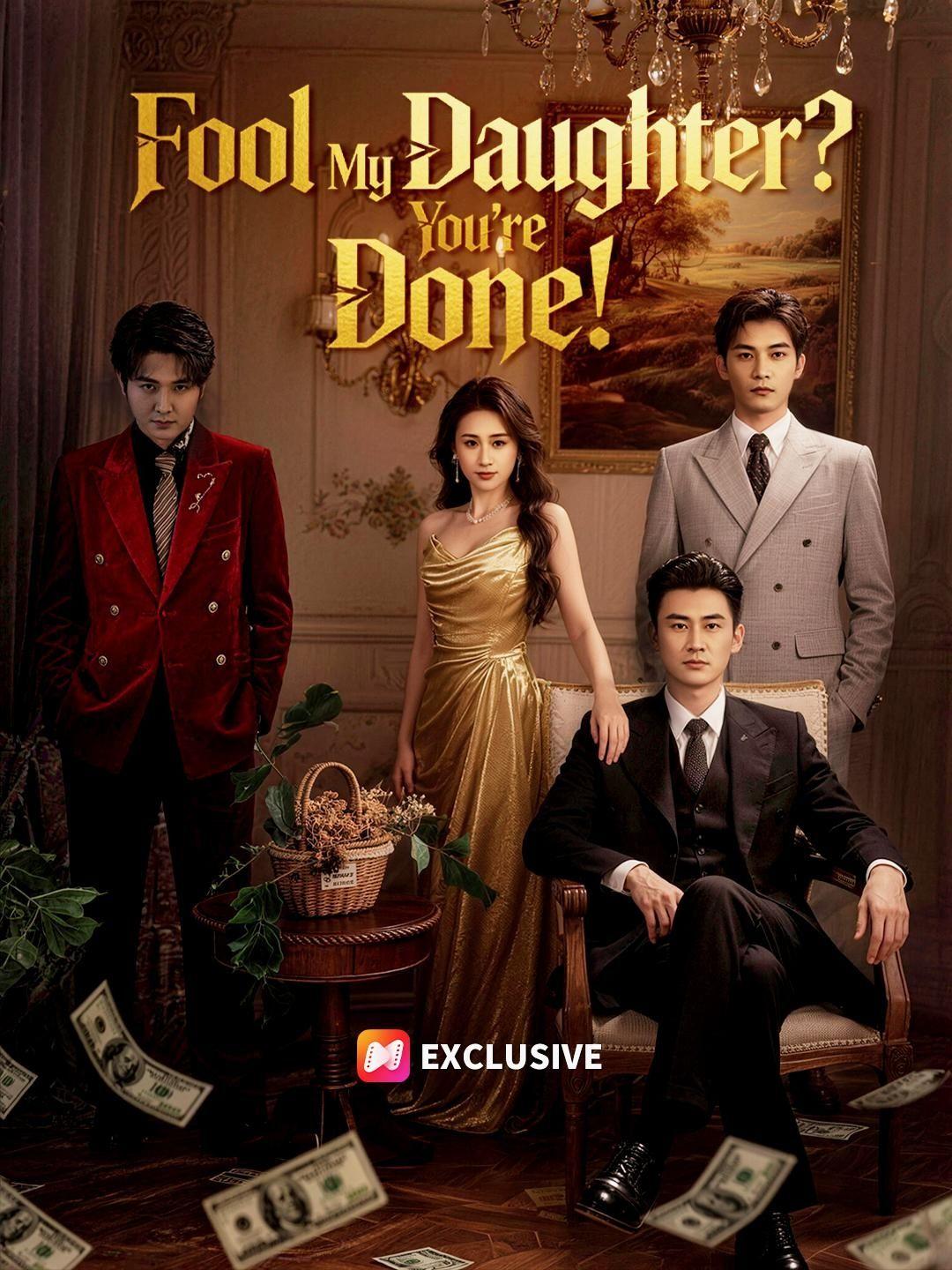
The episode unveils the shocking truth that Sabrina Zeller is Jeremy Howard's daughter, causing disbelief and skepticism among the crowd while setting the stage for a dramatic family reunion at an engagement party.Will Jeremy Howard publicly acknowledge his daughter and wife at the engagement party, or will the family's past secrets keep them apart?


Recommended for you


Lost and Found: When the Banquet Becomes a Trial
The air in the banquet hall hums—not with music, not with laughter, but with the low-frequency vibration of impending rupture. You can feel it in the way the white chairs remain untouched, in how the waitstaff lingers just outside the frame, in the slight tremor in Xiao Yu’s fingers as she grips the thin strap of her clutch at 00:40. This isn’t a celebration. It’s a tribunal. And everyone present has been summoned—not by invitation, but by fate, by debt, by the unbearable weight of unspoken promises. Let’s talk about Lin Wei again—but this time, not as the bewildered groom-to-be, but as the unwitting protagonist of a psychological thriller disguised as a social event. His tan blazer is immaculate, his hair styled with precision, yet his body language betrays him. At 00:01, his brow furrows—not in anger, but in cognitive dissonance. He’s trying to reconcile two realities: the one he prepared for (a smooth, elegant ceremony), and the one unfolding before him (a silent war waged through glances and half-turned shoulders). His shift from shock at 00:02 to that faint, almost imperceptible smirk at 00:44 is the pivot point of the entire narrative. That smirk isn’t amusement. It’s the dawning awareness that he’s been played—and not by a villain, but by circumstance itself. He’s beginning to understand that the real antagonist isn’t Chen Lan, or Aunt Mei, or even Xiao Yu. It’s the script they were all handed at birth. Xiao Yu, meanwhile, is the quiet detonator. Her dress—soft, romantic, innocent—is a red herring. Every time the camera lingers on her face—00:03, 00:12, 00:22, 00:30—she’s not reacting. She’s *deciding*. Her eyes don’t dart nervously; they lock onto targets. At 00:15, she glances toward the man in sunglasses behind her—security? A confidant? A threat? We don’t know. But she knows. And that knowledge gives her power. She’s not waiting for permission to speak. She’s waiting for the right moment to *redefine* the conversation. When she finally turns fully toward Aunt Mei at 00:13, her posture is upright, her chin lifted—not defiant, but dignified. She’s not asking for forgiveness. She’s asserting her right to exist outside the margins of their expectations. Aunt Mei, the woman in the leaf-patterned blouse, is the emotional fulcrum of the scene. Her expressions are a masterclass in restrained intensity. At 00:09, her lips part—not to speak, but to *inhale*, as if bracing for a blow. Her eyes, wide and alert, scan the room like a radar. She’s not just observing the drama; she’s calculating its fallout. How will this affect the family name? The business ties? The marriage alliances already negotiated in backrooms? Her dialogue at 00:18–00:21 is delivered in hushed tones, but the subtext screams: *You do not get to rewrite history in front of witnesses.* Yet watch her at 00:41—standing beside Xiao Yu, hands clasped, gaze lowered. For the first time, she doesn’t look like a matriarch. She looks like a woman who’s just realized her authority has a shelf life. And when she glances sideways at 00:56, her expression is not anger, but grief. Grief for the future she imagined, for the daughter she thought she knew, for the illusion of control she’s maintained for decades. Chen Lan, in her black sequined gown, is the embodiment of curated perfection—and that’s precisely why she’s so dangerous. Her jewelry isn’t adornment; it’s declaration. The diamond necklace, the teardrop earrings—they’re not meant to dazzle. They’re meant to *intimidate*. At 00:36, her eyes widen, but her mouth stays closed. She doesn’t gasp. She *registers*. This is not surprise; it’s recalibration. She’s already running scenarios in her head: legal clauses, media spin, damage control. When she crosses her arms at 00:46, it’s not insecurity—it’s strategic withdrawal. She’s retreating into her fortress of privilege, preparing to deploy countermeasures. And her final expression at 00:53? Not defeat. *Contempt*. She looks at Xiao Yu not as a rival, but as a glitch in the system—a malfunction she’ll have repaired by morning. Now, let’s pivot to Zhang Tao—the man in the grey suit, whose entrance at 00:24 changes the energy of the room like a sudden drop in barometric pressure. He doesn’t belong to the emotional core of the conflict, yet his presence looms larger than anyone else’s. Why? Because he represents the *infrastructure* of this world. The deals signed in silence. The favors owed. The debts that outlive marriages. His frown at 00:24 isn’t personal—it’s professional. He sees the cracks in the foundation, and he’s already drafting the repair order. Then, the office sequence—00:59 onward—reveals the hidden machinery. The phone call isn’t casual. It’s urgent. His voice, though unheard, carries the cadence of someone negotiating with ghosts. At 01:06, his eyes narrow—not at the caller, but at the *implication* of what’s being said. Something has shifted. A lever has been pulled. And he’s scrambling to adjust before the dominoes fall. What elevates Lost and Found beyond typical melodrama is its refusal to assign moral clarity. Xiao Yu isn’t a saint. Lin Wei isn’t a martyr. Aunt Mei isn’t a tyrant. Chen Lan isn’t a villain. They’re all prisoners of their own narratives—trapped in roles they inherited, scripts they never auditioned for. The banquet hall, with its grand archways and soft lighting, becomes a metaphor for societal expectation: beautiful on the surface, suffocating beneath. And here’s the genius of the editing: the cuts between the banquet and the office aren’t just transitions—they’re *contrasts*. One space is filled with people performing civility; the other, with a man confronting raw consequence. Zhang Tao’s phone call isn’t about the engagement. It’s about the *aftermath*. Who will cover the losses? Who will take the fall? And most chillingly—who knew this would happen? Lost and Found doesn’t give us answers. It gives us *questions* that echo long after the final frame. Did Xiao Yu plan this confrontation? Was Lin Wei ever truly committed to Chen Lan—or was he merely fulfilling a familial obligation he’d long since stopped believing in? What secret did Zhang Tao uncover that made him slam his hand on the desk at 01:05? And why does the green figurine on his shelf—a child’s toy, perhaps—linger in the background like a ghost from another life? This is storytelling at its most intimate and incisive. Every gesture, every pause, every shift in lighting serves the central theme: identity is not fixed. It’s negotiated. Reclaimed. Sometimes, violently. The ‘lost’ in Lost and Found isn’t just about missing people or misplaced emotions. It’s about the parts of ourselves we surrender to fit in—and the courage it takes to find them again, even if it means burning the whole house down to see the foundation clearly. In the end, the most powerful moment isn’t the shouting match that never comes. It’s the silence at 00:58—just before the screen cuts to black. No music. No dialogue. Just three women standing side by side: Xiao Yu, Aunt Mei, and Chen Lan—each representing a different generation, a different philosophy, a different kind of survival. And in that silence, we understand: the real engagement wasn’t between Lin Wei and Chen Lan. It was between each of them and the truth they’ve been avoiding. That’s why Lost and Found lingers. Not because of the glamour, or the drama, or even the stunning cinematography. But because it forces us to ask: What role are *we* playing today? And when the music stops, will we have the courage to step out of character—and finally, truly, be found?
Lost and Found: The Engagement That Never Was
In the opulent ballroom bathed in soft golden light and draped with heavy velvet curtains, a scene unfolds that feels less like celebration and more like a slow-motion collision of expectations, class, and unspoken truths. The backdrop—projected Chinese characters reading ‘Engagement Banquet’—hangs like an ironic banner above a gathering where no one seems truly engaged. This is not a joyous union; it’s a performance on the verge of collapse, and every character wears their role like a slightly-too-tight suit. Let’s begin with Lin Wei, the young man in the tan blazer and black shirt—his posture initially rigid, his eyes darting like a cornered animal. He doesn’t just look surprised; he looks *betrayed*, as if the script he rehearsed in his head has been torn up mid-scene. His gesture at 00:02—pointing, then retracting his hand—is textbook emotional whiplash: accusation, hesitation, regret. He’s not angry yet. He’s still processing. That flicker of disbelief in his eyes tells us he thought he knew the rules of this game. He didn’t. And when he later smiles faintly at 00:43, it’s not relief—it’s resignation. A man who’s just realized he’s been cast as the foil, not the hero. Opposite him stands Xiao Yu, the woman in the cream off-shoulder dress with ruffled sleeves—a garment that screams innocence, but her expression says otherwise. Her hair is neatly pinned, her earrings delicate pearls, yet her gaze is sharp, calculating, even wounded. At 00:12, she turns toward the older woman beside her—not with deference, but with quiet defiance. She’s not a passive victim here. She’s holding ground. When she glances sideways at 00:15, her lips part slightly—not to speak, but to *breathe*, as if bracing for impact. That moment is pure cinematic tension: the calm before the storm, where silence speaks louder than any shouted line. Later, at 00:30–00:33, her expression shifts again—not fear, but resolve. She’s made a choice. And whatever that choice is, it will redefine the evening. Then there’s Aunt Mei, the woman in the floral blouse—her presence alone radiates decades of quiet authority. She doesn’t raise her voice; she doesn’t need to. Her mouth moves at 00:09, and though we don’t hear the words, her jaw tightens, her eyebrows lift just enough to signal disapproval laced with disappointment. She’s not scolding Xiao Yu; she’s *assessing* her. There’s history in that look—generations of family duty, unspoken contracts, and the weight of reputation. When she places her hand lightly on Xiao Yu’s arm at 00:40, it’s not comfort. It’s containment. A silent plea: *Don’t ruin this.* Yet her own eyes, at 00:56, betray her—she’s not certain *she* believes in the arrangement either. That ambiguity is what makes her so compelling. She’s not the villain; she’s the reluctant architect of a crumbling edifice. And then—enter Chen Lan. The woman in the black sequined gown, diamonds catching the light like scattered stars. Her entrance at 00:34 is deliberate, theatrical. She walks beside Lin Wei, but her grip on his arm is possessive, not affectionate. Her necklace, her earrings—they’re armor. At 00:36, her eyes widen, then narrow. She’s not shocked by the disruption; she’s *offended* by it. Her world runs on protocol, on appearances, on the assumption that money and status are the only currencies that matter. When she crosses her arms at 00:46, it’s not defensiveness—it’s dismissal. She’s already mentally recalculating the guest list, the seating chart, the future press releases. Her anger isn’t raw; it’s polished, like a blade kept in silk. And when she speaks at 00:47, her voice—though unheard—carries the cadence of someone used to being obeyed. She doesn’t ask questions. She issues corrections. The real masterstroke, however, lies in the editing rhythm—the way the camera cuts between faces, never lingering too long, forcing us to read micro-expressions like forensic evidence. At 00:24, we see a new man: Zhang Tao, in the grey double-breasted suit, his tie clipped with silver, a brooch pinned like a badge of honor. His frown is subtle, but his eyes—oh, his eyes—are scanning the room like a general surveying a battlefield. He’s not part of the immediate conflict, yet he’s deeply invested. Is he Lin Wei’s uncle? A business partner? A rival? The ambiguity is intentional. He represents the *system*—the invisible architecture that holds these relationships together, or tears them apart. Then, the cut to the office. Cold glass, minimalist furniture, a city skyline blurred beyond the window. Zhang Tao, now alone, pacing while on the phone. His tone shifts from controlled to urgent, then to something darker—frustration edged with fear. At 01:03, he slams his palm on the desk. Not rage. *Desperation*. This isn’t just about the banquet. This is about leverage. About secrets buried under layers of polite smiles. The phone call isn’t logistical—it’s existential. And when he glances toward the shelf behind him—at 01:09—we catch a glimpse of a small green figurine, a gold bust, a ceramic vase. Trinkets. Mementos. Symbols of a life built on careful curation. What if one of those trinkets holds the key to everything? This is where Lost and Found reveals its true texture. It’s not just about a broken engagement. It’s about identity—how we perform ourselves for others, how we rewrite our pasts to survive the present. Xiao Yu isn’t just choosing love over duty; she’s reclaiming agency in a world that assigned her a role before she could speak. Lin Wei isn’t just losing a fiancée; he’s realizing he never really knew himself outside the expectations placed upon him. Aunt Mei isn’t just protecting tradition; she’s mourning the version of her daughter—or perhaps herself—that could have been free. And Chen Lan? She’s the most tragic figure of all. Because she *believes* in the system. She’s spent her life polishing her armor, perfecting her smile, mastering the art of the acceptable lie. To her, emotion is inefficiency. Vulnerability is weakness. So when the facade cracks, she doesn’t crumble—she doubles down. Her final glance at 00:53 isn’t confusion. It’s contempt. For the chaos. For the messiness of real feeling. For the fact that, despite all her glitter and grace, she’s been left standing in the wreckage of a story she didn’t write. What makes Lost and Found so gripping is that no one is entirely wrong. Lin Wei wants authenticity. Xiao Yu wants autonomy. Aunt Mei wants stability. Chen Lan wants legacy. They’re all fighting for versions of truth—and none of them fit neatly into the same frame. The banquet hall, with its white chairs and soft lighting, becomes a stage where morality is relative, loyalty is conditional, and love is just one option among many. We’re left with questions that linger long after the screen fades: Did Xiao Yu plan this? Was Lin Wei ever truly in love with Chen Lan—or was he seduced by the idea of her? What did Zhang Tao hear on that phone call? And most importantly—what does ‘found’ mean when you’ve never really been lost? Because in Lost and Found, the real discovery isn’t who walks away with whom. It’s the terrifying, beautiful realization that sometimes, the only way to find yourself is to let the world you built around you burn to the ground—and walk through the ashes, barefoot, into the unknown.