



Reunion and Doubt
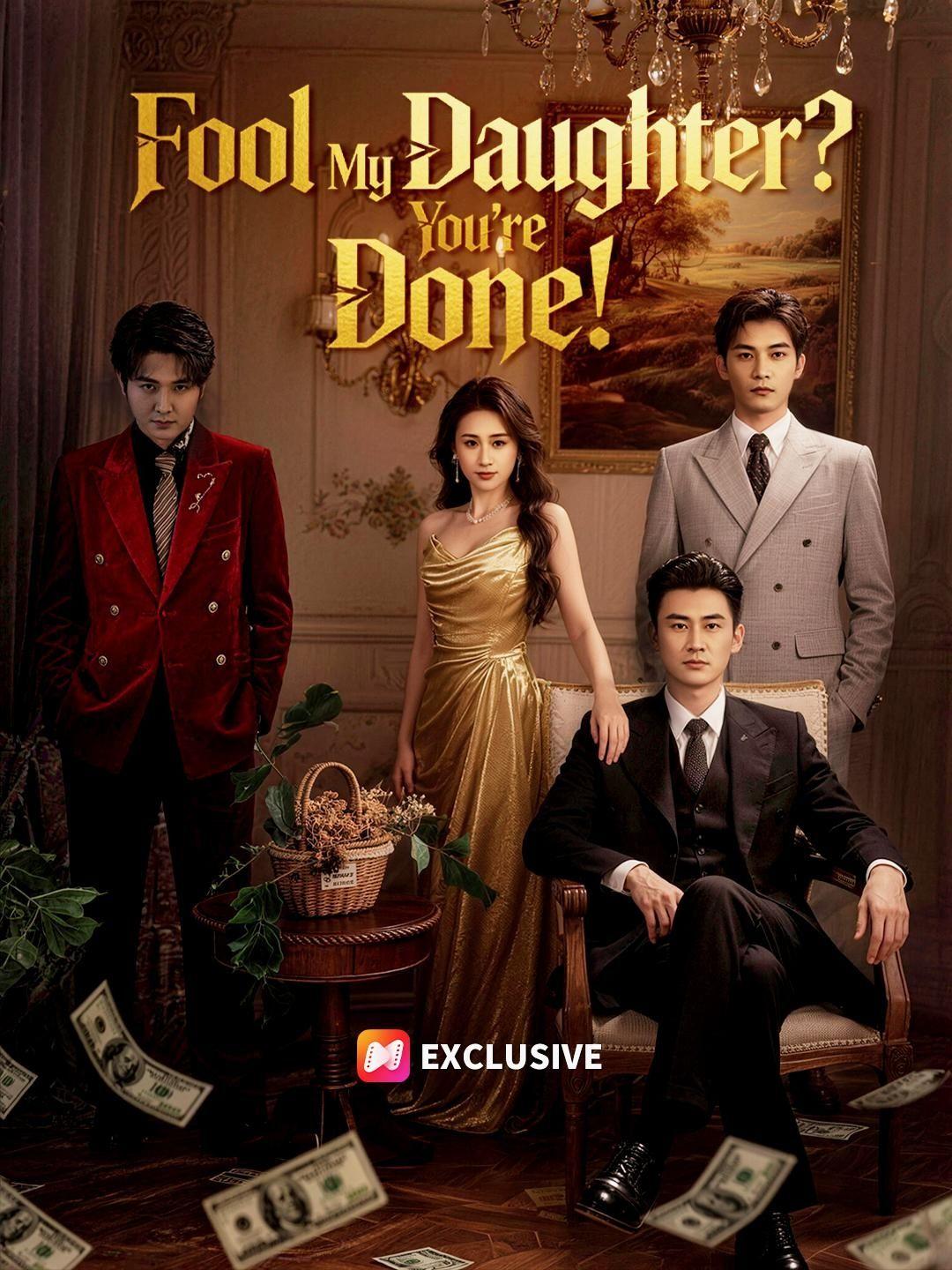
Jeremy Howard finally reunites with Zoe after 20 years, but doubts about her true identity linger. He devises a plan to verify her identity using a keepsake from their past while simultaneously rewarding those who have supported Zoe in his absence.Will Jeremy's test confirm Zoe's true identity or unravel a deeper deception?


Recommended for you


Lost and Found: When a Bracelet Holds a Family’s Silence
There’s a moment in *Lost and Found*—just three seconds, no dialogue, no music—that haunts me more than any climax: Xiao Mei’s hands, small and steady, threading a black braided cord around the wrist of a young man in a white shirt. The background is a blur of amber grass, the sun low and forgiving. Her fingers move with practiced care, as if this act is ritual, not romance. And yet, when the camera lifts to her face, her smile is not the bright, uncomplicated joy of youth. It’s softer. Warmer. Tinged with melancholy. She knows—*she knows*—that this bracelet will outlive the moment. It will survive arguments, distance, even death. It will become a relic. And that knowledge doesn’t dim her smile; it deepens it. This is the heart of *Lost and Found*: not the grand reveal, but the quiet accumulation of meaning in objects too small to notice—until they’re the only things left standing. Let’s talk about Alex Wilson. Not the corporate executive, not the Horizon Group Landon branch manager, but the man who stands frozen in a courtyard, clutching a paper bag like it’s a live grenade. His suit is immaculate, yes—but his eyes are wild. His jaw is clenched so tight you can see the tendon jump. He’s not angry. He’s *disoriented*. Like he’s walked into a room he swore he’d never see again, and everything—the smell of dried hay, the creak of the wooden gate, the way Li Fang tucks a strand of hair behind her ear—is a trigger. Li Fang. The woman in the plaid shirt. She doesn’t confront him. She doesn’t scream. She holds a green fruit—unpeeled, uncut—and brings it to her lips, not to eat, but to *remember*. Her smile is gentle, but her eyes are sharp. She speaks softly, her words barely audible over the rustle of leaves, yet Alex flinches as if struck. Why? Because she’s not talking *to* him. She’s talking *through* him—to someone else. To the boy he used to be. To the promise he broke. The film’s genius lies in its editing rhythm: we cut between the pastoral idyll of Xiao Mei and the young man—sunlight catching the braid of her hair, the way his sleeve rides up as he extends his arm—and the harsh daylight of Alex’s present, where shadows fall too sharply, where every gesture feels rehearsed. The contrast isn’t accidental. It’s thematic. The village is memory made manifest; the city is performance. And Alex Wilson is caught in the middle, trying to wear both skins at once. Watch how Manager Chen operates. He’s not a sidekick; he’s a damage control specialist. When Alex’s face twists in silent panic, Chen doesn’t offer comfort. He leans in, covers his mouth with his hand, and whispers—*whispers*—as if the very air might betray them. His body language screams urgency, but his voice (we infer) is calm, measured, professional. He’s not protecting Alex from Li Fang. He’s protecting the *narrative*. The story Alex has built—the successful expatriate, the disciplined leader, the man who left poverty behind—is fragile. One loose thread, and the whole tapestry unravels. And the bracelet? Oh, the bracelet. It appears three times with escalating significance. First, on Xiao Mei’s wrist—a symbol of connection, of belonging. Second, on the young man’s wrist—a token of commitment, of shared future. Third, in Alex’s palm, held like evidence in a courtroom. He examines it not as a lover would, but as a detective. He turns it over, traces the knots, his thumb brushing the frayed end. That fraying matters. It suggests wear. Use. Time. This wasn’t a new gift. It was *reclaimed*. And when he finally shows it to Chen—holding it out like a confession—the other man’s face doesn’t register surprise. It registers *recognition*. Chen takes the bracelet, not to inspect it, but to *contain* it. He tucks it into the paper bag, as if sealing away a dangerous truth. The bag itself becomes a motif: crumpled, unassuming, yet carrying the weight of decisions made in haste, apologies deferred, lives altered. Later, in the sleek office with its reflective floors and panoramic views, Alex stands alone, staring out at the green hills far below. The irony is brutal: he’s higher up now, literally and figuratively, yet he’s never felt smaller. His reflection on the floor is distorted, fragmented—just like his sense of self. Then Wang An calls. Wang An—the man who stood silently in the village, who watched Xiao Mei tie the bracelet, who carried a woven basket like a farmer, not a financier. Now, in the office, he’s all swagger and smirk, pacing, laughing into the phone, his pinstripe suit gleaming under LED lights. But watch his eyes when he pauses. They flicker toward the window. Toward Alex’s reflection. He knows Alex is listening. Or he *hopes* he is. Because Wang An’s call isn’t just business. It’s a taunt. A reminder: *You think you’ve escaped? We’re still here. The past isn’t dead. It’s not even past.* *Lost and Found* refuses easy answers. Did Alex abandon Xiao Mei? Did he steal something from Li Fang? Did he inherit a debt he never understood? The film doesn’t say. Instead, it gives us textures: the rough weave of the plaid shirt, the smooth coolness of the green fruit, the slight give of the braided cord under tension. It gives us micro-expressions: Li Fang’s lip trembling as she speaks, Alex’s nostrils flaring when he inhales too quickly, Wang An’s smile not quite reaching his eyes. These are the real plot points. The story isn’t in the dialogue—it’s in the silence between breaths. And that final sequence, where Alex walks away, then stops, then turns back toward the village—only to see Li Fang standing in the doorway, holding the fruit, smiling that quiet, knowing smile—it’s not a resolution. It’s an invitation. An open door. A question posed not in words, but in posture: *Will you come back? Or will you keep walking, carrying the bracelet in your pocket like a stone in your shoe?* *Lost and Found* understands something profound about human nature: we don’t lose things—we misplace them, bury them, pretend they never existed. And sometimes, the universe, in its cruel kindness, hands them back to us—worn, faded, still tied in the same knot we left them in. The tragedy isn’t that Alex forgot. The tragedy is that he *remembered*—too late, too painfully, too clearly. And the bracelet? It’s still there. Waiting. In the pocket of his suit. In the drawer of his desk. In the hollow space behind his ribs. *Lost and Found* isn’t about finding what was lost. It’s about surviving the moment you realize you were the one who let it go.
Lost and Found: The Bracelet That Unraveled Two Worlds
In the quiet, sun-drenched fields of a rural village, where time moves slower and emotions run deeper, *Lost and Found* delivers a masterclass in visual storytelling—not through grand explosions or dramatic monologues, but through the subtle tremor of a wrist, the hesitant smile of a young woman named Xiao Mei, and the furrowed brow of a man named Alex Wilson, who carries more than just a paper bag. This isn’t just a short film; it’s a psychological excavation, peeling back layers of class, memory, and unspoken grief with the precision of a surgeon’s scalpel. From the very first frame, we’re thrust into a dissonance that lingers long after the screen fades: Alex Wilson, impeccably dressed in a charcoal pinstripe double-breasted suit—complete with a silver tie clip and a brooch shaped like a coiled serpent—stands rigidly beside a man in a cream-colored suit, both men holding crumpled brown paper parcels as if they were evidence bags. Their expressions are not neutral; they’re *alarmed*. Alex’s eyes dart, his lips press into a thin line, his eyebrows knit together in a knot of disbelief. He is not visiting; he is interrogating reality itself. And then—the cut. A close-up of a hand, slender and sun-kissed, gripping a green fruit—perhaps a loquat or unripe pear—against the backdrop of a plaid shirt. The bracelet on that wrist is black, braided, simple. It’s the same one we see moments later being tied around the wrist of a young man in a white shirt, standing in a golden field at sunset. Xiao Mei, her hair in twin braids, her floral blouse slightly rumpled, watches with a mixture of tenderness and quiet resolve as her fingers deftly knot the cord. Her smile is not naive; it’s *knowing*. She knows what this gesture means. She knows it’s a vow, a tether, a promise whispered into the wind. But here’s the twist the audience feels before the characters do: that same bracelet appears on Alex Wilson’s wrist later—not as a gift, but as a relic. He removes it slowly, almost reverently, holding it up to the light as if trying to decode a cipher. His expression shifts from confusion to dawning horror, then to something quieter: sorrow. The film doesn’t tell us *why*—it shows us. The older woman in the plaid shirt—Li Fang, perhaps, the mother figure—holds the green fruit to her lips, smiling faintly, her eyes glistening. She speaks to Alex, her voice soft but insistent, her gestures gentle yet firm. She touches her own throat, as if recalling a chokehold of memory. When Alex reacts with visible distress—his mouth agape, his posture recoiling—it’s not because he’s offended. It’s because he recognizes the fruit. He recognizes the bracelet. He recognizes *her*. *Lost and Found* operates on a dual timeline, though it never explicitly states it. The pastoral scenes with Xiao Mei and the young man are bathed in warm, nostalgic light—golden hour, soft focus, the kind of cinematography reserved for memories. Meanwhile, Alex’s present-day scenes are crisp, high-contrast, almost clinical. The rural house behind him has a red-tiled roof, a satellite dish, a pile of firewood—details that root him in the *now*, yet his emotional state is trapped in the *then*. The man in the cream suit—let’s call him Manager Chen—plays the role of the pragmatic confidant. He leans in, whispers urgently into Alex’s ear, his hand hovering near Alex’s shoulder like a priest offering absolution. But his whisper is not comforting; it’s conspiratorial. He’s not calming Alex down—he’s trying to *contain* him. And when Alex finally walks away, turning his back on the house, the camera follows him not with sympathy, but with suspicion. He walks past Li Fang, who watches him go with a mixture of pity and resolve. Then, in a breathtaking sequence, he stops mid-stride, turns, and looks back—not at the house, but at the horizon, as if searching for a ghost. The green fields stretch endlessly, dotted with modest homes, power lines cutting across the sky like scars. This is not a place of escape; it’s a place of reckoning. Later, in a stark, modern office with floor-to-ceiling windows and a polished floor that mirrors his silhouette, Alex stands alone. The contrast is jarring. The rural chaos has been replaced by sterile silence. He checks his phone. A call comes in. The screen identifies the caller: Wang An, Horizon Group Landon branch manager. The name flashes—Wang An, the man who was *also* there, in the village, wearing the striped shirt and towel draped over his shoulders, watching Xiao Mei with an unreadable expression. Now, in the office, Wang An is all charm and confidence, pacing by the window, phone pressed to his ear, grinning like a man who’s just won a bet. His suit is darker, pinstriped, his hair tousled in that ‘effortlessly successful’ way. He says things like ‘It’s done,’ ‘She agreed,’ ‘The transfer is clean.’ But his eyes—when he glances toward the window, toward where Alex might be standing—betray him. There’s guilt there. Or fear. Or both. The brilliance of *Lost and Found* lies in its refusal to explain. We don’t need to know if Xiao Mei is Alex’s sister, his lost love, or the daughter of someone he wronged. What matters is the *weight* of the bracelet, the *texture* of the paper bag (which, in one shot, appears to contain not food, but folded documents), the way Li Fang’s smile tightens when she mentions ‘the old days.’ The film trusts its audience to connect the dots—and the dots form a constellation of regret, privilege, and the quiet resilience of those left behind. Alex isn’t a villain. He’s a man who built a life on foundations he didn’t realize were rotten. The green fruit? It’s not just fruit. In many rural Chinese traditions, giving a fruit symbolizes blessing, continuity, even apology. Li Fang offers it not as charity, but as a challenge: *Remember who you were. Remember what you took.* And when Alex finally holds the bracelet in his palm, alone in the brick-walled alley, his face contorts—not with anger, but with the unbearable weight of recognition. He doesn’t throw it away. He doesn’t crush it. He simply stares at it, as if it were the last piece of a puzzle he’s spent decades trying to solve. *Lost and Found* doesn’t end with closure. It ends with a question hanging in the air, thick as the humidity before a storm: What do you do when the past doesn’t stay buried? When the people you tried to forget show up, not with accusations, but with a fruit and a bracelet—and a look in their eyes that says, *We knew you’d come back.* The final shot—Alex walking away from the village, then pausing, then turning back—doesn’t resolve anything. It deepens the mystery. Because sometimes, the most devastating thing isn’t losing something. It’s finding it again… and realizing you no longer deserve it. *Lost and Found* isn’t just a title. It’s a diagnosis. And every character in this film is suffering from the same condition: the chronic, incurable ache of having left something vital behind—and the terrifying hope that it might still be waiting, unchanged, in the fields where you once belonged.