



Powerful Reunion
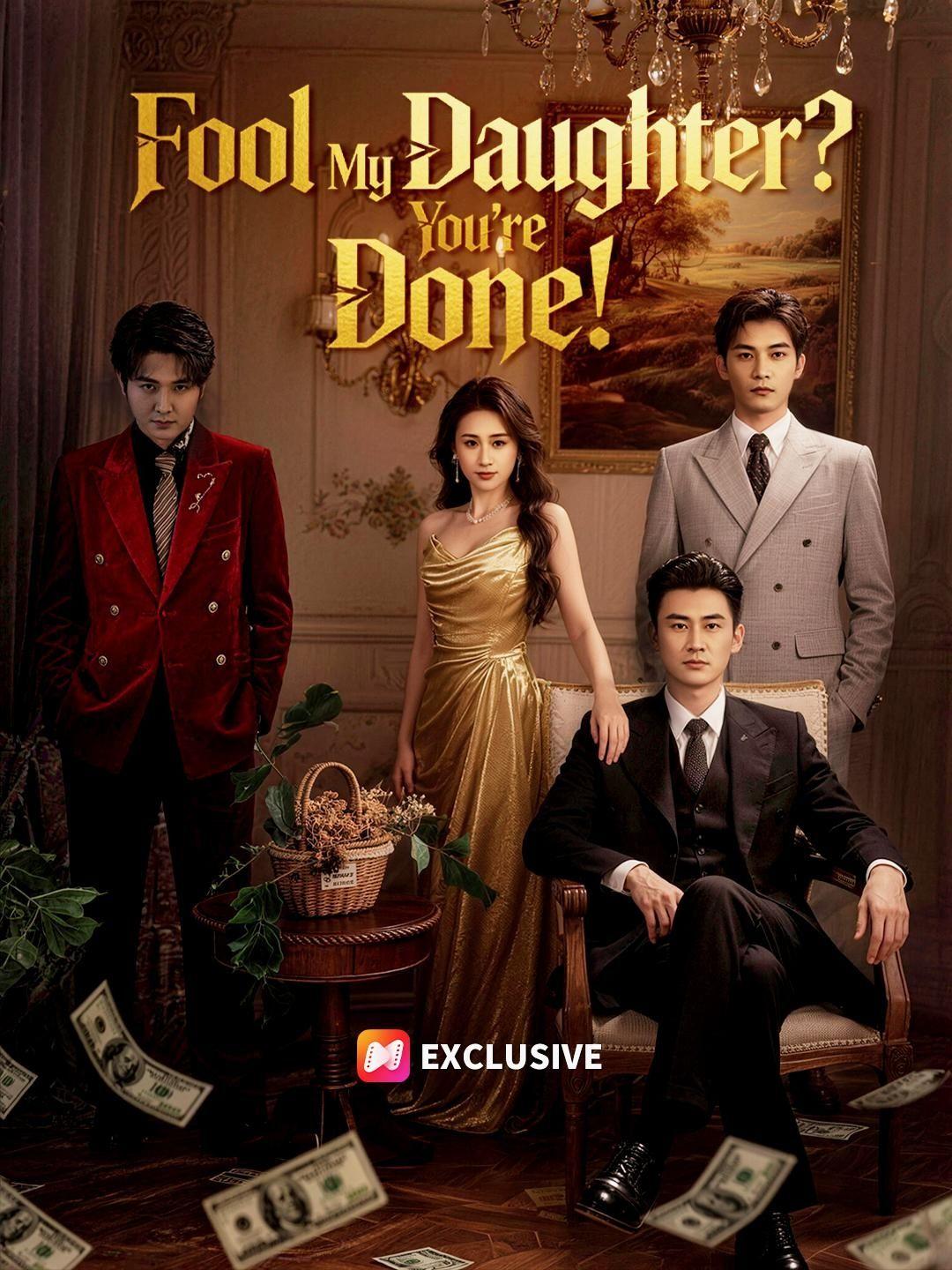
Jeremy Howard publicly claims Zoe Stilwell and their daughter as his family, retaliating against those who dishonored them by cutting business ties with SunVane Technologies and issuing a stern warning.Will Jeremy's bold declaration reunite his family or ignite more conflicts?


Recommended for you


Lost and Found: When a Handbag Holds More Than Keys
Let’s talk about the handbag. Not just any handbag—but the brown Michael Kors satchel clutched by Zhang Mei in the opening seconds of *Lost and Found*, its gold logo gleaming like a tiny beacon in a sea of emotional static. That bag isn’t carrying lipstick or receipts. It’s carrying history. It’s carrying shame. It’s carrying the weight of a thousand unspoken questions. And in a narrative where dialogue is sparse and gestures are everything, that handbag becomes the silent protagonist of the entire sequence. Zhang Mei doesn’t raise her voice. She doesn’t point. She simply tightens her grip—first with both hands, then with one, then shifts it to her hip, as if testing how much pressure the leather can withstand before it cracks. That’s the moment the audience realizes: this isn’t a social gathering. This is an interrogation disguised as a celebration. *Lost and Found* excels at constructing emotional architecture through costume, posture, and spatial dynamics. Consider Li Wei again—the man in the pinstripe suit, whose lapel pin (a stylized dragon, perhaps?) hints at lineage, legacy, or maybe just pretense. His stance is textbook confidence: feet shoulder-width apart, chest open, chin level. Yet watch his eyes. They dart—not nervously, but strategically. He scans the room like a general assessing terrain before battle. When he addresses Zhang Mei, his tone is measured, almost rehearsed. But his left hand, tucked casually into his pocket, flexes once. Just once. A tell. A crack in the armor. And Zhang Mei sees it. Of course she does. She’s been watching him for years. The way she tilts her head, just slightly, as if recalibrating her perception of him—that’s the pivot point of the entire scene. In that micro-second, *Lost and Found* shifts from observation to revelation. Lin Xiaoyu, meanwhile, stands like a statue carved from porcelain—delicate, luminous, and dangerously fragile. Her cream dress, with its oversized bow and ruffled straps, evokes youth, purity, even naivety. But her eyes? They’re ancient. They’ve seen too much. When Chen Hao steps forward, his white suit blinding under the chandelier’s glow, she doesn’t flinch. She exhales—slowly, deliberately—and her shoulders drop a fraction. That’s not relief. That’s surrender. She knows what’s coming. And yet, she stays. Why? Because in *Lost and Found*, running away isn’t an option. The past is woven into the floorboards, the curtains, the very air. Every character is trapped—not by walls, but by memory. Auntie Fang, in her lavender blouse with its intricate knot detailing, embodies this perfectly. Her expression shifts from mild concern to quiet devastation in three frames. She doesn’t cry. She doesn’t speak. She simply closes her eyes for a beat longer than necessary—and when she opens them, the world has changed. That’s the power of restraint. That’s the art of implication. What makes *Lost and Found* so compelling is its refusal to moralize. There’s no clear villain. Li Wei isn’t evil—he’s conflicted. Zhang Mei isn’t righteous—she’s wounded. Chen Hao isn’t deceitful—he’s desperate. Even the background figures matter: the man in the beige suit with the orange-striped tie, standing slightly behind Li Wei, his expression unreadable but his posture rigid—suggesting he’s either a loyal subordinate or a ticking time bomb. The camera lingers on these secondary players not to distract, but to deepen the sense of entanglement. Everyone here is connected, whether they admit it or not. The digital backdrop behind them—those glowing Chinese characters—might read ‘Mid-Autumn Reunion’ or ‘Corporate Summit,’ but the irony is palpable. This isn’t reunion. It’s reckoning. And the characters know it. Notice how sound design plays a role—even though we can’t hear it in the still frames, the visual rhythm suggests a score that pulses softly beneath the surface: low cello notes, a distant piano motif, the occasional chime of glassware being set down too hard. That’s the soundtrack of suppressed emotion. When Zhang Mei finally speaks—her lips parting, her voice barely above a whisper—the room seems to hold its breath. Her words aren’t transcribed, but her body language screams volume: shoulders squared, chin lifted, one hand still gripping the bag like it’s the last thing tethering her to reality. And Li Wei? He doesn’t look away. He meets her gaze, and for the first time, his mask slips—not fully, but enough. A flicker of regret. A shadow of guilt. Then he blinks, and it’s gone. That’s the tragedy of *Lost and Found*: the truth is always visible, if you know where to look. It’s in the way Lin Xiaoyu tucks a stray strand of hair behind her ear—not out of habit, but as a reflexive act of self-soothing. It’s in the way Chen Hao’s smile doesn’t reach his eyes. It’s in the way Auntie Fang’s fingers brush the sleeve of Lin Xiaoyu’s dress, a fleeting gesture of protection that says more than any speech ever could. This isn’t just a scene. It’s a psychological excavation. *Lost and Found* peels back layers of performance to reveal the raw nerve beneath: the fear of exposure, the ache of unresolved grief, the quiet fury of being misunderstood. And yet, despite the heaviness, there’s beauty in the restraint. The lighting is warm, the fabrics luxurious, the composition painterly—every frame feels like a Renaissance portrait waiting to speak. The characters aren’t shouting. They’re breathing in sync with the audience’s rising anxiety. By the final shot—Li Wei turning slightly, a ghost of a smile playing on his lips, while Zhang Mei stares straight ahead, her expression unreadable—we’re left with more questions than answers. Who lost what? And who, if anyone, will be found? The brilliance of *Lost and Found* is that it doesn’t demand resolution. It invites reflection. It asks us to sit with the ambiguity, to wonder what we would do in their shoes, and to recognize that sometimes, the most powerful stories are the ones that refuse to end.
Lost and Found: The Unspoken Tension in the Banquet Hall
In the opulent banquet hall, where golden chandeliers cast soft halos over polished marble floors, a quiet storm brews beneath the surface of polite smiles and tailored suits. *Lost and Found*, a short drama that thrives on emotional subtext and restrained confrontation, delivers a masterclass in nonverbal storytelling—where every glance, every hesitation, every clutched handbag speaks louder than dialogue ever could. At the center of this tableau stands Li Wei, the man in the charcoal pinstripe double-breasted suit, his hair slicked back with precision, a silver tie clip gleaming like a silent warning. His posture is rigid, yet his eyes betray flickers of uncertainty—especially when he locks gazes with Zhang Mei, the woman in the black-and-white striped wrap top, her pearl necklace catching the light like tiny beads of judgment. She holds a brown Michael Kors handbag—not as an accessory, but as a shield. Her fingers twist the strap compulsively, a nervous tic that reveals more than any monologue could. When she opens her mouth, it’s not to speak, but to inhale sharply—as if bracing for impact. That moment, frozen between breath and utterance, is where *Lost and Found* truly begins. The setting itself functions as a character: rich wood paneling, floral drapes that whisper of old money, and behind it all, a massive digital backdrop emblazoned with Chinese characters—likely the name of a corporate gala or family reunion event. But the real drama unfolds not on the stage, but in the liminal space between people. Notice how Lin Xiaoyu, the young woman in the cream-colored dress with the bow at the neckline and a single braid draped over her shoulder, never looks directly at Li Wei. Her gaze skitters sideways, down, away—like a bird startled by sudden movement. Her earrings, simple pearls, tremble slightly with each micro-expression. She isn’t passive; she’s calculating. Every tilt of her head, every slight purse of her lips, suggests she knows something the others don’t—or perhaps, she fears what they might soon discover. *Lost and Found* doesn’t rely on exposition; it trusts its audience to read the silence between heartbeats. Then there’s Chen Hao, the man in the white double-breasted suit, whose hands are clasped tightly in front of him—not in prayer, but in containment. His smile is too wide, too quick, and when he bows slightly toward Li Wei, it feels less like deference and more like a tactical retreat. Behind him, another man in olive green watches with narrowed eyes, arms loose at his sides but shoulders tense—a classic ‘ready-to-intervene’ stance. These men aren’t just guests; they’re players in a game whose rules were written long before the cameras rolled. And yet, none of them speak more than a few words. The power lies in what remains unsaid. When Li Wei turns his head, revealing the small knot of hair tied at the nape of his neck—a detail so intimate it feels invasive—the camera lingers. It’s not vanity; it’s vulnerability disguised as control. He’s trying to project authority, but the slight tremor in his jaw tells another story entirely. Zhang Mei reappears, now speaking—not loudly, but with a cadence that cuts through the ambient murmur of the room. Her voice is steady, yet her knuckles whiten around the handbag strap. She’s not angry; she’s disappointed. That’s far more dangerous. Disappointment implies expectation—and expectation implies betrayal. In *Lost and Found*, betrayal isn’t shouted; it’s whispered in the pause before a sentence finishes. Watch how the older woman in the lavender blouse—let’s call her Auntie Fang—steps half a pace forward, then stops herself. Her expression shifts from concern to resignation, as if she’s seen this script play out before. Her blouse, with its delicate ruched collar and mother-of-pearl buttons, mirrors her role: elegant, composed, but quietly fraying at the seams. She doesn’t intervene. She observes. And in doing so, she becomes complicit. The genius of *Lost and Found* lies in its refusal to resolve. There’s no grand confession, no slap across the face, no dramatic exit. Instead, the tension simmers, thickens, and settles into the air like incense smoke. When Li Wei finally offers a faint, almost imperceptible smile—not at anyone in particular, but at the situation itself—it’s chilling. He’s accepted the chaos. He’s chosen ambiguity over truth. And in that choice, the audience is left suspended, wondering: What was lost? And who, exactly, will be found? Was it Lin Xiaoyu’s innocence? Zhang Mei’s trust? Chen Hao’s loyalty? Or something far more intangible—like the illusion of harmony itself? The film doesn’t answer. It invites you to sit with the discomfort, to replay the frames in your mind, searching for the micro-expression that gave it all away. That’s the hallmark of great short-form storytelling: it doesn’t fill the silence; it weaponizes it. *Lost and Found* reminds us that in human relationships, the most devastating moments aren’t the ones we remember—they’re the ones we feel in our ribs long after the scene has faded.